Loading...
Akbar the Great vs Charlemagne
Charlemagne leads by 1.2 pts · 2 figures compared
…
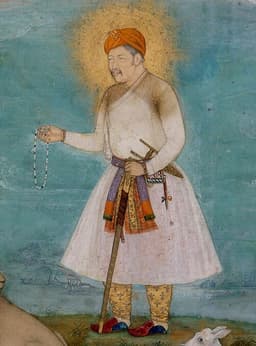
Akbar the Great
Emperor · Modern
69.8Total
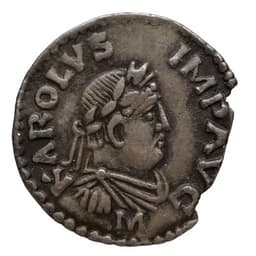
Charlemagne
Emperor · Medieval
71.0Total
Basic Information
Born
1542
748
Died
1605
814
Era
Modern
Medieval
Nationality
India
Frankish Empire
Occupation
Emperor
Emperor
Civilization
Indian
Western
Score Comparison
Military (10%)
80.0
80.0
Political (20%)
82.0
78.0
Influence (20%)
68.0
65.0
Legacy (20%)
55.0
65.0
Leadership (15%)
80.0
80.0
Strategy (15%)
68.0
68.0
TOTAL
69.8
71.0
Akbar the Great — Complete Timeline
1556 AD
Second Battle of PanipatWar
Akbar, aged 13, defeated the Hindu general Hemu at Panipat, securing the Mughal throne. Hemu had captured Delhi and declared himself emperor. Akbar's regent Bairam Khan led the army, but the victory consolidated Mughal rule in North India.
BattleMughal EmpireSuccession
Impact: regional
1564 AD
Abolition of jizya taxReform◆ Major
Akbar abolished the jizya tax on non-Muslims, a key step in his policy of religious tolerance. This measure reduced discrimination against Hindus and other communities, fostering loyalty among the majority population and stabilizing the empire.
Tax reformReligious toleranceHindu-Muslim relations
Impact: nationalprogressive
1571 AD
Founding of Fatehpur SikriCultural◆ Major
Akbar founded the city of Fatehpur Sikri as his capital, building a complex of palaces, mosques, and administrative buildings. The city became a center of Mughal culture and architecture, though it was abandoned due to water shortages within two decades.
ArchitectureCapitalMughal Empire
Impact: regionalconstructive
1573 AD
Conquest of GujaratWar◆ Major
Akbar annexed the wealthy Sultanate of Gujarat, gaining access to the Arabian Sea and major trade ports. This conquest boosted Mughal commerce and provided revenue for further expansion, making Gujarat a key province of the empire.
ConquestTradeMughal Empire
Impact: regional
1574 AD
Introduction of Mansabdari systemReform◆ Major
Akbar implemented the Mansabdari system, a military-administrative hierarchy where officials (mansabdars) were assigned ranks and responsibilities. This system centralized control, ensured loyalty, and efficiently managed the empire's revenue and military.
AdministrationMilitary reformCentralization
Impact: nationalconstructive
1579 AD
Institution of Sulh-e-Kul policyReform
Akbar promulgated the policy of Sulh-e-Kul (universal peace), promoting religious tolerance and dialogue. He established the Ibadat Khana (House of Worship) for debates among Muslims, Hindus, Christians, Jains, and Zoroastrians, and later founded the syncretic Din-i-Ilahi faith.
Religious policySyncretismTolerance
Impact: nationalprogressive
Charlemagne — Complete Timeline
772 AD
Saxon WarsWar◆ Major
Charlemagne launched a series of campaigns against the Saxons lasting over three decades. He forcibly converted them to Christianity, incorporated their territory into the Frankish Empire, and ordered the execution of thousands at the Massacre of Verden in 782.
ConquestChristianizationWar
Impact: regionaldestructive
774 AD
Conquest of the Lombard KingdomWar◆ Major
Charlemagne answered Pope Adrian I's call for aid against the Lombards. He besieged and captured Pavia, deposed King Desiderius, and annexed the Lombard Kingdom into his domain, assuming the title 'King of the Lombards' and solidifying Frankish control over Italy.
ConquestItalyPapal Alliance
Impact: regional
779 AD
Capitulary of HerstalReform
Charlemagne issued a series of legal and administrative reforms at the assembly in Herstal. He standardized weights and measures, reformed the coinage system, and strengthened the authority of royal officials (missi dominici) to oversee local governance and justice.
Legal ReformAdministrationStandardization
Impact: nationalconstructive
780 AD
Carolingian Renaissance ReformsCultural◆ Major
Charlemagne initiated a program of educational and cultural revival, inviting scholars like Alcuin of York to his court. He standardized Latin script (Carolingian minuscule), established palace schools, and promoted the copying of classical texts, preserving ancient knowledge.
EducationCultural RevivalScript
Impact: globalprogressive
800 AD
Coronation as Holy Roman EmperorPolitical Action
Pope Leo III crowned Charlemagne as Emperor of the Romans in St. Peter's Basilica on Christmas Day. This act revived the Western Roman Empire, established a precedent for papal authority over imperial titles, and created a political entity that shaped medieval European politics.
CoronationHoly Roman EmpirePapacy
Impact: globalconstructive
Expert Analysis
Charlemagne vs Akbar the Great: Historical Comparison
Charlemagne (c. 742–814), King of the Franks and first Holy Roman Emperor, unified much of Western Europe through conquest and Christianization. Akbar the Great (1542–1605), third Mughal Emperor, expanded and consolidated the Mughal Empire in India, pioneering religious tolerance and administrative reform. While both were transformative rulers, Akbar’s broader strategic vision and inclusive governance give him a slight edge.
Dimension Analysis
**Military: Charlemagne 78 / Akbar the Great 80**
Charlemagne’s 50+ campaigns subdued Saxons, Lombards, and Avars, but relied heavily on heavy cavalry and seasonal warfare. Akbar’s innovative use of matchlock infantry, artillery, and swift cavalry, combined with a centralized Mansabdari system, enabled more efficient conquest of a vast, diverse subcontinent.
**Political: Charlemagne 80 / Akbar the Great 85**
Charlemagne established a feudal system with counts and missi dominici, but his empire fragmented after his death. Akbar’s centralized bureaucracy, revenue reforms (Zabt system), and policy of Sulh-e-Kul (“universal peace”) integrated Hindus and Muslims, creating a more durable and inclusive political structure.
**Influence: Charlemagne 65 / Akbar the Great 78**
Charlemagne’s Carolingian Renaissance revived learning but remained largely confined to Latin Christendom. Akbar’s court fostered Persianate culture, art, and the syncretic Din-i-Ilahi, influencing Indian architecture, administration, and religious pluralism for centuries.
**Legacy: Charlemagne 80 / Akbar the Great 80**
Charlemagne is remembered as the “Father of Europe,” symbolizing the fusion of Roman, Christian, and Germanic traditions. Akbar’s legacy of religious tolerance and efficient governance remains a model in modern India, with both rulers enduring as iconic nation-builders.
**Leadership: Charlemagne 80 / Akbar the Great 85**
Charlemagne was a charismatic warrior-king who personally led armies and promoted education. Akbar, though illiterate, demonstrated exceptional wisdom by surrounding himself with diverse advisers, abolishing the jizya tax, and fostering dialogue between religions, showcasing adaptive and visionary leadership.
**Strategy: Charlemagne 68 / Akbar the Great 75**
Charlemagne’s strategy relied on brute force and alliance-building within a Christian framework. Akbar employed sophisticated diplomacy, marriage alliances with Rajput princes, and a merit-based military hierarchy, achieving more sustainable expansion.
Verdict
Akbar the Great leads due to his superior political innovation, inclusive leadership, and strategic adaptability, creating a more enduring and culturally cohesive empire.
FAQ
Q: Who ranks higher? A: Akbar the Great ranks slightly higher than Charlemagne, with a total score of 81 versus 75, driven by stronger political, influence, and leadership dimensions.
Rankings
🥇
CharlemagneLeader
Mil: 80.0Pol: 78.0Inf: 65.0
71.0
🥈
Akbar the Great
Mil: 80.0Pol: 82.0Inf: 68.0
69.8
+1.2 behind
How This Comparison Works
Algorithm
Each figure is scored on 6 dimensions (0—100 scale) based on structured historical data: Military (10%), Political (20%), Influence (20%), Legacy (20%), Leadership (15%), Strategy (15%). The weighted total produces the final ranking.
Data Sources
Scores are computed from structured sub-indicators in the database. Scale factors adjust for era (Ancient ×0.85, Modern ×1.0) and civilization size (Eastern ×1.05, Other ×0.80) to account for differences in population and military scale.
Maximum 3 Figures
Comparisons are limited to 2—3 figures to ensure readability and statistical meaningfulness.
Error Margins
±5 points per dimension — Sub-scores are derived from historical records with inherent uncertainty. Two figures within 5 points on a dimension should be considered roughly equivalent in that area.
Total Score Accuracy
±3 points overall — The weighted combination of 6 dimensions produces a total score with approximately ±3 points of uncertainty. Differences of less than 3 points are not statistically significant— the figures are effectively tied.
Known Limitations
- Historical records are incomplete and uneven across civilizations
- Figures from oral-tradition societies may be underrepresented
- Occupation labels can misclassify multi-role figures
- Scores measure capability and impact, not moral character
- Quantitative scoring is a comparison tool, not absolute truth
Capability Radar
Military (10%) — Battles & Warfare
Battles
85
85
Win Rate
90
90
Expansion
88
88
Political (20%) — Governance & Reform
Reform
95
90
Diplomacy
92
80
Economy
88
75
Influence (20%) — Cultural & Global Reach
Cultural
85
85
Global
70
80
Legacy (20%) — Historical Impact
Historical
80
90
Longevity
75
85
Leadership (15%) — Power & Stability
Tenure
90
85
Stability
85
70
Strategy (15%) — Tactics & Innovation
Strategy
85
85
Tactics
80
75
Reform
75
80
Similar Comparisons
Comments & Discussion
Chronicler48906/16/2026
我仔细看了评分,政治项查尔曼80 vs 阿克巴85,这5分差距给得还算合理,但军事项78 vs 80就有点敷衍了。查尔曼打了50多场仗,主要靠重骑兵和季节性远征,这跟阿克巴用火绳枪、火炮加曼萨卜达里体系的效率差远了。阿克巴的军队能快速集结、跨区域作战,类似明朝戚继光的车营战术,但规模大得多。再说影响力,查尔曼65分、阿克巴78分,这13分差距其实该更大。查尔曼的加洛林文艺复兴只影响西欧一小撮教士,阿克巴的宗教政策和文化融合直接影响了印度几百年的政治生态——类比一下,查尔曼像晚唐藩镇割据的短命王朝,阿克巴更像元朝忽必烈,但阿克巴的包容性远超忽必烈。所以我建议军事项该给阿克巴85,政治项该给90,总分至少82以上才算合理。
ArchQuill116/16/2026
查尔曼和阿克巴放在一起比,其实挺有意思的。西方学者总爱把查尔曼捧成“欧洲之父”,但要是按中国史学标准,他的政治遗产远不如阿克巴。查尔曼那套封建采邑制,说白了就是分封诸侯,死后帝国就裂了,跟周朝东迁后的局面差不多。反观阿克巴,搞中央集权、土地改革、宗教包容,这思路更像秦始皇统一度量衡、汉武帝推恩令那套——但阿克巴做得更聪明,他没搞焚书坑儒,而是用“苏赫-埃-库尔”让印度教徒和穆斯林都服气。阿克巴的曼萨卜达里制度,就是把军事官僚体系化,这比查尔曼靠骑士效忠的松散联盟高明多了。要是比谁更接近“千古一帝”的标准,阿克巴显然更胜一筹。