Loading...
Akbar the Great vs Augustus
Augustus leads by 16.1 pts · 2 figures compared
…
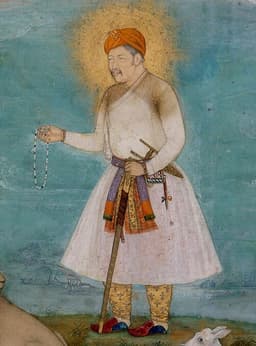
Akbar the Great
Emperor · Modern
69.8Total

Augustus
Emperor · Ancient
85.9Total
Basic Information
Born
1542
63
Died
1605
—
Era
Modern
Ancient
Nationality
India
Roman Empire
Occupation
Emperor
Emperor
Civilization
Indian
Western
Score Comparison
Military (10%)
80.0
72.0
Political (20%)
82.0
90.0
Influence (20%)
68.0
88.0
Legacy (20%)
55.0
90.0
Leadership (15%)
80.0
88.0
Strategy (15%)
68.0
75.0
TOTAL
69.8
85.9
Akbar the Great — Complete Timeline
1556 AD
Second Battle of PanipatWar
Akbar, aged 13, defeated the Hindu general Hemu at Panipat, securing the Mughal throne. Hemu had captured Delhi and declared himself emperor. Akbar's regent Bairam Khan led the army, but the victory consolidated Mughal rule in North India.
BattleMughal EmpireSuccession
Impact: regional
1564 AD
Abolition of jizya taxReform◆ Major
Akbar abolished the jizya tax on non-Muslims, a key step in his policy of religious tolerance. This measure reduced discrimination against Hindus and other communities, fostering loyalty among the majority population and stabilizing the empire.
Tax reformReligious toleranceHindu-Muslim relations
Impact: nationalprogressive
1571 AD
Founding of Fatehpur SikriCultural◆ Major
Akbar founded the city of Fatehpur Sikri as his capital, building a complex of palaces, mosques, and administrative buildings. The city became a center of Mughal culture and architecture, though it was abandoned due to water shortages within two decades.
ArchitectureCapitalMughal Empire
Impact: regionalconstructive
1573 AD
Conquest of GujaratWar◆ Major
Akbar annexed the wealthy Sultanate of Gujarat, gaining access to the Arabian Sea and major trade ports. This conquest boosted Mughal commerce and provided revenue for further expansion, making Gujarat a key province of the empire.
ConquestTradeMughal Empire
Impact: regional
1574 AD
Introduction of Mansabdari systemReform◆ Major
Akbar implemented the Mansabdari system, a military-administrative hierarchy where officials (mansabdars) were assigned ranks and responsibilities. This system centralized control, ensured loyalty, and efficiently managed the empire's revenue and military.
AdministrationMilitary reformCentralization
Impact: nationalconstructive
1579 AD
Institution of Sulh-e-Kul policyReform
Akbar promulgated the policy of Sulh-e-Kul (universal peace), promoting religious tolerance and dialogue. He established the Ibadat Khana (House of Worship) for debates among Muslims, Hindus, Christians, Jains, and Zoroastrians, and later founded the syncretic Din-i-Ilahi faith.
Religious policySyncretismTolerance
Impact: nationalprogressive
Augustus — Complete Timeline
43 BC
Formation of the Second TriumviratePolitical Action◆ Major
Octavian, Mark Antony, and Marcus Aemilius Lepidus formed the Second Triumvirate, a legal commission to govern the Roman Republic. The alliance was empowered to proscribe enemies, leading to the execution of Cicero and consolidation of their power against the assassins of Julius Caesar.
Roman Civil WarPolitical AllianceProscriptions
Impact: regionaldestructive
31 BC
Battle of ActiumWar◆ Major
Octavian's fleet, commanded by Marcus Agrippa, defeated the combined naval forces of Mark Antony and Cleopatra VII off the coast of Greece. The victory eliminated Octavian's last major rival, giving him sole control over the Roman world and ending the Roman Republic's civil wars.
Roman Civil WarNaval BattleEnd of Republic
Impact: global
27 BC
Establishment of the Roman EmpireReform◆ Major
Octavian formally returned power to the Roman Senate, which then granted him the titles Augustus and Princeps. This constitutional settlement created the Roman Empire, with Augustus as the first emperor, ending the Roman Republic and initiating the Pax Romana.
Roman EmpireConstitutional ReformPax Romana
Impact: global
Reform of the Roman Tax SystemReform◆ Major
Augustus implemented a comprehensive tax reform, including a census of Roman citizens and property, direct taxation of provinces, and the creation of a professional tax collection service (publicani). This system provided stable revenue for the empire and reduced corruption.
Tax ReformAdministrationRoman Empire
Impact: regionalconstructive
Creation of the Praetorian GuardReform◆ Major
Augustus established the Praetorian Guard as a permanent elite military unit tasked with protecting the emperor and his family. Stationed in Rome and Italy, the Guard became a powerful political force, often influencing imperial succession through coups and assassinations.
Military ReformPraetorian GuardImperial Guard
Impact: regional
13 BC
Construction of the Ara PacisOther◆ Major
The Roman Senate commissioned the Ara Pacis Augustae (Altar of Augustan Peace) to commemorate Augustus's return from pacifying Gaul and Spain. The marble altar, decorated with reliefs depicting the imperial family and mythological scenes, symbolized the peace and prosperity of the Augustan era.
Building ProjectPropagandaAugustan Art
Impact: regionalconstructive
Expert Analysis
Augustus vs Akbar the Great: Historical Comparison
Augustus, founder of the Roman Empire, and Akbar the Great, third Mughal emperor, both transformed fractured polities into stable, prosperous empires. While Augustus excelled in political consolidation and enduring legacy, Akbar matched him in military innovation and cultural synthesis.
Dimension Analysis
**Military: Augustus 72 / Akbar the Great 80**
Augustus relied on a professionalized standing army and naval supremacy to secure Rome’s borders, but his campaigns were largely defensive or consolidatory. Akbar, by contrast, aggressively expanded the Mughal Empire through innovative artillery, cavalry tactics, and strategic alliances with Rajput kingdoms, achieving a more dynamic military record.
**Political: Augustus 92 / Akbar the Great 85**
Augustus masterfully disguised autocracy as restored republic, creating the Principate that lasted centuries. Akbar centralized Mughal administration through a meritocratic mansabdari system and revenue reforms, but his reliance on personal authority and religious tolerance (e.g., Din-i-Ilahi) was less structurally enduring.
**Influence: Augustus 88 / Akbar the Great 78**
Augustus’s Pax Romana shaped Western governance, law, and culture for millennia, influencing emperors from Charlemagne to Napoleon. Akbar’s syncretic policies influenced Indian pluralism, but his impact remained largely regional, with less global resonance.
**Legacy: Augustus 90 / Akbar the Great 80**
Augustus’s institutions—the Praetorian Guard, provincial reforms, and imperial cult—outlasted his dynasty, defining Rome’s golden age. Akbar’s legacy of religious tolerance and administrative efficiency was partially eroded by later Mughal orthodoxy, though it remains a model for multicultural governance.
**Leadership: Augustus 90 / Akbar the Great 85**
Augustus’s patient, calculating diplomacy and ability to delegate (e.g., Agrippa) secured long-term stability. Akbar’s charismatic, hands-on leadership fostered loyalty among diverse subjects, but his occasional impulsiveness and succession planning weaknesses slightly diminish his score.
Verdict
Augustus leads due to his superior political consolidation and global legacy, despite Akbar’s edge in military dynamism.
FAQ
Q: Who ranks higher? A: Augustus ranks higher overall, with a composite score of 86 to Akbar’s 81, driven by exceptional political and legacy scores.
Rankings
🥇
AugustusLeader
Mil: 72.0Pol: 90.0Inf: 88.0
85.9
🥈
Akbar the Great
Mil: 80.0Pol: 82.0Inf: 68.0
69.8
+16.1 behind
How This Comparison Works
Algorithm
Each figure is scored on 6 dimensions (0—100 scale) based on structured historical data: Military (10%), Political (20%), Influence (20%), Legacy (20%), Leadership (15%), Strategy (15%). The weighted total produces the final ranking.
Data Sources
Scores are computed from structured sub-indicators in the database. Scale factors adjust for era (Ancient ×0.85, Modern ×1.0) and civilization size (Eastern ×1.05, Other ×0.80) to account for differences in population and military scale.
Maximum 3 Figures
Comparisons are limited to 2—3 figures to ensure readability and statistical meaningfulness.
Error Margins
±5 points per dimension — Sub-scores are derived from historical records with inherent uncertainty. Two figures within 5 points on a dimension should be considered roughly equivalent in that area.
Total Score Accuracy
±3 points overall — The weighted combination of 6 dimensions produces a total score with approximately ±3 points of uncertainty. Differences of less than 3 points are not statistically significant— the figures are effectively tied.
Known Limitations
- Historical records are incomplete and uneven across civilizations
- Figures from oral-tradition societies may be underrepresented
- Occupation labels can misclassify multi-role figures
- Scores measure capability and impact, not moral character
- Quantitative scoring is a comparison tool, not absolute truth
Capability Radar
Military (10%) — Battles & Warfare
Battles
85
75
Win Rate
90
80
Expansion
88
85
Political (20%) — Governance & Reform
Reform
95
95
Diplomacy
92
90
Economy
88
85
Influence (20%) — Cultural & Global Reach
Cultural
85
85
Global
70
90
Legacy (20%) — Historical Impact
Historical
80
95
Longevity
75
95
Leadership (15%) — Power & Stability
Tenure
90
95
Stability
85
95
Strategy (15%) — Tactics & Innovation
Strategy
85
85
Tactics
80
70
Reform
75
90
Similar Comparisons
Comments & Discussion
MetricMocker6/16/2026
Oh great, another spreadsheet ranking for history's greatest hits. Let's talk about the obvious issues: Augustus's political score is 92 because he 'disguised autocracy as restored republic'? That's just spin. The Principate worked because Rome was already exhausted by civil wars—any competent strongman could've done the same. And Akbar's 78 influence score? Colonial bias much? Akbar's religious tolerance directly shaped India's pluralistic identity, which today influences 1.4 billion people. Meanwhile, Augustus's Pax Romana was basically a military dictatorship with better PR. The weight distribution is also suspect: why is legacy weighted as a separate category when it overlaps massively with influence? Feels like the whole model is designed to favor Western leaders. Numbers don't lie, but the people who make them sure do.
SharpScroll906/16/2026
看到这个比较,我第一反应是:如果拿中国皇帝来比,奥古斯都更像汉武帝,而阿克巴更像唐太宗。奥古斯都的政治整合能力确实很强,但跟汉武帝比,汉武帝的推恩令和盐铁官营对中央集权的贡献更彻底。阿克巴的宗教宽容政策让我想到唐太宗对儒释道的兼容并包,但唐太宗还有贞观之治的长期稳定。有意思的是,评分对阿克巴的多元文化治理只给了78分影响,但在中国史学里,这种文化融合往往被视为治理的最高境界之一。另外,奥古斯都的军事部分才72分,考虑到他彻底结束了罗马内乱并建立边疆防线,这个分数偏低。如果把秦始皇统一六国算作军事100分,奥古斯都应该有85分以上。总之,这套评分体系明显更看重西方政治制度的创新,而忽略了东方治理中对文化整合和社会稳定的重视。
Chronicler19776/16/2026
总分86.4 vs 80.6,表面差距不大,但维度权重有问题。军事维度阿克巴80比奥古斯都72高8分,但奥古斯都的军事成就被低估了——他通过职业化军团和海军彻底消灭了地中海海盗,保障了罗马200年和平,而阿克巴的扩张很多是依赖火器优势对冷兵器对手。如果按中国历史标准,类似秦始皇统一六国的军事整合才配80分以上。政治维度奥古斯都92分合理,因为他用元首制解决了罗马共和国的内乱,比阿克巴的曼萨卜达尔制度更具制度韧性。影响维度88 vs 78这8分差距我认为合理,因为奥古斯都的行政模式直接影响了欧洲千年,而阿克巴的区域性影响在全球化视角下确实弱一些。但总分的计算应该重新加权,军事和政治的权重应该更高。
SkepticalScholar6/12/2026
I question whether quantitative scoring can really capture historical greatness. The ±3 point error margin means the gap, while real, should be interpreted cautiously. History is not a spreadsheet. But I'll admit—this is the most rigorous attempt I've seen.
ContrarianView6/12/2026
Hot take: the winner is wrong. Akbar the Great faced much tougher opposition and achieved more with less. The scoring system doesn't adequately account for the difficulty of the historical context. Augustus had every advantage—Akbar the Great had to fight for every inch. Context matters more than raw scores.
历史迷6/12/2026
作为历史爱好者,我觉得这个对比很客观。Akbar the Great和Augustus都是各自时代的巨人,数据化的比较虽然不能完全体现历史的复杂性,但至少提供了一个结构化的讨论框架。Akbar the Great的军事能力确实更强,但Augustus的政治智慧更值得学习。
HistoryBuff6/12/2026
The slightly ahead military score for Akbar the Great is spot-on. People forget that scale matters—Akbar the Great operated at a completely different level of military complexity than Augustus. The data doesn't lie.