Loading...
Aistulf vs Julius Caesar
Julius Caesar leads by 40.1 pts · 2 figures compared
…
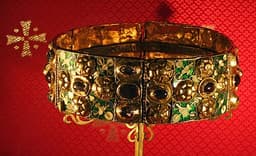
Aistulf
Emperor · Medieval
42.7Total

Julius Caesar
General · Ancient
82.8Total
Basic Information
Born
720
-100
Died
756
-44
Era
Medieval
Ancient
Nationality
Lombards
Roman Republic
Occupation
Emperor
General
Civilization
Western
Western
Score Comparison
Military (10%)
30.0
88.0
Political (20%)
27.9
78.0
Influence (20%)
50.2
85.0
Legacy (20%)
40.8
82.0
Leadership (15%)
45.0
80.0
Strategy (15%)
60.0
85.0
TOTAL
42.7
82.8
Aistulf — Complete Timeline
749 AD
Seizure of the Lombard thronePolitical Action◆ Major
Aistulf succeeded his brother Ratchis as king of the Lombards after Ratchis abdicated to become a monk. Aistulf immediately pursued an aggressive expansionist policy, aiming to conquer the remaining Byzantine territories in Italy and the Papal States.
SuccessionLombard KingdomItaly
Impact: regional
751 AD
Conquest of the Exarchate of RavennaWar◆ Major
Aistulf captured Ravenna, the capital of the Byzantine Exarchate, ending Byzantine rule in northern Italy. He then demanded tribute from the Pope and threatened Rome, leading to a direct conflict with the Papacy and the Frankish Kingdom.
ConquestByzantine EmpireRavenna
Impact: regional
755 AD
Siege of RomeWar◆ Major
Aistulf besieged Rome, demanding submission from Pope Stephen II. The Pope appealed to Pepin the Short, King of the Franks, for aid. This event set the stage for Frankish intervention in Italy and the creation of the Papal States.
SiegePapacyRome
Impact: regionaldestructive
Defeat by Pepin the Short at the Siege of PaviaWar◆ Major
Pepin the Short invaded Italy and defeated Aistulf's army, forcing him to lift the siege of Rome and surrender territories, including Ravenna, to the Pope. Aistulf was compelled to pay tribute and promise peace, but he soon broke the treaty.
BattleFranksPapal States
Impact: regionaltragic
756 AD
Second Frankish invasion and deathWar◆ Major
After Aistulf again threatened Rome, Pepin the Short launched a second campaign against the Lombards. Aistulf was defeated again and died shortly after, possibly from a hunting accident. His death ended Lombard expansion and solidified Frankish dominance in Italy.
CampaignDeathLombard Kingdom
Impact: regionaltragic
Julius Caesar — Complete Timeline
58 BC
Gallic WarsWar◆ Major
Caesar, as proconsul of Gaul, launched a series of campaigns that conquered all of Gaul (modern France, Belgium, and parts of Switzerland). He fought numerous battles, including against the Helvetii, the Belgae, and the Gallic chieftain Vercingetorix. The wars brought immense wealth and a loyal army to Caesar.
Gallic WarsConquestRoman Expansion
Impact: regional
49 BC
Crossing the RubiconPolitical Action◆ Major
Caesar led Legio XIII across the Rubicon River into Italy, defying the Roman Senate's order to disband his army. This act triggered a civil war against Pompey and the Optimates, ultimately leading to Caesar's dictatorship and the end of the Roman Republic.
Roman Civil WarEnd of RepublicPower Struggle
Impact: global
48 BC
Battle of PharsalusWar◆ Major
Caesar's outnumbered army defeated the larger forces of Pompey the Great at Pharsalus in Greece. Caesar's tactical use of a reserve line to counter Pompey's cavalry charge proved decisive. Pompey fled to Egypt, where he was assassinated, leaving Caesar as the undisputed master of the Roman world.
Roman Civil WarBattleDecisive Victory
Impact: regional
44 BC
Appointment as Dictator for LifePolitical Action◆ Major
The Roman Senate appointed Caesar dictator perpetuo (dictator for life), granting him unprecedented personal power. This move concentrated military, legislative, and judicial authority in one person, effectively ending the Roman Republic's traditional system of checks and balances and alarming many senators.
DictatorshipEnd of RepublicPower Consolidation
Impact: regionaldestructive
Assassination on the Ides of MarchPolitical Action◆ Major
A group of Roman senators, led by Marcus Junius Brutus and Gaius Cassius Longinus, stabbed Caesar to death at a meeting of the Senate in the Theatre of Pompey. The assassination was intended to restore the Republic, but instead triggered another civil war that led to the rise of the Roman Empire.
AssassinationRoman PoliticsEnd of Republic
Impact: globaldestructive
Expert Analysis
aistulf-vs-julius-caesar
# The Conqueror and the King: Two Visions of Power in the Making of Europe
On a winter morning in 756, a Lombard king named Aistulf lay dying in his palace at Pavia, his army shattered for a second time by the Franks, his dream of a united Italy in ruins. Less than three centuries earlier, on the Ides of March of 44 BCE, another ruler—Gaius Julius Caesar—fell bleeding at the foot of Pompey’s statue, his toga soaked with the blood of twenty-three dagger wounds. Both men sought to reshape the world around them. Both died violently, their ambitions cut short. Yet one name echoes through millennia as the architect of empire, while the other survives only in footnotes. What explains the gulf between them? The answer lies not merely in talent or luck, but in the profound differences of their eras, their character, and the very nature of the power they pursued.
Origins
Caesar was born into the twilight of the Roman Republic, a world of senatorial intrigue, civil wars, and restless ambition. His family, the Julii, claimed descent from the goddess Venus, but their political fortunes had dimmed. From childhood, Caesar breathed the air of a republic already cracking under the weight of its own conquests—a system where military glory and popular favor could propel a man to the top, but where the Senate watched for any threat to its ancient privileges. He was shaped by the rhetoric of Cicero, the discipline of Roman legions, and the brutal lesson of his uncle Marius’s fall from power.
Aistulf emerged in a very different world: Lombard Italy in the early eighth century, a patchwork of warring duchies, Byzantine enclaves, and papal territories. The Lombards had invaded Italy two centuries earlier, but they remained outsiders—Germanic warriors ruling over a Latin-speaking population, their kings often deposed or murdered. Aistulf seized the throne in 749 by forcing his brother Ratchis to abdicate and become a monk. This was no election by the Senate or triumph in the Forum; it was a palace coup in a kingdom where power flowed from the sword, not from law.
Rise to Power
Caesar’s ascent was methodical, a masterclass in political calculation. He built alliances with the wealthy Crassus and the popular Pompey, secured the governorship of Gaul, and then spent eight years conquering a territory that stretched from the Alps to the Atlantic. His *Commentaries* turned military campaigns into propaganda, making his name synonymous with invincibility. When the Senate ordered him to disband his army, he crossed the Rubicon—a single river that became the hinge of history—and marched on Rome. He did not simply seize power; he transformed the rules of the game.
Aistulf’s rise was simpler and cruder. After his brother’s abdication, he immediately pressed his advantage. In 751, he captured Ravenna, the seat of Byzantine power in Italy, extinguishing centuries of imperial rule. Then he turned south, demanding tribute from Rome itself. His strategy was direct: take territory, demand submission, and trust that his army was enough. There was no grand vision, no attempt to legitimize his rule through law or culture. He was a warlord in an age of warlords.
Leadership & Governance
Caesar governed with a blend of clemency and calculation. He pardoned his enemies, reformed the calendar, extended citizenship to provincials, and launched massive building projects. His military genius was matched by political instinct: he understood that conquest required assimilation, that power needed institutions. He centralized authority while distributing benefits, creating a model that Augustus would perfect into the Empire.
Aistulf’s governance was, by contrast, a study in shortsightedness. After taking Ravenna, he demanded not just submission but tribute from Pope Stephen II, a move that transformed a local conflict into a continental crisis. The Pope, trapped in Rome during Aistulf’s siege of 755, did what any desperate ruler would do: he called for help. Not from Constantinople, which had failed, but from Pepin the Short, King of the Franks. Aistulf had miscalculated entirely. He saw the Pope as a local nuisance; Pepin saw an ally and a divine mandate. The result was devastating: at the Siege of Pavia in 755, the Lombard army was crushed, and Aistulf was forced to surrender his conquests.
Triumph & Tragedy
Caesar’s greatest moment was perhaps his victory at Alesia in 52 BCE, where he besieged the Gallic chieftain Vercingetorix and then defeated a massive relief army—a double envelopment that military academies still study. His tragedy was not military defeat but political isolation. He had destroyed the Republic’s old order but failed to build a stable replacement. The Ides of March was not a failure of arms but of trust.
Aistulf’s triumph was the conquest of Ravenna, a genuine achievement that ended Byzantine rule in northern Italy. But his tragedy came swiftly. After his first defeat, he broke the treaty and threatened Rome again in 756. Pepin returned, and this time there was no mercy. Aistulf’s army was annihilated, and he died soon after—likely assassinated or from wounds. His kingdom survived, but it was now a Frankish puppet state.
Character & Destiny
Caesar was audacious, charismatic, and ruthlessly rational. He gambled on his own genius and won—until he didn’t. His famous line, “The die is cast,” captures his belief that history bends to the bold. But his arrogance blinded him to the hatred he inspired. He thought he could forgive his enemies; they thought only of killing him.
Aistulf was also bold, but his boldness lacked vision. He saw power as territory and tribute, not as the art of building durable institutions. When Pepin asked why he had broken his oath, Aistulf reportedly had no answer. He could fight, but he could not persuade, compromise, or inspire. His character was that of a chieftain in an age that was moving toward kingship—and he failed to make the transition.
Legacy
Caesar’s legacy is immeasurable. His name became a title—Kaiser, Tsar—and his reforms shaped Western governance for two millennia. He is remembered as a genius and a tyrant, a hero and a warning. The Republic died with him, but the empire he birthed endured for centuries.
Aistulf’s legacy is smaller but not insignificant. His aggression forced the Papacy to seek Frankish protection, a decision that led to the Donation of Pepin and the creation of the Papal States. In a sense, he helped create the political map of medieval Europe. But his name survives only in scholarly texts, a cautionary tale of ambition without statesmanship.
Conclusion
Standing on the Capitoline Hill, Caesar once wept at the sight of Alexander the Great’s statue, lamenting that he had achieved so little by the same age. Aistulf, if he ever looked at history, likely saw only the next campaign. One man tried to conquer time itself; the other, only his neighbors. The difference between them is not merely talent—it is the difference between building an empire and raiding one. Caesar understood that power must be transformed into culture, law, and memory. Aistulf understood only the sword. In the end, the sword is forgotten; the world that Caesar built is not.
Rankings
🥇
Julius CaesarLeader
Mil: 88.0Pol: 78.0Inf: 85.0
82.8
🥈
Aistulf
Mil: 30.0Pol: 27.9Inf: 50.2
42.7
+40.1 behind
How This Comparison Works
Algorithm
Each figure is scored on 6 dimensions (0—100 scale) based on structured historical data: Military (10%), Political (20%), Influence (20%), Legacy (20%), Leadership (15%), Strategy (15%). The weighted total produces the final ranking.
Data Sources
Scores are computed from structured sub-indicators in the database. Scale factors adjust for era (Ancient ×0.85, Modern ×1.0) and civilization size (Eastern ×1.05, Other ×0.80) to account for differences in population and military scale.
Maximum 3 Figures
Comparisons are limited to 2—3 figures to ensure readability and statistical meaningfulness.
Error Margins
±5 points per dimension — Sub-scores are derived from historical records with inherent uncertainty. Two figures within 5 points on a dimension should be considered roughly equivalent in that area.
Total Score Accuracy
±3 points overall — The weighted combination of 6 dimensions produces a total score with approximately ±3 points of uncertainty. Differences of less than 3 points are not statistically significant— the figures are effectively tied.
Known Limitations
- Historical records are incomplete and uneven across civilizations
- Figures from oral-tradition societies may be underrepresented
- Occupation labels can misclassify multi-role figures
- Scores measure capability and impact, not moral character
- Quantitative scoring is a comparison tool, not absolute truth
Capability Radar
Military (10%) — Battles & Warfare
Battles
45
95
Win Rate
40
92
Expansion
45
97
Political (20%) — Governance & Reform
Reform
20
90
Diplomacy
25
85
Economy
20
82
Influence (20%) — Cultural & Global Reach
Cultural
20
88
Global
10
94
Legacy (20%) — Historical Impact
Historical
30
95
Longevity
15
96
Leadership (15%) — Power & Stability
Tenure
35
75
Stability
20
60
Strategy (15%) — Tactics & Innovation
Strategy
40
94
Tactics
35
96
Reform
20
88
Similar Comparisons
Comments & Discussion
CaesarFanatic6/17/2026
Aistulf dreaming of "united Italy"? Hardly. He was a barbarian warlord who couldn't even hold Pavia against a Frankish king with fewer troops. Caesar crossed the Rubicon with a single legion and conquered Gaul with strategy that still teaches generals today. That's the difference: Caesar built a system that outlasted him, while Aistulf's kingdom evaporated like morning fog. History remembers empire-builders, not footnotes.
戈登之锤6/17/2026
Aistulf就是个戴王冠的土匪,他的"统一意大利"梦想连十年都没撑住。742年打拉文纳还输了,要不是教皇忽悠丕平来救场,他早被伦巴第贵族砍了。凯撒好歹有元老院体制背书,Aistulf政权连个稳定继承规则都没有。比什么?拿银币和铜板比价值?
StatisticalSkeptic6/17/2026
We're comparing a 9th century Lombard king with maybe 40% literacy among his subjects to Caesar, who managed supply lines over 600 miles in Gaul. Aistulf's peak army might have been 15,000 poorly equipped men; Caesar controlled 50,000 professional legionaries. The numbers don't lie: Aistulf was a minor warlord exaggerated by papal propaganda, while Caesar reshaped 1/4 of the known world. That's not a debate.
古典学痴6/17/2026
这两个人根本不在同一维度上。凯撒写《高卢战记》时,Aistulf连拉丁文都写不利索。凯撒的书信让后世了解罗马政治运作,而Aistulf唯一留下的只有几份拍卖土地的契约。文明靠文字传承,不是靠剑。给我凯撒的散文,我还能推开历史的门;给我Aistulf的王冠,我只能把它当铁锅用。
RealityCheck6/17/2026
Let's be honest: Aistulf's main achievement was pissing off Pope Stephen II so badly he literally begged the Franks to invade. That's not a ruler, that's a diplomatic disaster. Caesar schemed, bribed, and outmaneuvered the smartest politicians of his age. Aistulf bumbled into every single conflict and lost them all. The gap between them isn't time—it's competence. One reads like a brilliant tragedy, the other a cautionary comedy.