Loading...
Ahuitzotl vs Napoleon Bonaparte
Napoleon Bonaparte leads by 8.3 pts · 2 figures compared
…
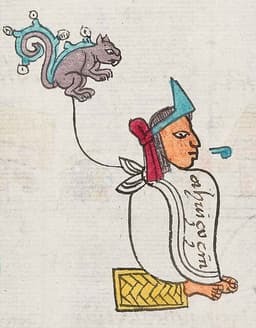
Ahuitzotl
Emperor · Medieval
62.6Total

Napoleon Bonaparte
General · Modern
70.9Total
Basic Information
Born
1440
1769
Died
1502
1821
Era
Medieval
Modern
Nationality
Aztec Empire
France
Occupation
Emperor
General
Civilization
Other
Western
Score Comparison
Military (10%)
78.5
94.0
Political (20%)
55.0
72.0
Influence (20%)
61.0
40.0
Legacy (20%)
54.0
80.0
Leadership (15%)
72.0
78.0
Strategy (15%)
70.0
90.0
TOTAL
62.6
70.9
Ahuitzotl — Complete Timeline
1486 AD
Expanded the Aztec Empire to its Greatest ExtentWar
Ahuitzotl launched extensive military campaigns that expanded the Aztec Empire to its maximum territorial extent, conquering regions from the Gulf of Mexico to the Pacific coast, including parts of modern-day Guatemala. He subjugated over 50 city-states.
Aztec ExpansionMilitary ConquestImperial Peak
Impact: regional
1487 AD
Dedicated the Great Temple of TenochtitlanCultural◆ Major
Ahuitzotl presided over the rededication of the Templo Mayor in Tenochtitlan, a massive ceremony involving the sacrifice of thousands of captives. The event reinforced Aztec religious authority and demonstrated the empire's military power.
Human SacrificeReligious CeremonyAztec Religion
Impact: regionaldestructive
1490 AD
Conquest of the Mixtec and Zapotec RegionsWar◆ Major
Ahuitzotl led campaigns into Oaxaca, conquering Mixtec and Zapotec strongholds such as Coixtlahuaca and Tehuantepec. These victories secured control over key trade routes and tribute sources, including gold and cotton.
Military CampaignOaxacaTribute
Impact: regional
Napoleon Bonaparte — Complete Timeline
1799 AD
Coup of 18 BrumaireOther◆ Major
Napoleon Bonaparte, with support from his brother Lucien and key political figures, overthrew the Directory in a bloodless coup. He established the Consulate with himself as First Consul, effectively becoming the ruler of France. This event ended the French Revolution's most unstable period.
French RevolutionCoupRise to Power
Impact: regional
1804 AD
Promulgation of the Napoleonic CodeOther◆ Major
Napoleon enacted the Civil Code of the French, known as the Napoleonic Code, a comprehensive set of laws that replaced the fragmented feudal legal systems. The code established legal equality, protected property rights, and secularized law. It became the basis for legal systems in many European and world countries.
Legal ReformNapoleonic CodeCivil Law
Impact: globalconstructive
1805 AD
Battle of AusterlitzWar◆ Major
Napoleon's Grande Arm
Napoleonic WarsBattleDecisive Victory
Impact: global
1812 AD
Invasion of RussiaWar◆ Major
Napoleon led the Grande Arm
Napoleonic WarsInvasionDisaster
Impact: globaldestructive
1815 AD
Battle of WaterlooWar◆ Major
Napoleon's French army was defeated by the combined forces of the Duke of Wellington's Anglo-Allied army and Gebhard Leberecht von Bl
Napoleonic WarsBattleFinal Defeat
Impact: globaldestructive
Expert Analysis
ahuitzotl-vs-napoleon-bonaparte
# The Eagle and the Jaguar
In the year 1502, as the Aztec emperor Ahuitzotl lay dying in his palace at Tenochtitlan, he could gaze across a lake city whose temples gleamed with fresh blood and gold, ruling an empire that stretched from the Gulf of Mexico to the Pacific. Three centuries later, in 1821, Napoleon Bonaparte drew his last breath on a remote island in the South Atlantic, a prisoner of the British, his empire reduced to memory. Both men shaped worlds—one through the flash of conquest, the other through the shadow of sacrifice. What drove these two titans to such different ends?
Origins
Napoleon was born in 1769 on the island of Corsica, a land recently annexed by France, to a minor noble family of Italian origin. His childhood was marked by resentment toward the French who had conquered his homeland, yet he would later embrace France as his destiny. Educated at military academies on the mainland, he absorbed Enlightenment ideas of merit and order, but also the raw ambition of a provincial outsider. Corsica’s rugged independence and France’s revolutionary ferment shaped a man who believed in destiny—his own.
Ahuitzotl, born around 1440, came from a very different world. The Aztec Empire, or Triple Alliance, was a theocratic warrior state centered on the sacred city of Tenochtitlan, built on an island in Lake Texcoco. He was the son of the emperor Moctezuma I, raised in a culture where warfare was ritualized, where the sun required human hearts to rise each morning. His training was not in books but in the flow of blood and the politics of tribute. While Napoleon studied artillery, Ahuitzotl learned the art of the flower war—a controlled conflict meant to capture prisoners for sacrifice.
Rise to Power
Napoleon’s ascent was meteoric, born of chaos. The French Revolution had shattered the old order, and in 1793, at age 24, he recaptured the port of Toulon from royalist rebels, earning promotion to brigadier general. By 1796, he led the Army of Italy, winning a string of stunning victories against Austria. His political genius matched his military skill: in 1799, he staged a coup, becoming First Consul, and by 1804, he crowned himself Emperor of the French. The revolution had opened doors to talent, and Napoleon kicked them down.
Ahuitzotl’s rise was more traditional, but no less bloody. He became emperor in 1486, inheriting a realm already powerful under his predecessor Tizoc. Yet Tizoc had been weak, and the Aztec nobility demanded strength. Ahuitzotl understood that legitimacy in Tenochtitlan came not from birth alone but from conquest. He immediately launched campaigns to expand the empire, not merely for land but for captives—the lifeblood of the Aztec cosmos.
Leadership & Governance
Napoleon governed with the precision of a military engineer. His Napoleonic Code, enacted in 1804, standardized French law, abolished feudal privileges, and enshrined property rights and secular authority. It spread across Europe, a lasting monument. Militarily, he was a master of speed and concentration, crushing armies at Austerlitz in 1805 and Jena in 1806. Yet his political wisdom faltered: he placed his brothers on thrones, alienated allies, and invaded Russia in 1812—a catastrophic miscalculation.
Ahuitzotl ruled through ritual and terror. He expanded the Aztec Empire to its greatest extent, conquering the Mixtec and Zapotec regions of Oaxaca in 1490, and pushing into Guatemala. But conquest was only half the task. In 1487, he dedicated the Great Temple of Tenochtitlan in a massive ceremony that, according to sources, involved the sacrifice of thousands of captives—some accounts claim 20,000 or more. This was not cruelty for its own sake; it was state theology. The sun god Huitzilopochtli required nourishment, and the emperor was his high priest. Ahuitzotl’s political acumen lay in balancing the tribute demands of conquered peoples with the religious expectations of his own.
Triumph & Tragedy
Napoleon’s greatest triumph was Austerlitz, where he destroyed a combined Russian-Austrian army in December 1805, forcing the Habsburgs to sue for peace. His tragedy was Waterloo, June 18, 1815, where he faced the Duke of Wellington and a Prussian army, and lost. Exiled to Saint Helena, he died in 1821, surrounded by a handful of loyalists, his final years consumed by bitterness and cancer.
Ahuitzotl’s greatest triumph was the sheer expansion of the Aztec world. Under him, Tenochtitlan became the dominant power in Mesoamerica, its tribute flowing with cacao, jade, and feathers. His tragedy was less personal than systemic: he built an empire that depended on perpetual conquest. When the Spanish arrived in 1519, just seventeen years after his death, the Aztec system of tribute and sacrifice had created many enemies among conquered peoples. Ahuitzotl’s success sowed the seeds of his civilization’s destruction.
Character & Destiny
Napoleon was a man of restless energy, capable of working eighteen hours a day, dictating letters to multiple secretaries simultaneously. He was charming, ruthless, and deeply insecure about his origins. “Impossible is a word to be found only in the dictionary of fools,” he once said. That hubris drove him to conquer Europe—and to lose it all.
Ahuitzotl was a different kind of leader. He was a priest-king, his identity fused with the gods. His decisions were not his alone; they were the will of the cosmos. The Aztec chronicles describe him as fierce and decisive, but also as a man who wept when his son died in battle. He was trapped in a worldview that demanded blood to sustain the world. His character was not one of personal ambition but of sacred duty.
Legacy
Napoleon’s legacy is global. The Napoleonic Code influenced legal systems from Latin America to Japan. His military campaigns are studied in war colleges. He reshaped nationalism, redrew borders, and ended the Holy Roman Empire. He is remembered as both a liberator and a tyrant, a man who spread revolutionary ideals and then crushed them under his boot.
Ahuitzotl’s legacy is more fragile. The Aztec Empire fell in 1521, its temples destroyed, its codices burned. He is remembered mainly through archaeological remains and the accounts of Spanish chroniclers. His name appears in textbooks, but he is not a household word. Yet his empire’s scale and sophistication—the aqueducts, the chinampas, the tribute system—testify to a civilization that rivaled any in Europe.
Conclusion
Napoleon and Ahuitzotl never met, but their stories speak to the same human impulse: the drive to impose order on chaos. One used law and gunpowder, the other blood and ritual. One built an empire that collapsed in a generation, the other an empire that collapsed in a decade. But both understood that power is a conversation between the ruler and the ruled, between the living and the dead. Napoleon’s ghost haunts Europe; Ahuitzotl’s haunts the ruins of Tenochtitlan. In the end, they remind us that every empire is a dream—and every dream, eventually, ends.
Rankings
🥇
Napoleon BonaparteLeader
Mil: 94.0Pol: 72.0Inf: 40.0
70.9
🥈
Ahuitzotl
Mil: 78.5Pol: 55.0Inf: 61.0
62.6
+8.3 behind
How This Comparison Works
Algorithm
Each figure is scored on 6 dimensions (0—100 scale) based on structured historical data: Military (10%), Political (20%), Influence (20%), Legacy (20%), Leadership (15%), Strategy (15%). The weighted total produces the final ranking.
Data Sources
Scores are computed from structured sub-indicators in the database. Scale factors adjust for era (Ancient ×0.85, Modern ×1.0) and civilization size (Eastern ×1.05, Other ×0.80) to account for differences in population and military scale.
Maximum 3 Figures
Comparisons are limited to 2—3 figures to ensure readability and statistical meaningfulness.
Error Margins
±5 points per dimension — Sub-scores are derived from historical records with inherent uncertainty. Two figures within 5 points on a dimension should be considered roughly equivalent in that area.
Total Score Accuracy
±3 points overall — The weighted combination of 6 dimensions produces a total score with approximately ±3 points of uncertainty. Differences of less than 3 points are not statistically significant— the figures are effectively tied.
Known Limitations
- Historical records are incomplete and uneven across civilizations
- Figures from oral-tradition societies may be underrepresented
- Occupation labels can misclassify multi-role figures
- Scores measure capability and impact, not moral character
- Quantitative scoring is a comparison tool, not absolute truth
Capability Radar
Military (10%) — Battles & Warfare
Battles
85
95
Win Rate
90
90
Expansion
90
95
Political (20%) — Governance & Reform
Reform
70
95
Diplomacy
65
80
Economy
80
85
Influence (20%) — Cultural & Global Reach
Cultural
60
85
Global
45
90
Legacy (20%) — Historical Impact
Historical
65
95
Longevity
50
90
Leadership (15%) — Power & Stability
Tenure
75
85
Stability
70
70
Strategy (15%) — Tactics & Innovation
Strategy
85
95
Tactics
80
98
Reform
70
92
Similar Comparisons
Comments & Discussion
No comments yet. Be the first to share your thoughts!