Loading...
Ahmed Shah Abdali vs Louis XV
Ahmed Shah Abdali leads by 14.0 pts · 2 figures compared
…

Ahmed Shah Abdali
Emperor · Modern
62.2Total
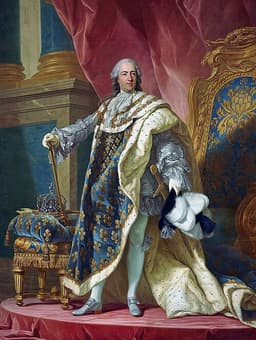
Louis XV
Emperor · Modern
48.2Total
Basic Information
Born
1722
1710
Died
1772
1774
Era
Modern
Modern
Nationality
Afghanistan
France
Occupation
Emperor
Emperor
Civilization
Middle Eastern
Western
Score Comparison
Military (10%)
82.0
55.0
Political (20%)
59.3
39.4
Influence (20%)
55.0
54.9
Legacy (20%)
55.0
42.5
Leadership (15%)
72.0
53.2
Strategy (15%)
68.1
45.0
TOTAL
62.2
48.2
Ahmed Shah Abdali — Complete Timeline
1747 AD
Founding of the Durrani EmpirePolitical Action
After the assassination of Nadir Shah, Abdali was elected as the leader of the Abdali Pashtuns at a loya jirga in Kandahar. He founded the Durrani Empire, uniting Pashtun tribes and establishing the modern state of Afghanistan.
FoundingEmpirePashtun Unity
Impact: regionalconstructive
Consolidation of Pashtun RulePolitical Action◆ Major
Abdali established the Durrani dynasty and consolidated Pashtun rule over Kandahar, Herat, and Kabul. He implemented a centralized administration and expanded the empire's borders to include parts of modern-day Pakistan, Iran, and Uzbekistan.
ConsolidationEmpire BuildingAdministration
Impact: regionalconstructive
1748 AD
Invasions of IndiaWar◆ Major
Abdali launched multiple invasions of India between 1748 and 1767, plundering Delhi, Mathura, and other cities. These campaigns brought immense wealth to the Durrani Empire but also caused widespread destruction and depopulation.
InvasionsPlunderMughal Decline
Impact: regionaldestructive
1761 AD
Battle of Panipat (1761)War◆ Major
Abdali led Afghan forces to a decisive victory over the Maratha Empire at the Third Battle of Panipat. The battle shattered Maratha power in northern India and established Afghan dominance in the region for decades.
BattleMaratha EmpireIndian Subcontinent
Impact: regional
Louis XV — Complete Timeline
1740 AD
War of the Austrian SuccessionWar◆ Major
Louis XV involved France in the War of the Austrian Succession, supporting Prussia against Austria. French forces achieved victories at Fontenoy (1745) but failed to secure lasting gains. The war drained French finances and ended with the inconclusive Treaty of Aix-la-Chapelle.
WarEuropean ConflictDynastic Struggle
Impact: global
1748 AD
Treaty of Aix-la-Chapelle (1748)Political Action◆ Major
Louis XV signed the Treaty of Aix-la-Chapelle, ending the War of the Austrian Succession. France gained little from the war despite military successes, returning conquered territories including the Austrian Netherlands. The treaty was seen as a diplomatic failure and contributed to the decline of royal prestige.
TreatyWar of the Austrian SuccessionDiplomacy
Impact: global
1756 AD
Seven Years' War (French and Indian War)War
Louis XV led France into the Seven Years' War against Great Britain and Prussia. The war resulted in France losing most of its North American colonies (New France) and its influence in India. The Treaty of Paris (1763) confirmed these losses, severely weakening French colonial power.
Colonial WarLoss of TerritorySeven Years' War
Impact: globaldestructive
1771 AD
Suppression of the ParlementsPolitical Action◆ Major
Louis XV, advised by Chancellor Maupeou, abolished the Parlements (high courts) that had opposed royal tax reforms. This authoritarian move centralized power but alienated the nobility and legal classes, creating long-term opposition to the monarchy.
Judicial ReformAbsolutismParlements
Impact: nationaldestructive
Expert Analysis
Origins
Ahmed Shah Abdali (1722–1772) was born into the Sadozai clan of the Abdali Pashtuns in Multan, present-day Pakistan. His father, Mohammad Zaman Khan, was a tribal chief. Orphaned young, Abdali was captured by Nadir Shah of Persia and rose in his service, learning military and political skills. Louis XV (1710–1774) was born at Versailles, the great-grandson of Louis XIV. His father, the Duke of Burgundy, died when he was two, and he became king at age five under the regency of Philippe d'Orléans. His education was overseen by Cardinal Fleury, who shaped his early policies.
Rise to Power
Abdali's rise began after Nadir Shah's assassination in 1747. At a loya jirga in Kandahar, the Abdali Pashtuns elected him as their leader, and he took the title Durr-i-Durran (Pearl of Pearls), founding the Durrani Empire. He quickly consolidated control over Kandahar, Herat, and Kabul, uniting Pashtun tribes. Louis XV became king in 1715, but his rule was initially managed by regents. He assumed personal rule in 1743 after Fleury's death. His reign saw a shift from absolute monarchy to a more consultative style, but he lacked the decisiveness of his predecessors.
Leadership & Governance
Abdali's leadership was military-centric. He centralized administration under a royal council and appointed governors from loyal tribes. He maintained control through a standing army and plunder from India, which funded his empire. His governance score of 59.3 reflects his ability to unite Pashtuns but failure to create lasting institutions. Louis XV's political score of 39.4 indicates weak governance. He attempted reforms, such as suppressing the Parlements in 1771 to centralize tax collection, but this provoked resistance and was reversed after his death. His indecision led to inconsistent policies and loss of royal authority.
Triumph & Tragedy
Abdali's greatest triumph was the Third Battle of Panipat (1761), where his forces, numbering around 60,000, defeated the Maratha Empire, killing over 100,000 Marathas. This shattered Maratha power in northern India and established Afghan dominance. However, his failure to consolidate gains in India meant his empire remained dependent on continuous plunder. His invasions weakened his own treasury and led to revolts in Herat and Kashmir. Louis XV's triumphs include French victories at Fontenoy (1745) during the War of the Austrian Succession, which enhanced his prestige. Yet his greatest tragedy was the Seven Years' War (1756–1763), where France lost Canada, Louisiana, and influence in India to Britain. The Treaty of Paris (1763) stripped France of its North American empire, a blow from which it never fully recovered.
Character & Destiny
Abdali was pragmatic and ruthless, skilled in tribal diplomacy and military strategy. His score of 68.1 in strategy reflects his ability to plan campaigns like Panipat. However, his lack of political vision limited his empire's longevity. Louis XV was intelligent but apathetic, preferring hunting and mistresses over governance. His score of 45.0 in strategy indicates poor decision-making in foreign affairs. The Diamond Necklace Affair, though occurring after his death, tarnished his reputation and symbolized the decadence of his court. His character contributed to the erosion of monarchical power, setting the stage for the French Revolution.
Legacy
Abdali's legacy is mixed. He founded the Durrani Empire, which lasted until the 19th century and is considered the origin of modern Afghanistan. His military score of 82.0 highlights his battlefield prowess. However, his empire fragmented after his death due to lack of institutionalization. Louis XV's legacy is largely negative in France. He is remembered as the king who lost the empire and failed to reform the state. His influence score of 54.9 reflects his role in the Enlightenment, as his reign saw the flourishing of philosophy and arts, but his political failures overshadowed this. The score gap of 14.0 points between Abdali (62.2 total) and Louis XV (48.2 total) underscores the former's greater impact in military and leadership.
Conclusion
Ahmed Shah Abdali had a greater impact than Louis XV. Despite ruling a smaller and less developed realm, Abdali's victory at Panipat reshaped Indian history and established a cohesive Afghan state. Louis XV, ruling the wealthiest kingdom in Europe, squandered its power and prestige. Abdali's military score of 82.0 and leadership of 72.0 contrast sharply with Louis XV's 55.0 and 53.2. While Abdali's empire was short-lived, his influence on Afghan identity persists. Louis XV's reign accelerated France's decline. Therefore, Abdali's impact, measured by historical outcomes and scores, surpasses that of Louis XV.
Rankings
🥇
Ahmed Shah AbdaliLeader
Mil: 82.0Pol: 59.3Inf: 55.0
62.2
🥈
Louis XV
Mil: 55.0Pol: 39.4Inf: 54.9
48.2
+14.0 behind
How This Comparison Works
Algorithm
Each figure is scored on 6 dimensions (0—100 scale) based on structured historical data: Military (10%), Political (20%), Influence (20%), Legacy (20%), Leadership (15%), Strategy (15%). The weighted total produces the final ranking.
Data Sources
Scores are computed from structured sub-indicators in the database. Scale factors adjust for era (Ancient ×0.85, Modern ×1.0) and civilization size (Eastern ×1.05, Other ×0.80) to account for differences in population and military scale.
Maximum 3 Figures
Comparisons are limited to 2—3 figures to ensure readability and statistical meaningfulness.
Error Margins
±5 points per dimension — Sub-scores are derived from historical records with inherent uncertainty. Two figures within 5 points on a dimension should be considered roughly equivalent in that area.
Total Score Accuracy
±3 points overall — The weighted combination of 6 dimensions produces a total score with approximately ±3 points of uncertainty. Differences of less than 3 points are not statistically significant— the figures are effectively tied.
Known Limitations
- Historical records are incomplete and uneven across civilizations
- Figures from oral-tradition societies may be underrepresented
- Occupation labels can misclassify multi-role figures
- Scores measure capability and impact, not moral character
- Quantitative scoring is a comparison tool, not absolute truth
Capability Radar
Military (10%) — Battles & Warfare
Battles
85
45
Win Rate
90
40
Expansion
85
20
Political (20%) — Governance & Reform
Reform
65
20
Diplomacy
70
30
Economy
60
25
Influence (20%) — Cultural & Global Reach
Cultural
70
40
Global
60
30
Legacy (20%) — Historical Impact
Historical
75
35
Longevity
65
30
Leadership (15%) — Power & Stability
Tenure
70
80
Stability
55
20
Strategy (15%) — Tactics & Innovation
Strategy
85
30
Tactics
80
35
Reform
75
25
Similar Comparisons
Comments & Discussion
No comments yet. Be the first to share your thoughts!