Loading...
This comparison has not been analyzed yet.
One-time AI generation (~1 minute). Scores and timeline are already available below.
Ahmed III vs Cheoljong of Joseon
Ahmed III leads by 8.0 pts · 2 figures compared
…
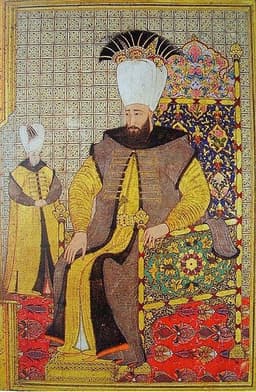
Ahmed III
Emperor · Modern
54.5Total

Cheoljong of Joseon
Emperor · Modern
46.5Total
Basic Information
Born
1673
1831
Died
1736
1863
Era
Modern
Modern
Nationality
Ottoman Empire
Korea
Occupation
Emperor
Emperor
Civilization
Middle Eastern
Eastern
Score Comparison
Military (10%)
50.0
52.0
Political (20%)
68.0
30.8
Influence (20%)
59.0
46.3
Legacy (20%)
44.2
35.8
Leadership (15%)
65.7
62.2
Strategy (15%)
36.8
68.1
TOTAL
54.5
46.5
Ahmed III — Complete Timeline
1718 AD
Tulip Era Cultural FlourishingCultural◆ Major
Ahmed III's reign saw the Tulip Era, a period of cultural and artistic revival. The court sponsored poetry, painting, and architecture, and introduced the tulip as a symbol. The era was marked by lavish gardens and festivals, but also by high taxes.
Tulip EraCultureArt
Impact: nationalconstructive
Treaty of PassarowitzPolitical Action◆ Major
Ahmed III signed the Treaty of Passarowitz with the Habsburgs and Venice, ending the Austro-Turkish War (1716-1718). The treaty ceded the Banat and Belgrade to the Habsburgs, but allowed the Ottomans to retain the Morea from Venice.
Peace TreatyHabsburgsTerritorial Loss
Impact: regional
1724 AD
War with Safavids and Capture of TabrizWar
Ahmed III's empire went to war with the Safavid Empire, taking advantage of its decline. Ottoman forces captured Tabriz and other territories in the Caucasus. The war ended with the Treaty of Hamedan in 1727, confirming Ottoman gains.
Ottoman-Safavid WarTabrizCaucasus
Impact: regional
1727 AD
Introduction of the Printing PressInvention◆ Major
Ahmed III granted permission to Ibrahim Muteferrika to establish the first Ottoman printing press. The press published books in Turkish and Arabic, spreading knowledge and modernizing education. This was a key reform of the Tulip Era.
Printing PressIbrahim MuteferrikaEducation
Impact: nationalprogressive
1730 AD
Patrona Halil RevoltPolitical Action◆ Major
Ahmed III was overthrown by a revolt led by Patrona Halil, a Janissary and former sailor. The rebels, angry over the Tulip Era's extravagance and the war with Persia, forced Ahmed to abdicate. He was replaced by his nephew Mahmud I.
RevoltPatrona HalilTulip Era
Impact: nationaltragic
Cheoljong of Joseon — Complete Timeline
1849 AD
Ascension from PovertyPolitical Action◆ Major
Cheoljong, a distant royal relative living in poverty on Ganghwa Island, was chosen as king by the Andong Kim clan. He was ill-prepared for rule and remained a figurehead, with the clan controlling all state affairs.
SuccessionSedo PoliticsFigurehead
Impact: national
1850 AD
Andong Kim Clan's Absolute ControlPolitical Action◆ Major
Under Cheoljong, the Andong Kim clan monopolized power, filling key positions with their members. Corruption and factionalism intensified, leading to administrative paralysis. The king had no real authority and was largely ignored.
Sedo PoliticsCorruptionPower Monopoly
Impact: nationaldestructive
1860 AD
Rise of the Pungyang Jo ClanPolitical Action
The Pungyang Jo clan, led by Queen Sinjeong, began to challenge the Andong Kim clan's dominance. This factional struggle further destabilized the court. Cheoljong remained a passive observer as the two clans vied for control.
Factional StrifePower StruggleSedo Politics
Impact: nationaldestructive
1863 AD
Death of CheoljongOther◆ Major
King Cheoljong died at age 32, likely from illness. He left no heir, ending the line of King Yeongjo. His death led to the selection of Gojong as the next king, with the Pungyang Jo clan gaining power and eventually leading to the regency of Heungseon Daewongun.
DeathSuccessionEnd of Era
Impact: nationaltragic
This comparison has not been analyzed yet.
One-time AI generation (~1 minute). Scores and timeline are already available below.
Rankings
🥇
Ahmed IIILeader
Mil: 50.0Pol: 68.0Inf: 59.0
54.5
🥈
Cheoljong of Joseon
Mil: 52.0Pol: 30.8Inf: 46.3
46.5
+8.0 behind
How This Comparison Works
Algorithm
Each figure is scored on 6 dimensions (0—100 scale) based on structured historical data: Military (10%), Political (20%), Influence (20%), Legacy (20%), Leadership (15%), Strategy (15%). The weighted total produces the final ranking.
Data Sources
Scores are computed from structured sub-indicators in the database. Scale factors adjust for era (Ancient ×0.85, Modern ×1.0) and civilization size (Eastern ×1.05, Other ×0.80) to account for differences in population and military scale.
Maximum 3 Figures
Comparisons are limited to 2—3 figures to ensure readability and statistical meaningfulness.
Error Margins
±5 points per dimension — Sub-scores are derived from historical records with inherent uncertainty. Two figures within 5 points on a dimension should be considered roughly equivalent in that area.
Total Score Accuracy
±3 points overall — The weighted combination of 6 dimensions produces a total score with approximately ±3 points of uncertainty. Differences of less than 3 points are not statistically significant— the figures are effectively tied.
Known Limitations
- Historical records are incomplete and uneven across civilizations
- Figures from oral-tradition societies may be underrepresented
- Occupation labels can misclassify multi-role figures
- Scores measure capability and impact, not moral character
- Quantitative scoring is a comparison tool, not absolute truth
Capability Radar
Military (10%) — Battles & Warfare
Battles
25
52
Win Rate
20
54
Expansion
10
58
Political (20%) — Governance & Reform
Reform
55
15
Diplomacy
50
20
Economy
40
10
Influence (20%) — Cultural & Global Reach
Cultural
60
10
Global
35
5
Legacy (20%) — Historical Impact
Historical
45
15
Longevity
30
10
Leadership (15%) — Power & Stability
Tenure
45
40
Stability
20
20
Strategy (15%) — Tactics & Innovation
Strategy
20
59
Tactics
15
63
Reform
10
66
Similar Comparisons
Comments & Discussion
No comments yet. Be the first to share your thoughts!