Loading...
This comparison has not been analyzed yet.
One-time AI generation (~1 minute). Scores and timeline are already available below.
Ahmad Shah Durrani vs Ernst Johann von Biron
Ahmad Shah Durrani leads by 29.4 pts · 2 figures compared
…
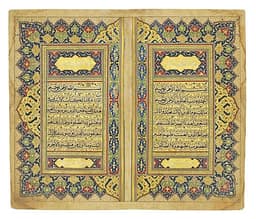
Ahmad Shah Durrani
Emperor · Modern
66.1Total

Ernst Johann von Biron
Emperor · Modern
36.7Total
Basic Information
Born
1722
1690
Died
1772
1772
Era
Modern
Modern
Nationality
Afghanistan
Courland
Occupation
Emperor
Emperor
Civilization
Middle Eastern
Western
Score Comparison
Military (10%)
82.0
13.4
Political (20%)
45.0
26.4
Influence (20%)
82.0
47.1
Legacy (20%)
55.0
35.8
Leadership (15%)
72.0
31.2
Strategy (15%)
60.7
60.0
TOTAL
66.1
36.7
Ahmad Shah Durrani — Complete Timeline
1747 AD
Coronation as King of AfghanistanPolitical Action
Ahmad Shah Durrani was elected as the leader of the Pashtun tribes at a loya jirga in Kandahar, following the assassination of Nadir Shah of Persia. He was crowned as the first King of Afghanistan, founding the Durrani Empire and the modern Afghan state.
AfghanistanFoundingEmpire
Impact: regionalconstructive
Establishment of Kandahar as capitalPolitical Action
Ahmad Shah Durrani made Kandahar the capital of his new empire. He built a new city, including the famous mausoleum of the Prophet Muhammad's cloak, and established it as the political and cultural center of the Durrani Empire.
AfghanistanCapitalUrban Development
Impact: nationalconstructive
1750 AD
Conquest of Herat and MashhadWar
Ahmad Shah Durrani captured the cities of Herat and Mashhad from the declining Persian Empire. These conquests expanded the Durrani Empire's territory into modern-day Iran and secured control over key trade routes and religious centers.
AfghanistanPersiaExpansion
Impact: regional
1761 AD
Battle of PanipatWar◆ Major
Ahmad Shah Durrani led Afghan forces to a decisive victory against the Maratha Empire at the Third Battle of Panipat in India. The battle halted Maratha expansion in northern India and established Afghan influence in the region, but also weakened both empires.
IndiaAfghanistanBattle
Impact: regional
Ernst Johann von Biron — Complete Timeline
1737 AD
Became Duke of CourlandPolitical Action◆ Major
With the support of Empress Anna of Russia, Ernst Johann von Biron was elected Duke of Courland. He ruled the duchy as a Russian client, implementing policies favorable to St. Petersburg.
DuchyRussian Influence
Impact: regional
1740 AD
Exiled to Siberia after Anna's deathPolitical Action◆ Major
Following the death of Empress Anna, Biron was arrested by Field Marshal Burkhard Christoph von M
ExileFall from Power
Impact: nationaltragic
1763 AD
Restored as Duke of Courland by Catherine the GreatPolitical Action◆ Major
Catherine the Great restored Biron to the Duchy of Courland. He returned from exile and ruled again until 1769, when he abdicated in favor of his son Peter von Biron.
RestorationCatherine the Great
Impact: regionalconstructive
This comparison has not been analyzed yet.
One-time AI generation (~1 minute). Scores and timeline are already available below.
Rankings
🥇
Ahmad Shah DurraniLeader
Mil: 82.0Pol: 45.0Inf: 82.0
66.1
🥈
Ernst Johann von Biron
Mil: 13.4Pol: 26.4Inf: 47.1
36.7
+29.4 behind
How This Comparison Works
Algorithm
Each figure is scored on 6 dimensions (0—100 scale) based on structured historical data: Military (10%), Political (20%), Influence (20%), Legacy (20%), Leadership (15%), Strategy (15%). The weighted total produces the final ranking.
Data Sources
Scores are computed from structured sub-indicators in the database. Scale factors adjust for era (Ancient ×0.85, Modern ×1.0) and civilization size (Eastern ×1.05, Other ×0.80) to account for differences in population and military scale.
Maximum 3 Figures
Comparisons are limited to 2—3 figures to ensure readability and statistical meaningfulness.
Error Margins
±5 points per dimension — Sub-scores are derived from historical records with inherent uncertainty. Two figures within 5 points on a dimension should be considered roughly equivalent in that area.
Total Score Accuracy
±3 points overall — The weighted combination of 6 dimensions produces a total score with approximately ±3 points of uncertainty. Differences of less than 3 points are not statistically significant— the figures are effectively tied.
Known Limitations
- Historical records are incomplete and uneven across civilizations
- Figures from oral-tradition societies may be underrepresented
- Occupation labels can misclassify multi-role figures
- Scores measure capability and impact, not moral character
- Quantitative scoring is a comparison tool, not absolute truth
Capability Radar
Military (10%) — Battles & Warfare
Battles
75
39
Win Rate
70
41
Expansion
80
42
Political (20%) — Governance & Reform
Reform
55
5
Diplomacy
60
15
Economy
50
10
Influence (20%) — Cultural & Global Reach
Cultural
70
5
Global
60
5
Legacy (20%) — Historical Impact
Historical
75
10
Longevity
70
5
Leadership (15%) — Power & Stability
Tenure
65
10
Stability
45
5
Strategy (15%) — Tactics & Innovation
Strategy
70
44
Tactics
65
46
Reform
60
51
Similar Comparisons
Comments & Discussion
No comments yet. Be the first to share your thoughts!