Loading...
Analysis will be generated on first visit.
Scores and timeline are available below. The page will refresh automatically when ready.
Ahmad Sanjar vs Julius Caesar
Julius Caesar leads by 10.0 pts · 2 figures compared
…
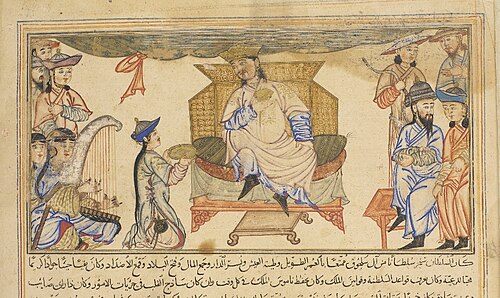
Ahmad Sanjar
Emperor · Medieval
73.3Total
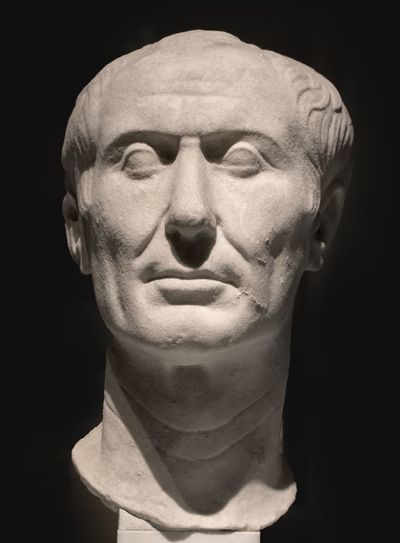
Julius Caesar
General · Ancient
83.3Total
Basic Information
Born
1085
-100
Died
1157
-44
Era
Medieval
Ancient
Nationality
Seljuk Empire
Roman Republic
Occupation
Emperor
General
Civilization
Middle Eastern
Western
Score Comparison
Military (10%)
67.7
88.0
Political (20%)
85.7
78.0
Influence (20%)
73.9
85.0
Legacy (20%)
67.4
82.0
Leadership (15%)
83.1
82.0
Strategy (15%)
57.9
88.0
TOTAL
73.3
83.3
Rankings
🥇
Julius CaesarLeader
Mil: 88.0Pol: 78.0Inf: 85.0
83.3
🥈
Ahmad Sanjar
Mil: 67.7Pol: 85.7Inf: 73.9
73.3
+10.0 behind
How This Comparison Works
Algorithm
Each figure is scored on 6 dimensions (0—100 scale) based on structured historical data: Military (10%), Political (20%), Influence (20%), Legacy (20%), Leadership (15%), Strategy (15%). The weighted total produces the final ranking.
Data Sources
Scores are computed from structured sub-indicators in the database. Scale factors adjust for era (Ancient ×0.85, Modern ×1.0) and civilization size (Eastern ×1.05, Other ×0.80) to account for differences in population and military scale.
Maximum 3 Figures
Comparisons are limited to 2—3 figures to ensure readability and statistical meaningfulness.
Error Margins
±5 points per dimension — Sub-scores are derived from historical records with inherent uncertainty. Two figures within 5 points on a dimension should be considered roughly equivalent in that area.
Total Score Accuracy
±3 points overall — The weighted combination of 6 dimensions produces a total score with approximately ±3 points of uncertainty. Differences of less than 3 points are not statistically significant— the figures are effectively tied.
Known Limitations
- Historical records are incomplete and uneven across civilizations
- Figures from oral-tradition societies may be underrepresented
- Occupation labels can misclassify multi-role figures
- Scores measure capability and impact, not moral character
- Quantitative scoring is a comparison tool, not absolute truth
Capability Radar
Military (10%) — Battles & Warfare
Battles
75
95
Win Rate
70
92
Expansion
68
97
Political (20%) — Governance & Reform
Reform
65
90
Diplomacy
70
85
Economy
60
82
Influence (20%) — Cultural & Global Reach
Cultural
60
88
Global
50
94
Legacy (20%) — Historical Impact
Historical
65
95
Longevity
55
96
Leadership (15%) — Power & Stability
Tenure
85
75
Stability
55
60
Strategy (15%) — Tactics & Innovation
Strategy
72
94
Tactics
65
96
Reform
60
88
Analysis will be generated on first visit.
Scores and timeline are available below. The page will refresh automatically when ready.
Ahmad Sanjar — Complete Timeline
1097 AD
Appointment as Governor of KhorasanPolitical Action◆ Major
Ahmad Sanjar was appointed governor of Khorasan by his half-brother Barkiyaruq at age 12. This position gave him control over the eastern Seljuk territories and allowed him to build a power base independent of the central sultanate.
KhorasanGovernorBarkiyaruq
Impact: regionalconstructive
1141 AD
Battle of QatwanWar
Ahmad Sanjar's Seljuk army was decisively defeated by the Qara Khitai (Western Liao) at the Battle of Qatwan near Samarkand. This defeat ended Seljuk dominance in Transoxiana and forced Sanjar to pay tribute to the Qara Khitai.
Qara KhitaiTransoxianaDefeat
Impact: regionaldestructive
1153 AD
Revolt of the Oghuz TurksWar
Oghuz Turkic tribes in Khorasan rebelled against Ahmad Sanjar's rule, capturing him in battle near Merv. Sanjar was held captive for three years, during which the Oghuz plundered Khorasan, severely weakening Seljuk authority in the east.
Oghuz RevoltCaptivityKhorasan
Impact: regionaldestructive
1156 AD
Escape from Oghuz CaptivityPolitical Action◆ Major
Ahmad Sanjar escaped from Oghuz captivity with the help of loyalists. He returned to Merv but found his authority greatly diminished. The empire had fragmented, and he was unable to restore his former power.
EscapeOghuzDecline
Impact: regional
1157 AD
Death of Ahmad SanjarPolitical Action
Ahmad Sanjar died in Merv at age 72, ending his 60-year reign. His death marked the effective end of the Great Seljuk Empire, as his successors could not reunify the realm, leading to the rise of regional dynasties like the Khwarazmians.
DeathEnd of EmpireMerv
Impact: regionaltragic
Similar Comparisons
Comments & Discussion
No comments yet. Be the first to share your thoughts!