Loading...
Aditya I vs Julius Caesar
Julius Caesar leads by 34.1 pts · 2 figures compared
…
Aditya I
Emperor · Medieval
48.7Total

Julius Caesar
General · Ancient
82.8Total
Basic Information
Born
871
-100
Died
907
-44
Era
Medieval
Ancient
Nationality
India
Roman Republic
Occupation
Emperor
General
Civilization
Indian
Western
Score Comparison
Military (10%)
30.0
88.0
Political (20%)
40.8
78.0
Influence (20%)
51.0
85.0
Legacy (20%)
43.3
82.0
Leadership (15%)
67.0
80.0
Strategy (15%)
60.0
85.0
TOTAL
48.7
82.8
Aditya I — Complete Timeline
880 AD
Conquest of Kongu NaduWar
Aditya I conquered the Kongu region (western Tamil Nadu) from the Pandya and Pallava control. This expansion gave the Cholas control over important trade routes and fertile lands, boosting the kingdom's economic base.
Territorial ExpansionKongu NaduChola Conquest
Impact: regionalconstructive
890 AD
Alliance with the Chera KingdomPolitical Action◆ Major
Aditya I formed a marital and military alliance with the Chera kingdom of Kerala, strengthening the Chola position against the Pandya and Rashtrakuta kingdoms. This alliance helped secure the western frontier and facilitated trade.
AllianceChera KingdomDiplomacy
Impact: regionalconstructive
897 AD
Defeat of Aparajita Varman and End of Pallava RuleWar◆ Major
Aditya I defeated and killed the Pallava king Aparajita Varman at the Battle of Tirupati, ending the Pallava dynasty. He annexed the entire Pallava kingdom into the Chola domain, making the Cholas the dominant power in Tamil Nadu.
Pallava ConquestChola ExpansionDynastic Change
Impact: regionaldestructive
Julius Caesar — Complete Timeline
58 BC
Gallic WarsWar◆ Major
Caesar, as proconsul of Gaul, launched a series of campaigns that conquered all of Gaul (modern France, Belgium, and parts of Switzerland). He fought numerous battles, including against the Helvetii, the Belgae, and the Gallic chieftain Vercingetorix. The wars brought immense wealth and a loyal army to Caesar.
Gallic WarsConquestRoman Expansion
Impact: regional
49 BC
Crossing the RubiconPolitical Action◆ Major
Caesar led Legio XIII across the Rubicon River into Italy, defying the Roman Senate's order to disband his army. This act triggered a civil war against Pompey and the Optimates, ultimately leading to Caesar's dictatorship and the end of the Roman Republic.
Roman Civil WarEnd of RepublicPower Struggle
Impact: global
48 BC
Battle of PharsalusWar◆ Major
Caesar's outnumbered army defeated the larger forces of Pompey the Great at Pharsalus in Greece. Caesar's tactical use of a reserve line to counter Pompey's cavalry charge proved decisive. Pompey fled to Egypt, where he was assassinated, leaving Caesar as the undisputed master of the Roman world.
Roman Civil WarBattleDecisive Victory
Impact: regional
44 BC
Appointment as Dictator for LifePolitical Action◆ Major
The Roman Senate appointed Caesar dictator perpetuo (dictator for life), granting him unprecedented personal power. This move concentrated military, legislative, and judicial authority in one person, effectively ending the Roman Republic's traditional system of checks and balances and alarming many senators.
DictatorshipEnd of RepublicPower Consolidation
Impact: regionaldestructive
Assassination on the Ides of MarchPolitical Action◆ Major
A group of Roman senators, led by Marcus Junius Brutus and Gaius Cassius Longinus, stabbed Caesar to death at a meeting of the Senate in the Theatre of Pompey. The assassination was intended to restore the Republic, but instead triggered another civil war that led to the rise of the Roman Empire.
AssassinationRoman PoliticsEnd of Republic
Impact: globaldestructive
Expert Analysis
aditya-i-vs-julius-caesar
# The Crossing of Two Worlds
On a winter morning in 44 BCE, a man in a purple toga walked through the streets of Rome, surrounded by senators who smiled and whispered. Within hours, twenty-three dagger wounds would end the life of Gaius Julius Caesar, and with it, the Roman Republic. Half a world away and nearly a millennium later, another ruler—Aditya I of the Chola dynasty—faced his own moment of truth on a battlefield near Tirupati. One man died at the height of his power; the other died in his bed, having founded a dynasty that would rule for centuries. What separates a titan from a builder? The answer lies not in their bloodlines, but in the worlds they inherited and the choices they made.
Origins
Julius Caesar was born into the patrician class of Rome, but his family had fallen from political prominence. His aunt married Gaius Marius, the populist general who had reformed the Roman army, and his father died when Caesar was only sixteen. The young Roman grew up in a city torn between the optimates—the aristocratic conservatives—and the populares, reformers who championed the common people. Caesar’s childhood was shaped by civil war, proscriptions, and the constant threat of assassination. He learned early that survival required cunning, ambition, and a willingness to break the rules.
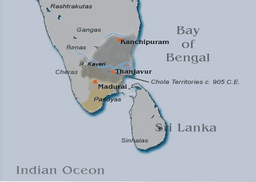
Aditya I emerged from a very different world. The Chola kingdom in the ninth century was a small principality in the Kaveri River delta, overshadowed by the mighty Pallava empire to the north and the Pandya kingdom to the south. Aditya was the son of Vijayalaya Chola, a chieftain who had captured the city of Thanjavur from the Muttaraiyar chieftains. The Cholas were rising, but they were still regional players in a chessboard of Tamil kingdoms. Aditya’s world was one of ritual, temple construction, and careful diplomacy—not the naked ambition of Rome’s Forum.
Rise to Power
Caesar’s path to power was a masterclass in political audacity. He served as a military tribune, then quaestor in Spain, and famously wept before a statue of Alexander the Great, lamenting that he had achieved nothing at an age when the Macedonian had already conquered the world. His capture by pirates—whom he later crucified—became legend. But his true ascent began when he formed the First Triumvirate with Pompey and Crassus in 60 BCE, an illegal alliance that gave him command of Gaul. In eight years, Caesar conquered a territory larger than Italy itself, wrote his own propaganda in elegant Latin, and built an army that loved him more than Rome.
Aditya I rose more quietly. He inherited the Chola throne around 871 CE, and his early reign was spent consolidating power in the Kaveri delta. Unlike Caesar, who tore down the old order, Aditya worked within it. He formed a marital and military alliance with the Chera kingdom of Kerala in 890 CE, a strategic move that secured his western flank. This was not a dramatic crossing of a river, but a careful weaving of dynastic threads. Aditya’s genius was patience—he waited for the Pallava empire to weaken, then struck.
Leadership & Governance
Caesar governed through sheer force of personality. He reformed the calendar, granted citizenship to Gauls, and initiated public works that employed the Roman poor. His Commentarii de Bello Gallico were not just military memoirs but political propaganda, crafted to make him seem invincible. As a general, he was revolutionary: he understood logistics, used engineering to overcome obstacles, and inspired loyalty that bordered on worship. But his political wisdom was flawed. He pardoned his enemies, only to be killed by them. He centralized power, but failed to build institutions that could survive him.
Aditya I ruled differently. He did not write memoirs or cross rivers. Instead, he conquered the Kongu region of western Tamil Nadu from the Pandya and Pallava control in 880 CE, expanding Chola territory through steady, methodical warfare. His greatest moment came in 897 CE at the Battle of Tirupati, where he defeated and killed the Pallava king Aparajita Varman, ending the Pallava dynasty that had ruled for centuries. But unlike Caesar, Aditya did not proclaim himself emperor. He married his son to a Pallava princess, absorbing rather than destroying. He built temples, not triumphal arches.
Triumph & Tragedy
Caesar’s triumph was the conquest of Gaul and his victory in the civil war that made him dictator for life. His tragedy was that he could not stop. He refused the crown three times, but accepted absolute power. His assassination on the Ides of March—March 15, 44 BCE—was the result of his own arrogance. He dismissed warnings, walked unarmed into the Senate, and died beneath the statue of his enemy Pompey. His last words, according to tradition, were “Et tu, Brute?”—a recognition that even his friends had turned against him.
Aditya I’s triumph was the destruction of the Pallava empire and the foundation of Chola supremacy in South India. His tragedy was that he did not live to see it flower. He died in 907 CE, probably of natural causes, leaving his son Parantaka I to expand the kingdom further. There was no dramatic assassination, no betrayal by friends—just the quiet end of a builder’s life. His greatest failure was perhaps that he did not centralize power enough; the Chola empire would face rebellions in the following decades.
Character & Destiny
Caesar was a man of impossible contradictions. He was generous to a fault, yet ruthlessly ambitious. He pardoned enemies, yet destroyed the Republic. He wrote elegant Latin, yet slept with his allies’ wives. His character was driven by a need for glory that bordered on madness. “I came, I saw, I conquered,” he wrote of a minor victory in Asia Minor—a phrase that captures his entire worldview. He believed that destiny was something to be seized, not waited for.
Aditya I was a different creature entirely. He was a consolidator, not a revolutionary. His actions suggest a man who understood that power is built on alliances, not just victories. He married, allied, and absorbed rather than destroyed. His strategy score of 35.3—much lower than Caesar’s 88.0—reflects not incompetence but a different approach to war. Aditya fought to achieve limited goals, not to conquer the world. His destiny was to lay foundations, not to build monuments to himself.
Legacy
Caesar’s legacy is the Roman Empire itself. His name became a title—Kaiser, Tsar—that rulers would use for two millennia. His writings are still read, his military tactics still studied. But his legacy is also a warning: absolute power corrupts, and even the greatest men can be brought down by their own hubris. He is remembered as a genius, a tyrant, and a martyr.
Aditya I is remembered as the king who ended Pallava rule and began the Chola golden age. His legacy is the Chola Empire, which under his successors would conquer Sri Lanka, the Maldives, and parts of Southeast Asia. But his name is not a household word. He is a footnote in history books, a bridge between eras. His total score of 51.4 compared to Caesar’s 83.3 reflects this difference in scale and impact.
Conclusion
Standing on the banks of the Rubicon, Caesar made a choice that changed the world. Standing on the plains of Tirupati, Aditya I made a choice that changed his world. Both men were ambitious, both were skilled, both left lasting legacies. But Caesar’s ambition was boundless, while Aditya’s was measured. One sought to conquer the world; the other sought to build a dynasty. One died in a betrayal of friends; the other died in peace. The difference between them is not just time and place—it is the difference between a man who wanted to be remembered forever, and a man who wanted his kingdom to last. In the end, both got what they wanted, but only one of them lived to enjoy it.
Rankings
🥇
Julius CaesarLeader
Mil: 88.0Pol: 78.0Inf: 85.0
82.8
🥈
Aditya I
Mil: 30.0Pol: 40.8Inf: 51.0
48.7
+34.1 behind
How This Comparison Works
Algorithm
Each figure is scored on 6 dimensions (0—100 scale) based on structured historical data: Military (10%), Political (20%), Influence (20%), Legacy (20%), Leadership (15%), Strategy (15%). The weighted total produces the final ranking.
Data Sources
Scores are computed from structured sub-indicators in the database. Scale factors adjust for era (Ancient ×0.85, Modern ×1.0) and civilization size (Eastern ×1.05, Other ×0.80) to account for differences in population and military scale.
Maximum 3 Figures
Comparisons are limited to 2—3 figures to ensure readability and statistical meaningfulness.
Error Margins
±5 points per dimension — Sub-scores are derived from historical records with inherent uncertainty. Two figures within 5 points on a dimension should be considered roughly equivalent in that area.
Total Score Accuracy
±3 points overall — The weighted combination of 6 dimensions produces a total score with approximately ±3 points of uncertainty. Differences of less than 3 points are not statistically significant— the figures are effectively tied.
Known Limitations
- Historical records are incomplete and uneven across civilizations
- Figures from oral-tradition societies may be underrepresented
- Occupation labels can misclassify multi-role figures
- Scores measure capability and impact, not moral character
- Quantitative scoring is a comparison tool, not absolute truth
Capability Radar
Military (10%) — Battles & Warfare
Battles
40
95
Win Rate
45
92
Expansion
45
97
Political (20%) — Governance & Reform
Reform
30
90
Diplomacy
45
85
Economy
35
82
Influence (20%) — Cultural & Global Reach
Cultural
30
88
Global
15
94
Legacy (20%) — Historical Impact
Historical
35
95
Longevity
25
96
Leadership (15%) — Power & Stability
Tenure
50
75
Stability
40
60
Strategy (15%) — Tactics & Innovation
Strategy
40
94
Tactics
35
96
Reform
20
88
Similar Comparisons
Comments & Discussion
No comments yet. Be the first to share your thoughts!