Loading...
Abu Jafar al-Mansur vs Qin Shi Huang
Qin Shi Huang leads by 19.7 pts · 2 figures compared
…
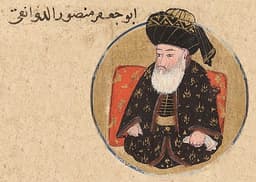
Abu Jafar al-Mansur
Emperor · Medieval
65.5Total
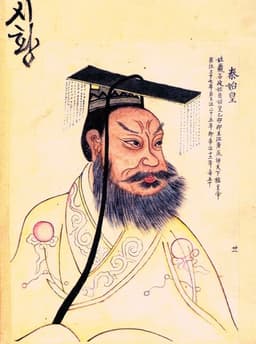
Qin Shi Huang
Emperor · Ancient
85.2Total
Basic Information
Born
714
-259
Died
775
-210
Era
Medieval
Ancient
Nationality
Abbasid Caliphate
China
Occupation
Emperor
Emperor
Civilization
Middle Eastern
Eastern
Score Comparison
Military (10%)
65.0
80.0
Political (20%)
75.0
90.0
Influence (20%)
40.0
85.0
Legacy (20%)
80.0
90.0
Leadership (15%)
82.0
78.0
Strategy (15%)
55.0
82.0
TOTAL
65.5
85.2
Abu Jafar al-Mansur — Complete Timeline
754 AD
Consolidated Abbasid Power After the RevolutionPolitical Action◆ Major
Al-Mansur eliminated rivals including his uncle Abd Allah ibn Ali and the Barmakids, securing Abbasid control. He established a centralized bureaucracy and suppressed rebellions, including the Rawandiyya uprising.
Impact: global
762 AD
Founded the City of BaghdadPolitical Action
Abu Jafar al-Mansur founded the city of Baghdad as the new capital of the Abbasid Caliphate. The Round City was designed as a center of administration and culture, becoming one of the largest cities in the world.
Impact: globalconstructive
770 AD
Patronized Translation of Greek WorksCultural◆ Major
Al-Mansur supported the translation of Greek philosophical and scientific texts into Arabic. This initiative laid the foundation for the Abbasid translation movement, which preserved and expanded classical knowledge.
Impact: globalconstructive
Qin Shi Huang — Complete Timeline
246 BC
Construction of the Mausoleum and Terracotta ArmyOther◆ Major
Qin Shi Huang commissioned a vast mausoleum complex near Xi'an, guarded by thousands of life-sized terracotta soldiers, horses, and chariots. The project employed hundreds of thousands of workers and reflected his obsession with immortality and imperial power.
Impact: global
230 BC
Conquest of the Six Warring StatesWar
From 230 to 221 BCE, Ying Zheng led the Qin state in a series of campaigns that conquered the Han, Zhao, Wei, Chu, Yan, and Qi states. This unified China under a single ruler for the first time, ending the Warring States period.
Impact: global
221 BC
Standardization of Writing, Currency, and MeasurementsReform◆ Major
Qin Shi Huang ordered the standardization of Chinese script, currency, and weights and measures across the unified empire. This facilitated administration, trade, and cultural integration, laying a foundation for future dynasties.
Impact: globalconstructive
Proclamation of the Qin DynastyPolitical Action
After conquering the last independent state, Ying Zheng declared himself Shi Huangdi (First Emperor), founding the Qin Dynasty. He adopted a new title to signify his supreme authority and initiated centralized imperial rule.
Impact: global
214 BC
Initiation of the Great Wall ConstructionOther◆ Major
Qin Shi Huang ordered the connection and extension of existing northern fortifications to create a unified defensive wall against nomadic Xiongnu raids. This project involved massive conscripted labor and became the precursor to the later Great Wall.
Impact: regional
213 BC
Burning of Books and Burying of ScholarsPolitical Action◆ Major
On the advice of Li Si, Qin Shi Huang ordered the burning of historical records and philosophical texts not aligned with Legalist doctrine. He also had 460 Confucian scholars buried alive to suppress dissent and consolidate ideological control.
Impact: nationaldestructive
Expert Analysis
abu-jafar-al-mansur-vs-qin-shi-huang
# The Emperor and the Caliph: Two Founders of Empire
On a bitter winter morning in 210 BC, deep within a mountain of rammed earth near the Wei River, an army of eight thousand terracotta soldiers stood silent guard over a tomb that would remain undiscovered for two millennia. More than nine hundred years later and four thousand miles to the west, a different kind of foundation was being laid: the circular walls of a new city rising on the banks of the Tigris, designed not for a dead emperor’s afterlife but for a living empire’s golden age. Qin Shi Huang and Abu Jafar al-Mansur never knew of each other’s existence, yet both men faced the same elemental challenge: how to forge unity from chaos. One built with fire and iron; the other with ink and intellect. Their contrasting answers shaped the destinies of China and the Islamic world for centuries to come.
Origins
Ying Zheng entered the world in 259 BC as a prince of Qin, a semi-barbarian frontier state that its more cultured neighbors regarded with contempt. His father had been a hostage in the Zhao court; his mother, a former concubine of uncertain origins. The boy king ascended the throne at thirteen, surrounded by scheming regents and a mother whose lover plotted to seize power. Childhood taught him that trust was a weakness and that the world was divided into those who conquered and those who were conquered.
Abu Jafar al-Mansur, born in 714 AD, came from a very different lineage. His family were descendants of al-Abbas, the Prophet Muhammad’s uncle, and they had spent generations cultivating religious prestige. The Abbasids had risen to power not by force of arms alone but by weaving together a coalition of Persian converts, Arab malcontents, and Shia sympathizers, all united by the promise of justice under a caliph who would restore the true spirit of Islam. Al-Mansur grew up in the shadow of the Umayyad dynasty’s fall, learning that legitimacy was a fragile thing, and that a ruler’s authority depended as much on stories as on swords.
Rise to Power
Qin Shi Huang’s path to supremacy was a brutal decade of conquest. Between 230 and 221 BC, he unleashed his armies against the six warring states—Han, Zhao, Wei, Chu, Yan, and Qi—in a coordinated campaign that combined overwhelming force with calculated treachery. He bribed ministers, assassinated generals, and flooded cities when siege failed. By 221 BC, at just thirty-eight years old, he stood as the undisputed master of all China, declaring himself Shi Huangdi, the First Emperor.
Al-Mansur’s rise was more subtle. He became caliph in 754 after his brother al-Saffah’s death, but the throne was anything but secure. His uncle, Abd Allah ibn Ali, raised a rebellion, claiming the caliphate for himself. Al-Mansur crushed the revolt with cold efficiency, then turned on the very allies who had brought the Abbasids to power. He eliminated the Barmakid family, once his most trusted administrators, when their influence grew too great. Unlike Qin Shi Huang, who conquered openly, al-Mansur ruled through a web of patronage, fear, and calculated generosity.
Leadership & Governance
The First Emperor governed as he conquered: with absolute uniformity. He standardized the written script across his realm, replacing regional variations with a single system of characters. He ordered all carts to have axles of the same length, so that wheels would fit the ruts of imperial roads. He unified currency, weights, and measurements, and imposed a single legal code that applied from the Yellow River to the Yangtze. Dissent was not tolerated. In 213 BC, on the advice of his chancellor Li Si, Qin Shi Huang ordered the burning of all historical records and philosophical texts not aligned with his Legalist ideology, and had hundreds of scholars buried alive for criticizing his rule.
Al-Mansur governed through persuasion and patronage. In 762, he founded the city of Baghdad, the Round City, designed as a perfect circle nearly two miles in diameter. At its heart stood the caliph’s palace and the great mosque, surrounded by concentric rings of markets, gardens, and administrative buildings. More than a capital, Baghdad became a magnet for scholars from across the known world. Al-Mansur actively patronized the translation of Greek philosophical and scientific works into Arabic—Aristotle, Ptolemy, Galen—laying the foundation for the Abbasid translation movement that would preserve classical knowledge for Europe’s Renaissance. Where Qin Shi Huang burned books, al-Mansur collected them.
Triumph & Tragedy
Qin Shi Huang’s greatest achievement was also his most unstable. The unification of China was a miracle of organization, but the cost was staggering. The Great Wall, begun in 214 BC by linking existing fortifications, consumed the labor of hundreds of thousands of conscripts, many of whom died and were buried within its ramparts. The emperor’s obsession with immortality drove him to consume mercury pills prescribed by alchemists, likely hastening his death in 210 BC at the age of forty-nine. Within four years of his passing, the Qin Dynasty collapsed in rebellion, its harsh laws and forced labor having alienated every class of society.
Al-Mansur’s tragedy was more personal. He never trusted anyone completely, not even his own sons. His reign was marked by constant paranoia and the elimination of potential rivals, including loyal servants who had helped build the dynasty. When he died in 775 while on pilgrimage to Mecca, he had secured the Abbasid Caliphate for centuries to come, but he left behind a court where fear, not love, was the currency of power.
Character & Destiny
Qin Shi Huang was a man of terrifying certainty. He believed that human nature was inherently selfish and could only be controlled through strict laws and harsh punishments. His Legalist philosophy left no room for mercy, compromise, or tradition. He saw himself as a demigod, the embodiment of cosmic order, and his tomb—a miniature universe complete with rivers of mercury and a ceiling of stars—reflected his conviction that even death could not diminish his power.
Al-Mansur was more pragmatic. He understood that empires are built not only on force but on legitimacy. He cultivated an image of piety and justice, even as he eliminated his enemies. His patronage of scholarship was not merely altruistic; it was a calculated strategy to attract the loyalty of Persian administrators, Jewish physicians, and Christian translators, creating a diverse elite bound to the Abbasid throne. Where Qin Shi Huang demanded uniformity, al-Mansur embraced diversity—as long as it served his purposes.
Legacy
Qin Shi Huang’s dynasty lasted only fifteen years, but his achievements outlived him. The standardized script he imposed remains the basis of written Chinese today. The administrative divisions he created shaped China’s geography for two millennia. The Great Wall, though rebuilt many times, still stands as a symbol of Chinese unity. And the terracotta army, unearthed in 1974, has made him one of the most famous rulers in world history—a tyrant whose vision of a unified China became the enduring dream of every dynasty that followed.
Al-Mansur’s legacy is quieter but equally profound. Baghdad became the intellectual capital of the world, a city where scholars from Persia, India, Greece, and China exchanged ideas that would eventually spark the European Renaissance. The Abbasid Caliphate survived for five centuries, and the cultural synthesis it fostered—Islamic, Persian, Greek, Indian—defined the civilization of the medieval Middle East. Al-Mansur is remembered not as a conqueror but as a builder, the man who gave Islam its most glorious city.
Conclusion
Standing before the terracotta warriors in Xi’an, one feels the weight of an emperor’s absolute will—the determination to impose order on chaos, to make the world conform to a single vision. Wandering the ruins of the Round City in Baghdad, one senses something different: the patient craft of a ruler who understood that power, to endure, must be more than iron. Qin Shi Huang and Abu Jafar al-Mansur both built empires that shaped the world. One tried to freeze time in stone and mercury; the other tried to channel time through knowledge and culture. The First Emperor’s empire crumbled with his death. The Caliph’s city burned and was rebuilt, burned and was rebuilt again. But the books he saved, the ideas he nurtured, and the civilization he fostered outlasted both his dynasty and his walls. In the end, it was not the emperor’s army but the caliph’s library that proved immortal.
Rankings
🥇
Qin Shi HuangLeader
Mil: 80.0Pol: 90.0Inf: 85.0
85.2
🥈
Abu Jafar al-Mansur
Mil: 65.0Pol: 75.0Inf: 40.0
65.5
+19.7 behind
How This Comparison Works
Algorithm
Each figure is scored on 6 dimensions (0—100 scale) based on structured historical data: Military (10%), Political (20%), Influence (20%), Legacy (20%), Leadership (15%), Strategy (15%). The weighted total produces the final ranking.
Data Sources
Scores are computed from structured sub-indicators in the database. Scale factors adjust for era (Ancient ×0.85, Modern ×1.0) and civilization size (Eastern ×1.05, Other ×0.80) to account for differences in population and military scale.
Maximum 3 Figures
Comparisons are limited to 2—3 figures to ensure readability and statistical meaningfulness.
Error Margins
±5 points per dimension — Sub-scores are derived from historical records with inherent uncertainty. Two figures within 5 points on a dimension should be considered roughly equivalent in that area.
Total Score Accuracy
±3 points overall — The weighted combination of 6 dimensions produces a total score with approximately ±3 points of uncertainty. Differences of less than 3 points are not statistically significant— the figures are effectively tied.
Known Limitations
- Historical records are incomplete and uneven across civilizations
- Figures from oral-tradition societies may be underrepresented
- Occupation labels can misclassify multi-role figures
- Scores measure capability and impact, not moral character
- Quantitative scoring is a comparison tool, not absolute truth
Capability Radar
Military (10%) — Battles & Warfare
Battles
60
85
Win Rate
65
90
Expansion
70
90
Political (20%) — Governance & Reform
Reform
90
95
Diplomacy
80
75
Economy
85
90
Influence (20%) — Cultural & Global Reach
Cultural
85
95
Global
80
85
Legacy (20%) — Historical Impact
Historical
90
95
Longevity
85
95
Leadership (15%) — Power & Stability
Tenure
85
70
Stability
75
65
Strategy (15%) — Tactics & Innovation
Strategy
70
85
Tactics
55
80
Reform
75
95
Similar Comparisons
Comments & Discussion
铁血诗宗6/17/2026
两位都是纸上谈兵的暴君!对比他们的统一方式太天真了。曼苏尔用墨水建城,但巴格达的"智慧宫"烧毁时,多少书籍化为灰烬?始皇帝焚书坑儒,连竹简都成了燃料。一个烧纸,一个烧人,殊途同归的野蛮。数据说话:秦统一后人口从2500万骤降至1600万,这不叫统一,叫屠杀!||TheTerracottaSky|en|For a "builder," Qin Shi Huang's wall didn't even keep out the nomads! The Great Wall's initial sections cost 400,000 lives, yet the Xiongnu just rode around it. Meanwhile, al-Mansur founded Baghdad as a round city—literally a perfect circle of 2.7 km diameter, designed for patrols and commerce. One built to hide behind, the other to trade with. G