Loading...
Abu Jafar al-Mansur vs Julius Caesar
Julius Caesar leads by 17.3 pts · 2 figures compared
…
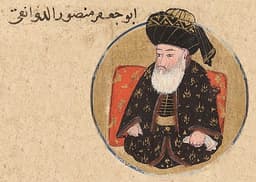
Abu Jafar al-Mansur
Emperor · Medieval
65.5Total

Julius Caesar
General · Ancient
82.8Total
Basic Information
Born
714
-100
Died
775
-44
Era
Medieval
Ancient
Nationality
Abbasid Caliphate
Roman Republic
Occupation
Emperor
General
Civilization
Middle Eastern
Western
Score Comparison
Military (10%)
65.0
88.0
Political (20%)
75.0
78.0
Influence (20%)
40.0
85.0
Legacy (20%)
80.0
82.0
Leadership (15%)
82.0
80.0
Strategy (15%)
55.0
85.0
TOTAL
65.5
82.8
Abu Jafar al-Mansur — Complete Timeline
754 AD
Consolidated Abbasid Power After the RevolutionPolitical Action◆ Major
Al-Mansur eliminated rivals including his uncle Abd Allah ibn Ali and the Barmakids, securing Abbasid control. He established a centralized bureaucracy and suppressed rebellions, including the Rawandiyya uprising.
Impact: global
762 AD
Founded the City of BaghdadPolitical Action
Abu Jafar al-Mansur founded the city of Baghdad as the new capital of the Abbasid Caliphate. The Round City was designed as a center of administration and culture, becoming one of the largest cities in the world.
Impact: globalconstructive
770 AD
Patronized Translation of Greek WorksCultural◆ Major
Al-Mansur supported the translation of Greek philosophical and scientific texts into Arabic. This initiative laid the foundation for the Abbasid translation movement, which preserved and expanded classical knowledge.
Impact: globalconstructive
Julius Caesar — Complete Timeline
58 BC
Gallic WarsWar◆ Major
Caesar, as proconsul of Gaul, launched a series of campaigns that conquered all of Gaul (modern France, Belgium, and parts of Switzerland). He fought numerous battles, including against the Helvetii, the Belgae, and the Gallic chieftain Vercingetorix. The wars brought immense wealth and a loyal army to Caesar.
Gallic WarsConquestRoman Expansion
Impact: regional
49 BC
Crossing the RubiconPolitical Action◆ Major
Caesar led Legio XIII across the Rubicon River into Italy, defying the Roman Senate's order to disband his army. This act triggered a civil war against Pompey and the Optimates, ultimately leading to Caesar's dictatorship and the end of the Roman Republic.
Roman Civil WarEnd of RepublicPower Struggle
Impact: global
48 BC
Battle of PharsalusWar◆ Major
Caesar's outnumbered army defeated the larger forces of Pompey the Great at Pharsalus in Greece. Caesar's tactical use of a reserve line to counter Pompey's cavalry charge proved decisive. Pompey fled to Egypt, where he was assassinated, leaving Caesar as the undisputed master of the Roman world.
Roman Civil WarBattleDecisive Victory
Impact: regional
44 BC
Appointment as Dictator for LifePolitical Action◆ Major
The Roman Senate appointed Caesar dictator perpetuo (dictator for life), granting him unprecedented personal power. This move concentrated military, legislative, and judicial authority in one person, effectively ending the Roman Republic's traditional system of checks and balances and alarming many senators.
DictatorshipEnd of RepublicPower Consolidation
Impact: regionaldestructive
Assassination on the Ides of MarchPolitical Action◆ Major
A group of Roman senators, led by Marcus Junius Brutus and Gaius Cassius Longinus, stabbed Caesar to death at a meeting of the Senate in the Theatre of Pompey. The assassination was intended to restore the Republic, but instead triggered another civil war that led to the rise of the Roman Empire.
AssassinationRoman PoliticsEnd of Republic
Impact: globaldestructive
Expert Analysis
Julius Caesar vs Abu Jafar al-Mansur
# The Builder and the Destroyer: Two Visions of Power
On a winter morning in 44 BCE, Julius Caesar walked into the Senate chamber, ignoring a soothsayer’s warning and a colleague’s note listing the conspirators. Within minutes, he lay bleeding from twenty-three stab wounds, the Roman Republic dying with him. Just eight centuries later, on the banks of the Tigris, another ruler stood surveying a circle of perfectly planned walls rising from the desert. Abu Jafar al-Mansur, the second Abbasid caliph, had just founded Baghdad—a city that would outlast his enemies, his dynasty, and even the empire he built. One man carved his name through conquest; the other through creation. Both changed the world, but in profoundly different ways.
Origins
Caesar was born into the twilight of the Roman Republic, a world of senatorial intrigue and civil wars. His family, the Julii, claimed descent from the goddess Venus, but they were politically marginal—a fact that burned in the young patrician’s ambition. The Republic of his youth was already cracking under the weight of its conquests: generals like Marius and Sulla had marched on Rome itself, setting a precedent Caesar would later perfect. He was shaped by a culture that worshipped military glory, where a triumph was the highest honor and a provincial command was a path to fortune.
Al-Mansur’s world was equally turbulent but fundamentally different. Born in 714 in Humeima, in modern-day Jordan, he grew up during the dying gasp of the Umayyad Caliphate—a dynasty his family, the Abbasids, had long conspired to overthrow. Unlike Caesar’s Rome, where power was openly seized on battlefields, the Abbasid revolution was a shadowy affair of secret networks and religious propaganda. Al-Mansur learned early that legitimacy came not from senatorial approval but from bloodline and divine mandate. His father was a descendant of the Prophet Muhammad’s uncle, and his brother al-Saffah had led the revolt that toppled the Umayyads. For al-Mansur, power was a family inheritance to be guarded, not a prize to be won.
Rise to Power
Caesar’s ascent was a masterclass in calculated risk. He borrowed fortunes to fund public spectacles, built alliances with the powerful Crassus and Pompey, and spent eight brutal years conquering Gaul—a campaign that gave him wealth, a loyal army, and a legend. When the Senate ordered him to disband his forces, he crossed the Rubicon River in 49 BCE, igniting a civil war. Within four years, he had defeated his rivals, been named dictator for life, and begun remaking Rome in his image. His rise was linear, violent, and entirely personal.
Al-Mansur’s path was more circuitous. When his brother al-Saffah died in 754, al-Mansur inherited a caliphate still reeling from revolution. He spent his first years eliminating rivals—including his own uncle Abd Allah ibn Ali and the powerful Barmakid family—in a series of purges that were quiet, methodical, and utterly ruthless. Unlike Caesar’s open warfare, al-Mansur’s consolidation was a bureaucratic and political campaign. He understood that in the Abbasid world, a dagger in the palace was worth a legion on the battlefield.
Leadership & Governance
Caesar governed as a military reformer and populist. He doubled the size of the Senate with his own supporters, reformed the calendar (giving us the Julian calendar), and launched ambitious public works. But his genius was in strategy: at the Battle of Alesia in 52 BCE, he besieged a Gallic army while simultaneously building defenses against a massive relief force—a feat of logistics and nerve that remains a textbook example of encirclement. His military score of 88 reflects this brilliance. Yet his political score of 78 reveals a fatal flaw: he centralized power without building institutions to sustain it. He ruled as a monarch in all but name, and the Republic’s old guard could not abide it.
Al-Mansur’s governance was the opposite. With a military score of just 60.4, he was no battlefield commander. But his political score of 67.9 and leadership score of 79.4 reflect a different kind of mastery: the ability to build systems. Baghdad, founded in 762, was his masterpiece. The “Round City” was designed as a perfect circle, with the caliph’s palace and mosque at the center—a physical symbol of cosmic order and centralized authority. He patronized the translation of Greek philosophical and scientific works into Arabic, laying the foundation for the Abbasid Golden Age. Where Caesar conquered, al-Mansur constructed.
Triumph & Tragedy
Caesar’s greatest triumph was his conquest of Gaul, which added a vast province to Rome and made him the most famous general of his age. His greatest tragedy was his assassination—a moment that proved his reforms had no institutional roots. When he fell, the Republic fell with him, and the empire that followed was built on the ruins of his ambition.
Al-Mansur’s triumph was Baghdad, a city that became the intellectual capital of the medieval world. His tragedy was subtler: the same purges that secured his power also planted seeds of factionalism. The Barmakids, whom he destroyed, had been his most capable administrators, and their loss weakened the caliphate’s bureaucracy. His legacy would be built on foundations that began to crack even as he laid them.
Character & Destiny
Caesar was audacity incarnate. He pardoned his enemies, gambled on impossible odds, and lived as though the world were a stage built for his performance. His character drove him to take risks that no sane general would attempt—and to ignore warnings that would have saved his life. He died because he could not imagine a world without him at its center.
Al-Mansur was caution personified. He was paranoid, calculating, and relentless—a man who built walls around his city and walls around his heart. His character made him a survivor but not a visionary; he created Baghdad but did not live to see it flourish. He died as he had ruled: quietly, in 775, on a pilgrimage to Mecca, leaving a caliphate that was stable but brittle.
Legacy
Caesar’s legacy is the Roman Empire itself. His name became synonymous with imperial power—Kaiser and Tsar are his linguistic descendants. His military tactics are still studied, and his assassination is the archetype of political betrayal. But his legacy is also a warning: personal ambition, unmoored from institutions, destroys what it seeks to control.
Al-Mansur’s legacy is Baghdad—and through it, the preservation of classical knowledge. The Greek texts he patronized were translated into Arabic, later returned to Europe during the Renaissance, and helped spark the Scientific Revolution. His city became the setting for *One Thousand and One Nights*, a symbol of Islamic civilization’s golden age. But his legacy is quieter: a foundation rather than a flash.
Conclusion
Caesar and al-Mansur faced the same question: how do you hold power in a world that resists it? Caesar answered with the sword, building a monument to himself that collapsed under its own weight. Al-Mansur answered with stone and ink, building a city that outlasted his name. One lived for glory, the other for order. One died in the Senate, the other on a pilgrimage. Their scores—83.3 and 69.1—reflect not their worth but their worlds. Caesar burned bright, and we remember the fire. Al-Mansur built deep, and we live in the shade. Both understood that power is not a gift; it is a question. How we answer it determines not just our fate, but the fate of civilizations.
Rankings
🥇
Julius CaesarLeader
Mil: 88.0Pol: 78.0Inf: 85.0
82.8
🥈
Abu Jafar al-Mansur
Mil: 65.0Pol: 75.0Inf: 40.0
65.5
+17.3 behind
How This Comparison Works
Algorithm
Each figure is scored on 6 dimensions (0—100 scale) based on structured historical data: Military (10%), Political (20%), Influence (20%), Legacy (20%), Leadership (15%), Strategy (15%). The weighted total produces the final ranking.
Data Sources
Scores are computed from structured sub-indicators in the database. Scale factors adjust for era (Ancient ×0.85, Modern ×1.0) and civilization size (Eastern ×1.05, Other ×0.80) to account for differences in population and military scale.
Maximum 3 Figures
Comparisons are limited to 2—3 figures to ensure readability and statistical meaningfulness.
Error Margins
±5 points per dimension — Sub-scores are derived from historical records with inherent uncertainty. Two figures within 5 points on a dimension should be considered roughly equivalent in that area.
Total Score Accuracy
±3 points overall — The weighted combination of 6 dimensions produces a total score with approximately ±3 points of uncertainty. Differences of less than 3 points are not statistically significant— the figures are effectively tied.
Known Limitations
- Historical records are incomplete and uneven across civilizations
- Figures from oral-tradition societies may be underrepresented
- Occupation labels can misclassify multi-role figures
- Scores measure capability and impact, not moral character
- Quantitative scoring is a comparison tool, not absolute truth
Capability Radar
Military (10%) — Battles & Warfare
Battles
60
95
Win Rate
65
92
Expansion
70
97
Political (20%) — Governance & Reform
Reform
90
90
Diplomacy
80
85
Economy
85
82
Influence (20%) — Cultural & Global Reach
Cultural
85
88
Global
80
94
Legacy (20%) — Historical Impact
Historical
90
95
Longevity
85
96
Leadership (15%) — Power & Stability
Tenure
85
75
Stability
75
60
Strategy (15%) — Tactics & Innovation
Strategy
70
94
Tactics
55
96
Reform
75
88
Similar Comparisons
Comments & Discussion
1. **GladiusOverQuill**6/16/2026
Caesar wasn’t just a conqueror—he was a tactical genius who wrote his own playbook. At Alesia, he built dual fortifications to trap Vercingetorix’s army while fending off a relief force, a move no one had pulled off before. Al-Mansur’s Baghdad is impressive, a perfect circle, sure, but it’s a bureaucrat’s dream, not a general’s. Caesar reshaped warfare; al-Mansur just reshaped real estate. Give me the man who wins battles over the one who draws city plans any day.
2. **尘封的档案**6/16/2026
数据不会撒谎——凯撒在高卢杀了近百万敌人,可罗马国库在他死后却空空如也,因为他花钱买民心、养军队,全是短期投资。曼苏尔建巴格达花了四年,城市却繁荣了五百年,带动整个阿拔斯王朝的黄金时代。从长远回报看,曼苏尔每枚金币都砸在了实处,凯撒更像是个败家子,只会用血换虚名。史书吹得响,数字才见真章。