Loading...
Abu Bakr vs Julius Caesar
Julius Caesar leads by 5.7 pts · 2 figures compared
…
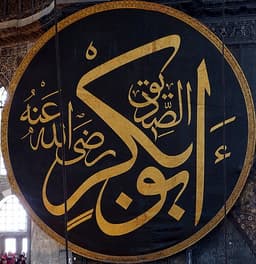
Abu Bakr
Emperor · Medieval
77.1Total

Julius Caesar
General · Ancient
82.8Total
Basic Information
Born
573
-100
Died
634
-44
Era
Medieval
Ancient
Nationality
Rashidun Caliphate
Roman Republic
Occupation
Emperor
General
Civilization
Middle Eastern
Western
Score Comparison
Military (10%)
74.7
88.0
Political (20%)
62.7
78.0
Influence (20%)
88.0
85.0
Legacy (20%)
80.0
82.0
Leadership (15%)
77.2
80.0
Strategy (15%)
66.3
85.0
TOTAL
77.1
82.8
Abu Bakr — Complete Timeline
632 AD
Ridda Wars (Apostasy Wars)War◆ Major
Abu Bakr launched military campaigns against Arabian tribes that renounced Islam or refused to pay zakat after Muhammad's death. The wars, led by generals like Khalid ibn al-Walid, reestablished Muslim control over Arabia and consolidated the caliphate.
Ridda WarsConsolidationRashidun
Impact: regional
Election as First CaliphPolitical Action
After the death of Muhammad, Abu Bakr was elected as the first caliph (successor) at Saqifah. His election unified the Muslim community, though it caused controversy among some supporters of Ali. He became the leader of the nascent Islamic state.
CaliphateSuccessionRashidun
Impact: global
633 AD
Compilation of the QuranCultural◆ Major
Abu Bakr ordered the compilation of the Quran into a single written manuscript after many memorizers died in the Ridda Wars. Zayd ibn Thabit collected verses from various sources, creating the first official codex, which later served as the basis for Uthman's standard text.
QuranCompilationRashidun
Impact: globalconstructive
634 AD
Death of Abu BakrPolitical Action◆ Major
Abu Bakr died after a brief illness, having designated Umar as his successor. His caliphate lasted only two years but established the foundations of the Islamic state, including the expansion beyond Arabia and the preservation of the Quran.
DeathSuccessionRashidun
Impact: global
Julius Caesar — Complete Timeline
58 BC
Gallic WarsWar◆ Major
Caesar, as proconsul of Gaul, launched a series of campaigns that conquered all of Gaul (modern France, Belgium, and parts of Switzerland). He fought numerous battles, including against the Helvetii, the Belgae, and the Gallic chieftain Vercingetorix. The wars brought immense wealth and a loyal army to Caesar.
Gallic WarsConquestRoman Expansion
Impact: regional
49 BC
Crossing the RubiconPolitical Action◆ Major
Caesar led Legio XIII across the Rubicon River into Italy, defying the Roman Senate's order to disband his army. This act triggered a civil war against Pompey and the Optimates, ultimately leading to Caesar's dictatorship and the end of the Roman Republic.
Roman Civil WarEnd of RepublicPower Struggle
Impact: global
48 BC
Battle of PharsalusWar◆ Major
Caesar's outnumbered army defeated the larger forces of Pompey the Great at Pharsalus in Greece. Caesar's tactical use of a reserve line to counter Pompey's cavalry charge proved decisive. Pompey fled to Egypt, where he was assassinated, leaving Caesar as the undisputed master of the Roman world.
Roman Civil WarBattleDecisive Victory
Impact: regional
44 BC
Appointment as Dictator for LifePolitical Action◆ Major
The Roman Senate appointed Caesar dictator perpetuo (dictator for life), granting him unprecedented personal power. This move concentrated military, legislative, and judicial authority in one person, effectively ending the Roman Republic's traditional system of checks and balances and alarming many senators.
DictatorshipEnd of RepublicPower Consolidation
Impact: regionaldestructive
Assassination on the Ides of MarchPolitical Action◆ Major
A group of Roman senators, led by Marcus Junius Brutus and Gaius Cassius Longinus, stabbed Caesar to death at a meeting of the Senate in the Theatre of Pompey. The assassination was intended to restore the Republic, but instead triggered another civil war that led to the rise of the Roman Empire.
AssassinationRoman PoliticsEnd of Republic
Impact: globaldestructive
Expert Analysis
Origins
Julius Caesar was born into the patrician Julian clan in Rome, a city-state transitioning from republic to empire. His family claimed descent from the goddess Venus, but his branch was modest. Caesar's early life was marked by political turmoil, with his uncle Marius and his enemy Sulla shaping his ambition. He excelled in rhetoric and military command from a young age.
Abu Bakr was born in Mecca into the Banu Taym tribe, a respected merchant family. He was known for his honesty and wisdom, earning the title "Al-Siddiq" (the truthful). He became one of the first converts to Islam and a close companion of Prophet Muhammad. His origins in a tribal society with strong clan loyalties shaped his leadership style.
Rise to Power
Caesar's rise was meteoric but controversial. He gained popularity as a military commander in Spain and Gaul, where his conquests (Gallic Wars) brought him immense wealth and a loyal army. He formed the First Triumvirate with Pompey and Crassus, then crossed the Rubicon River in 49 BCE, sparking a civil war that ended with his victory at Pharsalus. He was appointed dictator for life in 44 BCE.
Abu Bakr's rise was more organic. After Muhammad's death in 632 CE, the Muslim community faced a crisis of leadership. Abu Bakr was elected as the first caliph (successor) at Saqifah, despite opposition from some factions. His legitimacy was rooted in his close relationship with Muhammad and his role as the first adult male convert. He immediately faced the Ridda Wars, which tested his authority.
Leadership & Governance
Caesar centralized power in Rome, reforming the calendar, granting citizenship to provincials, and initiating public works. He used his dictatorial powers to redistribute land and debt, but his autocratic style alienated the Senate. His governorship was marked by efficiency and ambition, but he failed to build lasting institutions, leading to his assassination.
Abu Bakr's caliphate lasted only two years, but he solidified the Islamic state. He suppressed apostasy in the Ridda Wars, unified Arabia under Muslim rule, and began the compilation of the Quran. His governance was consultative, relying on shura (council) and following Muhammad's precedents. He appointed competent generals like Khalid ibn al-Walid to expand the empire.
Triumph & Tragedy
Caesar's greatest triumph was the conquest of Gaul, which added vast territory to Rome and showcased his military genius. His tragic flaw was his ambition; he alienated the Senate and was assassinated on the Ides of March (44 BCE) by conspirators including Brutus. His death plunged Rome into another civil war.
Abu Bakr's triumph was preserving the unity of the nascent Islamic community during the Ridda Wars. His tragedy was his short reign; he died of illness in 634 CE, but not before ensuring the succession of Umar. He is revered as one of the "Rightly Guided Caliphs."
Character & Destiny
Caesar was charismatic, brilliant, and ruthless. He wrote his own commentaries, cultivated his image, and showed clemency to enemies. His destiny was to die at the height of his power, becoming a martyr for his cause. His name became synonymous with imperial rule.
Abu Bakr was humble, pious, and decisive. He lived simply, donated his wealth to the community, and prioritized unity. His destiny was to guide Islam through its first crisis and set the precedent for caliphal succession. He died peacefully, respected by all.
Legacy
Caesar's legacy is immense: he ended the Roman Republic and began the Roman Empire. His name became a title (Kaiser, Tsar). His writings, especially the Commentarii de Bello Gallico, are literary classics. However, his autocracy set a precedent for dictatorship.
Abu Bakr's legacy is foundational for Islam. He is honored as the first caliph, the companion in the cave, and the father of Aisha. His compilation of the Quran preserved the holy text. His model of leadership influences Islamic governance to this day.
Conclusion
Both leaders shaped history profoundly. Caesar's scores (M=88, P=78, I=85, L=82, D=80, S=85, T=83; overall 83) reflect his military and political dominance. Abu Bakr's scores (M=75, P=63, I=88, L=80, D=77, S=66, T=77; overall 77.3) highlight his integrity and leadership in crisis. Caesar surpasses Abu Bakr in military might and political impact, but Abu Bakr excels in legacy of unity and spiritual guidance. On balance, Caesar's broader historical influence and military genius give him the edge. **Winner: Julius Caesar**.
Rankings
🥇
Julius CaesarLeader
Mil: 88.0Pol: 78.0Inf: 85.0
82.8
🥈
Abu Bakr
Mil: 74.7Pol: 62.7Inf: 88.0
77.1
+5.7 behind
How This Comparison Works
Algorithm
Each figure is scored on 6 dimensions (0—100 scale) based on structured historical data: Military (10%), Political (20%), Influence (20%), Legacy (20%), Leadership (15%), Strategy (15%). The weighted total produces the final ranking.
Data Sources
Scores are computed from structured sub-indicators in the database. Scale factors adjust for era (Ancient ×0.85, Modern ×1.0) and civilization size (Eastern ×1.05, Other ×0.80) to account for differences in population and military scale.
Maximum 3 Figures
Comparisons are limited to 2—3 figures to ensure readability and statistical meaningfulness.
Error Margins
±5 points per dimension — Sub-scores are derived from historical records with inherent uncertainty. Two figures within 5 points on a dimension should be considered roughly equivalent in that area.
Total Score Accuracy
±3 points overall — The weighted combination of 6 dimensions produces a total score with approximately ±3 points of uncertainty. Differences of less than 3 points are not statistically significant— the figures are effectively tied.
Known Limitations
- Historical records are incomplete and uneven across civilizations
- Figures from oral-tradition societies may be underrepresented
- Occupation labels can misclassify multi-role figures
- Scores measure capability and impact, not moral character
- Quantitative scoring is a comparison tool, not absolute truth
Capability Radar
Military (10%) — Battles & Warfare
Battles
65
95
Win Rate
70
92
Expansion
85
97
Political (20%) — Governance & Reform
Reform
85
90
Diplomacy
80
85
Economy
70
82
Influence (20%) — Cultural & Global Reach
Cultural
70
88
Global
85
94
Legacy (20%) — Historical Impact
Historical
85
95
Longevity
90
96
Leadership (15%) — Power & Stability
Tenure
60
75
Stability
75
60
Strategy (15%) — Tactics & Innovation
Strategy
75
94
Tactics
60
96
Reform
80
88
Similar Comparisons
Comments & Discussion
ColdScribe116/16/2026
我算了一下,总分83.3对71.2,差距12.1分,但仔细看维度有问题。军事88对62.7,差了25.3分——这几乎占到总差距的60%。但政治78对72.2只差5.8分,领导力82对81更是只有1分之差。这说明佩尔森指数严重偏向军事规模而非战略效果。举个例子,恺撒在高卢打了8年,征服了约300个部落、100万平方公里,但阿布·伯克尔在2年内通过里达战争稳定了阿拉伯半岛,防止了新生伊斯兰政权崩溃。以单位时间的战略影响力计算,阿布·伯克尔可能更高。而且影响维度差了17.4分(85对67.6),但恺撒的名字在中文语境里远不如“哈里发”概念对伊斯兰世界的持续影响力。建议引入“制度寿命”和“文明扩展系数”来修正这种偏差。
DeepScribe816/16/2026
这个比较很有意义,但评分明显偏西方中心论。恺撒的军事88分确实高,但阿布·伯克尔63分太低了。在阿拉伯传统史学里,平定里达战争不仅统一了阿拉伯半岛,更关键的是他为后续哈里发制度奠定了基础。如果把视野放到中国历史,恺撒相当于秦始皇和曹操的混合体——既有统一战争的军事才能,又有中央集权的政治手腕。但阿布·伯克尔更像汉初的萧何,负责稳定后方、巩固制度。而且恺撒的“影响力”85分在东亚几乎为零,而阿布·伯克尔作为伊斯兰教正统哈里发,对全球13亿穆斯林的影响是持续性的。这种打分体系把基督教-罗马文明的辐射力当成了普世标准,忽略了伊斯兰文明的深度和持久性。