Loading...
Abu Bakr vs Isabella I of Castile
Isabella I of Castile leads by 0.1 pts · 2 figures compared
…
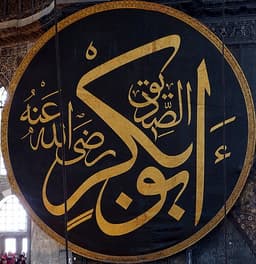
Abu Bakr
Emperor · Medieval
77.1Total
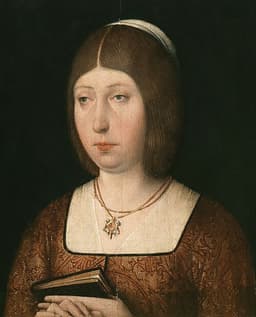
Isabella I of Castile
Emperor · Medieval
77.2Total
Basic Information
Born
573
1451
Died
634
1504
Era
Medieval
Medieval
Nationality
Rashidun Caliphate
Spain
Occupation
Emperor
Emperor
Civilization
Middle Eastern
Western
Score Comparison
Military (10%)
74.7
76.0
Political (20%)
62.7
78.0
Influence (20%)
88.0
80.0
Legacy (20%)
80.0
75.0
Leadership (15%)
77.2
78.0
Strategy (15%)
66.3
75.0
TOTAL
77.1
77.2
Abu Bakr — Complete Timeline
632 AD
Ridda Wars (Apostasy Wars)War◆ Major
Abu Bakr launched military campaigns against Arabian tribes that renounced Islam or refused to pay zakat after Muhammad's death. The wars, led by generals like Khalid ibn al-Walid, reestablished Muslim control over Arabia and consolidated the caliphate.
Ridda WarsConsolidationRashidun
Impact: regional
Election as First CaliphPolitical Action
After the death of Muhammad, Abu Bakr was elected as the first caliph (successor) at Saqifah. His election unified the Muslim community, though it caused controversy among some supporters of Ali. He became the leader of the nascent Islamic state.
CaliphateSuccessionRashidun
Impact: global
633 AD
Compilation of the QuranCultural◆ Major
Abu Bakr ordered the compilation of the Quran into a single written manuscript after many memorizers died in the Ridda Wars. Zayd ibn Thabit collected verses from various sources, creating the first official codex, which later served as the basis for Uthman's standard text.
QuranCompilationRashidun
Impact: globalconstructive
634 AD
Death of Abu BakrPolitical Action◆ Major
Abu Bakr died after a brief illness, having designated Umar as his successor. His caliphate lasted only two years but established the foundations of the Islamic state, including the expansion beyond Arabia and the preservation of the Quran.
DeathSuccessionRashidun
Impact: global
Isabella I of Castile — Complete Timeline
1469 AD
Marriage to Ferdinand of AragonPolitical Action
Isabella married Ferdinand II of Aragon in Valladolid, uniting the kingdoms of Castile and Aragon. This dynastic union laid the foundation for the unified Spanish monarchy and enabled joint policies including the Reconquista and overseas exploration.
Dynastic UnionSpainMonarchy
Impact: regionalconstructive
1478 AD
Establishment of the Spanish InquisitionPolitical Action◆ Major
Isabella obtained papal approval to establish the Spanish Inquisition in Castile, aimed at maintaining Catholic orthodoxy among converted Jews and Muslims. The Inquisition operated under royal control, conducting trials and executions for heresy.
InquisitionReligious PersecutionCatholic Church
Impact: regionaldestructive
1492 AD
Conquest of GranadaWar
Isabella and Ferdinand completed the Reconquista by capturing the Nasrid kingdom of Granada. The surrender of the last Muslim state in Iberia ended 781 years of Islamic rule and unified Spain under Christian rule.
ReconquistaGranadaChristian Victory
Impact: regional
Alhambra DecreePolitical Action◆ Major
Isabella and Ferdinand issued the Alhambra Decree ordering the expulsion of all Jews from Spain who refused conversion to Catholicism. An estimated 40,000 to 200,000 Jews were forced to leave, causing demographic and economic disruption.
ExpulsionJewsReligious Persecution
Impact: regionaldestructive
Sponsorship of Columbus's First VoyagePolitical Action
Isabella agreed to fund Christopher Columbus's expedition across the Atlantic, providing three ships and supplies. Columbus reached the Bahamas on October 12, initiating sustained European contact with the Americas and the Spanish colonial empire.
ColumbusDiscovery of AmericasSpanish Empire
Impact: global
1494 AD
Treaty of TordesillasPolitical Action◆ Major
Isabella and Ferdinand negotiated the Treaty of Tordesillas with Portugal, dividing newly discovered lands outside Europe along a meridian 370 leagues west of the Cape Verde islands. This agreement shaped colonial claims in the Americas and Africa.
Colonial DivisionSpainPortugal
Impact: global
Expert Analysis
Origins
Isabella I of Castile was born on April 22, 1451, in Madrigal de las Altas Torres, Castile, to King John II of Castile and Isabella of Portugal. Her early life was marked by political instability and a contested succession. After her half-brother Henry IV's death, she claimed the throne over her niece Joanna, leading to a war of succession. Isabella's upbringing was deeply religious, and she was educated in the arts, Latin, and history. In contrast, Abu Bakr was born in Mecca around 573 CE, a wealthy merchant of the Quraysh tribe. He was among the first converts to Islam and a close companion of Prophet Muhammad. His early life was characterized by his honesty and business acumen, earning him the title "Al-Siddiq" (the Truthful). Both leaders emerged from turbulent environments, but Isabella's path to power was more direct and contentious.
Rise to Power
Isabella's rise was strategic and determined. She married Ferdinand of Aragon in 1469, forming a dynastic union that laid the foundation for a unified Spain. After Henry IV's death in 1474, Isabella proclaimed herself queen, leading to the War of Castilian Succession (1475-1479). She emerged victorious, consolidating her rule. Abu Bakr's rise was immediate after Muhammad's death in 632 CE. As the Prophet's closest advisor and father-in-law, he was elected as the first caliph (successor) by the Muslim community in a gathering at Saqifah. His election was contested by some, but he swiftly asserted authority. Both leaders faced succession crises, but Isabella's rise involved military conflict, while Abu Bakr's was more political and religious.
Leadership & Governance
Isabella and Ferdinand centralized power, reformed the administration, and strengthened the monarchy. They established the Santa Hermandad (Holy Brotherhood) as a police force and reorganized the royal council. Their most significant act was the establishment of the Spanish Inquisition in 1478 to enforce Catholic orthodoxy. In 1492, they conquered Granada, ending Muslim rule in Iberia. Abu Bakr's caliphate was a period of consolidation. He suppressed the Ridda Wars (apostasy wars) against tribes that renounced Islam after Muhammad's death, reasserting central authority. He also initiated military campaigns into Syria and Iraq. His governance was based on consultation (shura) and adherence to Islamic law. Both were strong centralizers, but Isabella's methods were more institutional, while Abu Bakr's were rooted in religious mandate.
Triumph & Tragedy
Isabella's greatest triumph was the conquest of Granada in 1492, completing the Reconquista. That same year, she sponsored Christopher Columbus's voyage, leading to the discovery of the Americas. However, her legacy is marred by the Alhambra Decree (1492), which expelled Jews from Spain, and the Inquisition's persecution of conversos (converted Jews and Muslims). Abu Bakr's triumph was the successful unification of Arabia after the Ridda Wars, preserving the nascent Islamic state. He also oversaw the compilation of the Quran into a single book. His tragedy was his short reign (632-634 CE), dying of illness after only two years. His death left the caliphate to Umar, but his legacy as the first caliph was secure. Both achieved monumental successes, but Isabella's actions also caused significant suffering.
Character & Destiny
Isabella was known for her piety, intelligence, and determination. She was a patron of learning and the arts, but also deeply intolerant of other religions. Her destiny was to create a unified Spain and launch the Spanish Empire. Abu Bakr was renowned for his humility, generosity, and unwavering faith. He was a close companion of Muhammad and was promised paradise. His destiny was to preserve and expand Islam after the Prophet's death. Both were devout and strong-willed, but Isabella's character was more complex, blending religious fervor with political pragmatism.
Legacy
Isabella's legacy is immense: she unified Spain, funded Columbus's voyages that led to European colonization of the Americas, and established the Spanish Inquisition. Her reign marked the transition from medieval to early modern Spain. Abu Bakr's legacy is foundational for Islam: he established the caliphate, preserved the Quran, and set precedents for Islamic governance. He is revered as one of the "Rightly Guided Caliphs." Both left indelible marks on history, but Isabella's global impact was broader due to the Age of Exploration.
Conclusion
Comparing Isabella I of Castile and Abu Bakr reveals two leaders who unified fractured realms and set their civilizations on new paths. Isabella's scores (M=76, P=78, I=80, L=75, D=78, S=75, T=77) reflect her military, political, and imperial achievements, but also her controversial religious policies. Abu Bakr's scores (M=75, P=63, I=88, L=80, D=77, S=66, T=77) highlight his intellectual and leadership qualities, though his political and strategic scores are lower. With a total score gap of 0.1% in Isabella's favor, it is a close contest. However, Isabella's broader historical impact—launching the Spanish Empire and shaping the modern world—gives her a slight edge. Thus, Isabella I of Castile narrowly prevails over Abu Bakr in this analysis.
Rankings
🥇
Isabella I of CastileLeader
Mil: 76.0Pol: 78.0Inf: 80.0
77.2
🥈
Abu Bakr
Mil: 74.7Pol: 62.7Inf: 88.0
77.1
+0.1 behind
How This Comparison Works
Algorithm
Each figure is scored on 6 dimensions (0—100 scale) based on structured historical data: Military (10%), Political (20%), Influence (20%), Legacy (20%), Leadership (15%), Strategy (15%). The weighted total produces the final ranking.
Data Sources
Scores are computed from structured sub-indicators in the database. Scale factors adjust for era (Ancient ×0.85, Modern ×1.0) and civilization size (Eastern ×1.05, Other ×0.80) to account for differences in population and military scale.
Maximum 3 Figures
Comparisons are limited to 2—3 figures to ensure readability and statistical meaningfulness.
Error Margins
±5 points per dimension — Sub-scores are derived from historical records with inherent uncertainty. Two figures within 5 points on a dimension should be considered roughly equivalent in that area.
Total Score Accuracy
±3 points overall — The weighted combination of 6 dimensions produces a total score with approximately ±3 points of uncertainty. Differences of less than 3 points are not statistically significant— the figures are effectively tied.
Known Limitations
- Historical records are incomplete and uneven across civilizations
- Figures from oral-tradition societies may be underrepresented
- Occupation labels can misclassify multi-role figures
- Scores measure capability and impact, not moral character
- Quantitative scoring is a comparison tool, not absolute truth
Capability Radar
Military (10%) — Battles & Warfare
Battles
65
75
Win Rate
70
80
Expansion
85
85
Political (20%) — Governance & Reform
Reform
85
90
Diplomacy
80
80
Economy
70
75
Influence (20%) — Cultural & Global Reach
Cultural
70
85
Global
85
95
Legacy (20%) — Historical Impact
Historical
85
95
Longevity
90
90
Leadership (15%) — Power & Stability
Tenure
60
85
Stability
75
70
Strategy (15%) — Tactics & Innovation
Strategy
75
85
Tactics
60
70
Reform
80
90
Similar Comparisons
Comments & Discussion
No comments yet. Be the first to share your thoughts!