Loading...
Abu Bakr vs Emperor Taizong of Tang
Emperor Taizong of Tang leads by 1.8 pts · 2 figures compared
…
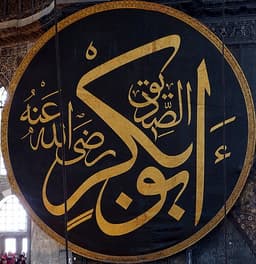
Abu Bakr
Emperor · Medieval
77.1Total
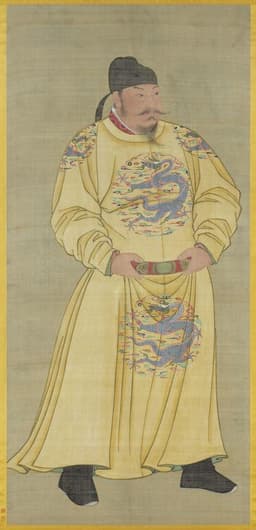
Emperor Taizong of Tang
Emperor · Medieval
78.9Total
Basic Information
Born
573
598
Died
634
649
Era
Medieval
Medieval
Nationality
Rashidun Caliphate
China
Occupation
Emperor
Emperor
Civilization
Middle Eastern
Eastern
Score Comparison
Military (10%)
74.7
77.5
Political (20%)
62.7
82.0
Influence (20%)
88.0
85.0
Legacy (20%)
80.0
71.4
Leadership (15%)
77.2
78.0
Strategy (15%)
66.3
80.6
TOTAL
77.1
78.9
Abu Bakr — Complete Timeline
632 AD
Ridda Wars (Apostasy Wars)War◆ Major
Abu Bakr launched military campaigns against Arabian tribes that renounced Islam or refused to pay zakat after Muhammad's death. The wars, led by generals like Khalid ibn al-Walid, reestablished Muslim control over Arabia and consolidated the caliphate.
Ridda WarsConsolidationRashidun
Impact: regional
Election as First CaliphPolitical Action
After the death of Muhammad, Abu Bakr was elected as the first caliph (successor) at Saqifah. His election unified the Muslim community, though it caused controversy among some supporters of Ali. He became the leader of the nascent Islamic state.
CaliphateSuccessionRashidun
Impact: global
633 AD
Compilation of the QuranCultural◆ Major
Abu Bakr ordered the compilation of the Quran into a single written manuscript after many memorizers died in the Ridda Wars. Zayd ibn Thabit collected verses from various sources, creating the first official codex, which later served as the basis for Uthman's standard text.
QuranCompilationRashidun
Impact: globalconstructive
634 AD
Death of Abu BakrPolitical Action◆ Major
Abu Bakr died after a brief illness, having designated Umar as his successor. His caliphate lasted only two years but established the foundations of the Islamic state, including the expansion beyond Arabia and the preservation of the Quran.
DeathSuccessionRashidun
Impact: global
Emperor Taizong of Tang — Complete Timeline
626 AD
Reign of ZhenguanReform
Emperor Taizong initiated the Zhenguan era, characterized by efficient governance, legal codification, and economic recovery. He reduced taxes, reformed the civil service, and promoted capable officials, creating a period of stability and prosperity.
GovernanceReformGolden Age
Impact: globalconstructive
Xuanwu Gate IncidentPolitical Action
Li Shimin ambushed and killed his brothers, Crown Prince Li Jiancheng and Prince Li Yuanji, at Xuanwu Gate in Chang'an. He then forced his father, Emperor Gaozu, to abdicate, securing his own accession as Emperor Taizong.
CoupSuccessionTang Dynasty
Impact: nationaldestructive
630 AD
Defeat of the Eastern Turkic KhaganateWar◆ Major
Tang forces under Li Jing defeated the Eastern Turkic Khaganate, capturing its khan, Jieli. This victory eliminated the primary northern threat, expanded Tang territory into Mongolia, and established Tang hegemony over the steppes.
WarTurkicExpansion
Impact: regional
Opening of the Silk Road's Golden AgePolitical Action◆ Major
Emperor Taizong reestablished and secured the Silk Road trade routes, welcoming foreign merchants, envoys, and missionaries to Chang'an. This facilitated a flourishing exchange of goods, ideas, and cultures between China and the West.
Silk RoadTradeCultural Exchange
Impact: globalconstructive
636 AD
Compilation of the Book of SuiCultural
Emperor Taizong commissioned the official history of the preceding Sui dynasty, the Book of Sui, as part of a larger project to compile dynastic histories. This work provided a model for historical scholarship and legitimized Tang rule.
HistoriographyCultureLegitimacy
Impact: nationalconstructive
Expert Analysis
Origins
Emperor Taizong of Tang (Li Shimin, 598–649) was born into the aristocratic Li family, which rose to power amid the collapse of the Sui dynasty. His father, Li Yuan, founded the Tang dynasty in 618, and Li Shimin played a crucial role in the campaigns that consolidated Tang control over China. In contrast, Abu Bakr (c. 573–634) was a close companion and father-in-law of the Prophet Muhammad, belonging to the Quraysh tribe of Mecca. He was among the first converts to Islam and stood by Muhammad during the Hijra to Medina, earning the title "al-Siddiq" (the Truthful). Both leaders emerged from turbulent periods—Taizong from civil war, Abu Bakr from the birth of a new faith—but their backgrounds shaped their divergent paths: Taizong as a military aristocrat, Abu Bakr as a religious statesman.
Rise to Power
Taizong's ascent was marked by ruthlessness and strategic brilliance. He orchestrated the Xuanwu Gate Incident in 626, killing his brothers Li Jiancheng and Li Yuanji, then forced his father to abdicate. This turning point secured his rule but stained his legacy with fratricide. Abu Bakr's rise was smoother but equally pivotal: after Muhammad's death in 632, he was elected Caliph (successor) despite opposition from the Ansar, using his close ties to the Prophet and his reputation for wisdom to unify the Muslim community. His election stabilized the nascent Islamic state, while Taizong's coup divided the Tang court—yet both effectively consolidated power.
Leadership & Governance
Taizong's Reign of Zhenguan (627–649) is celebrated as a golden age of Chinese civilization. He reformed the bureaucracy, promoted meritocracy, reduced taxes, and compiled the Book of Sui. His military campaigns defeated the Eastern Turkic Khaganate (630), expanding Tang influence and securing the Silk Road, fostering cultural and economic exchange. Abu Bakr's caliphate (632–634) focused on internal consolidation: the Ridda Wars crushed apostate tribes and false prophets, reunifying Arabia under Islam. He also ordered the compilation of the Quran into a single book, preserving Islamic scripture. Taizong's governance was broader in scope and longer in duration, emphasizing imperial expansion and cultural flourishing; Abu Bakr's was shorter but foundational for Islam, prioritizing religious unity and doctrinal preservation.
Triumph & Tragedy
Taizong's greatest triumph was the defeat of the Eastern Turks, which eliminated the primary threat to Tang and opened the Silk Road's golden age. His reign saw prosperity, population growth, and cultural achievements. However, the Xuanwu Gate Incident haunted his reign, and his later years were marred by succession disputes and health decline. Abu Bakr's triumph was the successful suppression of the Ridda Wars, ensuring Islam's survival and political dominance. His tragedy was his short reign—only two years—cut short by illness, leaving him unable to oversee further expansion. While Taizong's achievements were monumental, his legacy is tempered by his violent rise; Abu Bakr's is untainted by such personal ambition, yet limited in scale.
Character & Destiny
Taizong was a complex figure: ambitious, intelligent, and ruthless, but also a patron of arts and a just ruler. His destiny was to build a dynasty that would last nearly three centuries. Abu Bakr was humble, pious, and decisive, embodying the ideal Islamic leader. His destiny was to cement the caliphate and preserve Muhammad's message. Taizong's character reflects a pragmatic ruler willing to use force for order; Abu Bakr's reflects a servant-leader driven by faith. Both faced immense challenges—Taizong from internal and external enemies, Abu Bakr from apostasy—and both succeeded, but Taizong's broader canvas gives him an edge in historical impact.
Legacy
Taizong's legacy endures as one of China's greatest emperors, with the Zhenguan period symbolizing effective governance and cultural openness. The Silk Road flourished under his policies, influencing global trade. Abu Bakr is revered in Islam as the first Caliph and a model of leadership, with the compiled Quran as his lasting gift. His legacy is deeply spiritual and foundational for Islamic civilization. Taizong's influence is more secular and expansive, Abu Bakr's more religious and enduring within Islam. In comparative terms, Taizong's impact on world history is broader due to China's size and the Silk Road's reach, but Abu Bakr's role in shaping a major world religion is unparalleled for his time.
Conclusion
Based on the provided scores (Taizong: 78.9 avg, Abu Bakr: 77.1 avg), Taizong edges ahead by 1.8 points. His military conquests, administrative reforms, and cultural patronage surpass Abu Bakr's achievements in scale and duration. While Abu Bakr's unification of Arabia and Quran compilation are critical, they were brief and foundational. Taizong's 23-year reign of prosperity and expansion had a more profound global impact, making him the greater leader in this comparison. However, Abu Bakr's moral integrity and religious significance earn him high marks in different dimensions. Thus, Emperor Taizong of Tang wins this historical matchup.
Rankings
🥇
Emperor Taizong of TangLeader
Mil: 77.5Pol: 82.0Inf: 85.0
78.9
🥈
Abu Bakr
Mil: 74.7Pol: 62.7Inf: 88.0
77.1
+1.8 behind
How This Comparison Works
Algorithm
Each figure is scored on 6 dimensions (0—100 scale) based on structured historical data: Military (10%), Political (20%), Influence (20%), Legacy (20%), Leadership (15%), Strategy (15%). The weighted total produces the final ranking.
Data Sources
Scores are computed from structured sub-indicators in the database. Scale factors adjust for era (Ancient ×0.85, Modern ×1.0) and civilization size (Eastern ×1.05, Other ×0.80) to account for differences in population and military scale.
Maximum 3 Figures
Comparisons are limited to 2—3 figures to ensure readability and statistical meaningfulness.
Error Margins
±5 points per dimension — Sub-scores are derived from historical records with inherent uncertainty. Two figures within 5 points on a dimension should be considered roughly equivalent in that area.
Total Score Accuracy
±3 points overall — The weighted combination of 6 dimensions produces a total score with approximately ±3 points of uncertainty. Differences of less than 3 points are not statistically significant— the figures are effectively tied.
Known Limitations
- Historical records are incomplete and uneven across civilizations
- Figures from oral-tradition societies may be underrepresented
- Occupation labels can misclassify multi-role figures
- Scores measure capability and impact, not moral character
- Quantitative scoring is a comparison tool, not absolute truth
Capability Radar
Military (10%) — Battles & Warfare
Battles
65
95
Win Rate
70
95
Expansion
85
90
Political (20%) — Governance & Reform
Reform
85
95
Diplomacy
80
95
Economy
70
95
Influence (20%) — Cultural & Global Reach
Cultural
70
90
Global
85
90
Legacy (20%) — Historical Impact
Historical
85
95
Longevity
90
95
Leadership (15%) — Power & Stability
Tenure
60
85
Stability
75
95
Strategy (15%) — Tactics & Innovation
Strategy
75
95
Tactics
60
95
Reform
80
90
Similar Comparisons
Comments & Discussion
No comments yet. Be the first to share your thoughts!