Loading...
Abiy Ahmed vs Zviad Gamsakhurdia
Abiy Ahmed leads by 9.1 pts · 2 figures compared
…

Abiy Ahmed
Politician · Modern
54.9Total
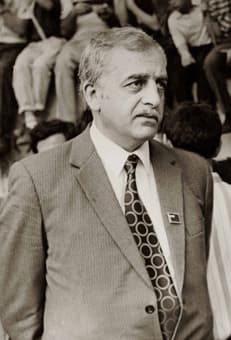
Zviad Gamsakhurdia
Politician · Modern
45.8Total
Basic Information
Born
1976
1939
Died
—
—
Era
Modern
Modern
Nationality
Ethiopia
Georgia
Occupation
Politician
Politician
Civilization
Other
Western
Score Comparison
Military (10%)
41.6
48.6
Political (20%)
72.0
37.9
Influence (20%)
55.0
53.3
Legacy (20%)
48.3
41.7
Leadership (15%)
64.0
48.4
Strategy (15%)
45.0
42.1
TOTAL
54.9
45.8
Abiy Ahmed — Complete Timeline
2018 AD
Became Prime Minister of EthiopiaPolitical Action◆ Major
Abiy Ahmed was elected Prime Minister of Ethiopia by the ruling coalition, EPRDF. He succeeded Hailemariam Desalegn and immediately embarked on sweeping political reforms, including releasing political prisoners and opening up the political space.
ReformLeadershipEPRDF
Impact: nationalconstructive
Signed Peace Agreement with EritreaPolitical Action◆ Major
Abiy signed a peace agreement with Eritrean President Isaias Afwerki, ending a 20-year border conflict. The deal led to the reopening of embassies, resumption of flights, and the awarding of the 2019 Nobel Peace Prize to Abiy.
PeaceEritreaNobel Prize
Impact: regionalconstructive
2019 AD
Launched Economic ReformsReform◆ Major
Abiy initiated economic liberalization, including partial privatization of state-owned enterprises like Ethio Telecom and Ethiopian Airlines. He also introduced a new investment law and sought to attract foreign capital, aiming to transform Ethiopia into a middle-income country.
Economic ReformPrivatizationInvestment
Impact: nationalconstructive
2020 AD
Launched Military Offensive in TigrayWar◆ Major
Abiy ordered a military offensive against the Tigray People's Liberation Front (TPLF) after a federal-state dispute. The Tigray War resulted in widespread atrocities, a humanitarian crisis, and the destabilization of northern Ethiopia, drawing international condemnation.
Tigray WarConflictHumanitarian Crisis
Impact: regionaldestructive
2021 AD
Declared Unilateral Ceasefire in TigrayPolitical Action◆ Major
Facing military setbacks and international pressure, Abiy declared a unilateral ceasefire in Tigray. The ceasefire was initially rejected by the TPLF, but it eventually led to peace talks and the Pretoria Agreement in 2022, ending the two-year war.
CeasefirePeace ProcessTigray
Impact: regional
Zviad Gamsakhurdia — Complete Timeline
1990 AD
Elected Chairman of the Supreme Council of GeorgiaPolitical Action◆ Major
Gamsakhurdia was elected Chairman of the Supreme Council of Georgia, effectively becoming the head of state. He led Georgia's declaration of independence from the Soviet Union in 1991, ending 70 years of Soviet rule.
Georgian IndependenceSoviet DissolutionNationalism
Impact: nationalconstructive
1991 AD
Elected First President of GeorgiaPolitical Action◆ Major
Gamsakhurdia won the first direct presidential election in Georgia with 86% of the vote. He became the first democratically elected president of the country. His presidency focused on consolidating independence and asserting Georgian sovereignty.
Georgian IndependenceDemocracyPresidency
Impact: nationalconstructive
1992 AD
Overthrow in a Coup d'ÉtatPolitical Action◆ Major
Gamsakhurdia was overthrown by a military coup backed by paramilitary groups and former allies. He fled to Chechnya. The coup led to a civil war and the rise of Eduard Shevardnadze. Gamsakhurdia's authoritarian style and nationalist policies had alienated many.
Georgian Civil WarCoupPolitical Crisis
Impact: nationaldestructive
1993 AD
Death in a Rebellion AttemptWar◆ Major
Gamsakhurdia returned to Georgia to lead an armed rebellion against Shevardnadze's government. He died in unclear circumstances in a village in western Georgia, reportedly by suicide or assassination. His death ended the rebellion.
Georgian Civil WarRebellionDeath
Impact: nationaltragic
Expert Analysis
Origins
Abiy Ahmed was born on August 15, 1976, in Beshasha, Ethiopia, to a Muslim father and Christian mother. He joined the Ethiopian military at a young age, serving in signals and intelligence. He earned a PhD in peace and security from Addis Ababa University. Zviad Gamsakhurdia was born on March 31, 1939, in Tbilisi, Georgia, into a literary family—his father was a famous writer. He studied philology at Tbilisi State University and became a dissident, imprisoned multiple times for his nationalist activism.
Rise to Power
Abiy rose through the ranks of the Ethiopian People's Revolutionary Democratic Front (EPRDF). He became Prime Minister on April 2, 2018, after Hailemariam Desalegn resigned amid unrest. He quickly consolidated power by purging opponents and initiating reforms. Gamsakhurdia led Georgia's independence movement. He was elected Chairman of the Supreme Council of Georgia on November 14, 1990, and led Georgia's declaration of independence from the Soviet Union on April 9, 1991. He won the first presidential election with 86% of the vote on May 26, 1991.
Leadership & Governance
Abiy's leadership style was initially reformist: he freed political prisoners, legalized opposition parties, and signed a peace deal with Eritrea in 2018, for which he won the Nobel Peace Prize in 2019. He scored 72.0 in political skill. However, his governance became authoritarian as he centralized power and launched a military offensive in Tigray in November 2020, leading to a brutal civil war. Gamsakhurdia's governance was marked by nationalism and ethnic tensions. He alienated ethnic minorities and former allies, leading to a coup in December 1991. His leadership score was 48.4.
Triumph & Tragedy
Abiy's greatest triumph was the Eritrea peace agreement, ending a 20-year conflict and reopening embassies. His tragedy is the Tigray War, which caused tens of thousands of deaths and a humanitarian crisis. He scored 41.6 in military, reflecting his mixed record. Gamsakhurdia's triumph was leading Georgia to independence from the Soviet Union peacefully. His tragedy was his overthrow in a violent coup and his subsequent death in 1993 while attempting to regain power. He scored 48.6 in military, higher than Abiy.
Character & Destiny
Abiy is charismatic and ambitious, but his decision-making became erratic. He initially pursued peace but then escalated conflict, showing a pattern of overconfidence. Gamsakhurdia was a fervent nationalist, uncompromising and suspicious, which isolated him. His downfall was partly due to his inability to build coalitions. Historical assessments often view Gamsakhurdia as a tragic figure whose idealism outpaced his political acumen.
Legacy
Abiy's legacy is mixed: he won a Nobel Peace Prize but his war in Tigray tarnished his image. His economic reforms, like partial privatization, have had limited impact due to conflict. Gamsakhurdia is remembered as Georgia's first democratic leader but his term was brief and chaotic. His influence score is 53.3, slightly above Abiy's 55.0. Abiy's total score of 54.9 surpasses Gamsakhurdia's 45.8 by 9.1 points.
Conclusion
Abiy Ahmed had greater impact due to his higher political scores and global recognition, but his legacy is deeply flawed by the Tigray War. Gamsakhurdia's impact was more localized and ended in failure. Abiy's potential for reform was greater, but his turn to war suggests that his peacemaking was more opportunistic than principled. Thus, Abiy's overall influence is larger, but not necessarily more positive.
Rankings
🥇
Abiy AhmedLeader
Mil: 41.6Pol: 72.0Inf: 55.0
54.9
🥈
Zviad Gamsakhurdia
Mil: 48.6Pol: 37.9Inf: 53.3
45.8
+9.1 behind
How This Comparison Works
Algorithm
Each figure is scored on 6 dimensions (0—100 scale) based on structured historical data: Military (10%), Political (20%), Influence (20%), Legacy (20%), Leadership (15%), Strategy (15%). The weighted total produces the final ranking.
Data Sources
Scores are computed from structured sub-indicators in the database. Scale factors adjust for era (Ancient ×0.85, Modern ×1.0) and civilization size (Eastern ×1.05, Other ×0.80) to account for differences in population and military scale.
Maximum 3 Figures
Comparisons are limited to 2—3 figures to ensure readability and statistical meaningfulness.
Error Margins
±5 points per dimension — Sub-scores are derived from historical records with inherent uncertainty. Two figures within 5 points on a dimension should be considered roughly equivalent in that area.
Total Score Accuracy
±3 points overall — The weighted combination of 6 dimensions produces a total score with approximately ±3 points of uncertainty. Differences of less than 3 points are not statistically significant— the figures are effectively tied.
Known Limitations
- Historical records are incomplete and uneven across civilizations
- Figures from oral-tradition societies may be underrepresented
- Occupation labels can misclassify multi-role figures
- Scores measure capability and impact, not moral character
- Quantitative scoring is a comparison tool, not absolute truth
Capability Radar
Military (10%) — Battles & Warfare
Battles
10
31
Win Rate
10
31
Expansion
10
36
Political (20%) — Governance & Reform
Reform
60
40
Diplomacy
70
25
Economy
45
20
Influence (20%) — Cultural & Global Reach
Cultural
40
35
Global
65
25
Legacy (20%) — Historical Impact
Historical
50
30
Longevity
30
20
Leadership (15%) — Power & Stability
Tenure
55
30
Stability
20
10
Strategy (15%) — Tactics & Innovation
Strategy
10
37
Tactics
10
39
Reform
40
45
Similar Comparisons
Comments & Discussion
No comments yet. Be the first to share your thoughts!