Loading...
This comparison has not been analyzed yet.
One-time AI generation (~1 minute). Scores and timeline are already available below.
Abiy Ahmed vs Filipe Nyusi
Abiy Ahmed leads by 2.6 pts · 2 figures compared
…

Abiy Ahmed
Politician · Modern
54.9Total
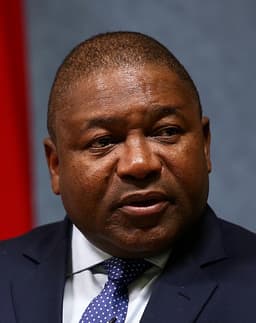
Filipe Nyusi
Politician · Modern
52.3Total
Basic Information
Born
1976
1959
Died
—
—
Era
Modern
Modern
Nationality
Ethiopia
Mozambique
Occupation
Politician
Politician
Civilization
Other
Other
Score Comparison
Military (10%)
41.6
36.0
Political (20%)
72.0
68.0
Influence (20%)
55.0
53.3
Legacy (20%)
48.3
40.8
Leadership (15%)
64.0
74.0
Strategy (15%)
45.0
39.0
TOTAL
54.9
52.3
Abiy Ahmed — Complete Timeline
2018 AD
Became Prime Minister of EthiopiaPolitical Action◆ Major
Abiy Ahmed was elected Prime Minister of Ethiopia by the ruling coalition, EPRDF. He succeeded Hailemariam Desalegn and immediately embarked on sweeping political reforms, including releasing political prisoners and opening up the political space.
ReformLeadershipEPRDF
Impact: nationalconstructive
Signed Peace Agreement with EritreaPolitical Action◆ Major
Abiy signed a peace agreement with Eritrean President Isaias Afwerki, ending a 20-year border conflict. The deal led to the reopening of embassies, resumption of flights, and the awarding of the 2019 Nobel Peace Prize to Abiy.
PeaceEritreaNobel Prize
Impact: regionalconstructive
2019 AD
Launched Economic ReformsReform◆ Major
Abiy initiated economic liberalization, including partial privatization of state-owned enterprises like Ethio Telecom and Ethiopian Airlines. He also introduced a new investment law and sought to attract foreign capital, aiming to transform Ethiopia into a middle-income country.
Economic ReformPrivatizationInvestment
Impact: nationalconstructive
2020 AD
Launched Military Offensive in TigrayWar◆ Major
Abiy ordered a military offensive against the Tigray People's Liberation Front (TPLF) after a federal-state dispute. The Tigray War resulted in widespread atrocities, a humanitarian crisis, and the destabilization of northern Ethiopia, drawing international condemnation.
Tigray WarConflictHumanitarian Crisis
Impact: regionaldestructive
2021 AD
Declared Unilateral Ceasefire in TigrayPolitical Action◆ Major
Facing military setbacks and international pressure, Abiy declared a unilateral ceasefire in Tigray. The ceasefire was initially rejected by the TPLF, but it eventually led to peace talks and the Pretoria Agreement in 2022, ending the two-year war.
CeasefirePeace ProcessTigray
Impact: regional
Filipe Nyusi — Complete Timeline
2014 AD
Elected President of MozambiquePolitical Action◆ Major
Filipe Nyusi, candidate of FRELIMO, won the presidential election with 57% of the vote. He succeeded Armando Guebuza, marking the continuation of FRELIMO's rule since independence. The election was contested by the opposition RENAMO.
ElectionFRELIMOMozambique
Impact: national
2017 AD
Launched Liquefied Natural Gas ProjectsOther◆ Major
Nyusi oversaw the final investment decisions for major LNG projects in the Rovuma Basin, led by Total and ExxonMobil. These projects promised significant economic transformation for Mozambique but were delayed by Islamist insurgency in Cabo Delgado.
LNGEconomyCabo Delgado
Impact: national
2019 AD
Signed Peace Agreement with RENAMOPolitical Action◆ Major
Nyusi signed a peace agreement with RENAMO leader Ossufo Momade, ending decades of sporadic civil conflict. The deal included disarmament of RENAMO's armed wing and political integration. It was brokered with international mediation.
Peace ProcessRENAMOCivil War
Impact: nationalconstructive
Re-elected President of MozambiquePolitical Action◆ Major
Nyusi won a second term with 73% of the vote in an election marred by allegations of fraud and low turnout. Opposition parties rejected the results, leading to protests. The election deepened political polarization.
ElectionFRELIMOControversy
Impact: national
2020 AD
Islamist Insurgency in Cabo Delgado EscalatedWar◆ Major
Under Nyusi's presidency, attacks by the Islamist group Ansar al-Sunna (later linked to ISIS) intensified, seizing the town of Moc
InsurgencyCabo DelgadoISIS
Impact: regionaldestructive
2021 AD
Deployed SADC and Rwandan Troops to Cabo DelgadoWar◆ Major
Nyusi authorized the deployment of Rwandan and SADC military forces to combat the Islamist insurgency in Cabo Delgado. The intervention recaptured Moc
Military InterventionSADCRwanda
Impact: regional
This comparison has not been analyzed yet.
One-time AI generation (~1 minute). Scores and timeline are already available below.
Rankings
🥇
Abiy AhmedLeader
Mil: 41.6Pol: 72.0Inf: 55.0
54.9
🥈
Filipe Nyusi
Mil: 36.0Pol: 68.0Inf: 53.3
52.3
+2.6 behind
How This Comparison Works
Algorithm
Each figure is scored on 6 dimensions (0—100 scale) based on structured historical data: Military (10%), Political (20%), Influence (20%), Legacy (20%), Leadership (15%), Strategy (15%). The weighted total produces the final ranking.
Data Sources
Scores are computed from structured sub-indicators in the database. Scale factors adjust for era (Ancient ×0.85, Modern ×1.0) and civilization size (Eastern ×1.05, Other ×0.80) to account for differences in population and military scale.
Maximum 3 Figures
Comparisons are limited to 2—3 figures to ensure readability and statistical meaningfulness.
Error Margins
±5 points per dimension — Sub-scores are derived from historical records with inherent uncertainty. Two figures within 5 points on a dimension should be considered roughly equivalent in that area.
Total Score Accuracy
±3 points overall — The weighted combination of 6 dimensions produces a total score with approximately ±3 points of uncertainty. Differences of less than 3 points are not statistically significant— the figures are effectively tied.
Known Limitations
- Historical records are incomplete and uneven across civilizations
- Figures from oral-tradition societies may be underrepresented
- Occupation labels can misclassify multi-role figures
- Scores measure capability and impact, not moral character
- Quantitative scoring is a comparison tool, not absolute truth
Capability Radar
Military (10%) — Battles & Warfare
Battles
10
19
Win Rate
10
25
Expansion
10
28
Political (20%) — Governance & Reform
Reform
60
40
Diplomacy
70
55
Economy
45
50
Influence (20%) — Cultural & Global Reach
Cultural
40
20
Global
65
30
Legacy (20%) — Historical Impact
Historical
50
25
Longevity
30
20
Leadership (15%) — Power & Stability
Tenure
55
60
Stability
20
30
Strategy (15%) — Tactics & Innovation
Strategy
10
31
Tactics
10
35
Reform
40
39
Similar Comparisons
Comments & Discussion
No comments yet. Be the first to share your thoughts!