Loading...
Abhisit Vejjajiva vs Li Xiannian
Li Xiannian leads by 10.3 pts · 2 figures compared
…

Abhisit Vejjajiva
Politician · Modern
41.8Total
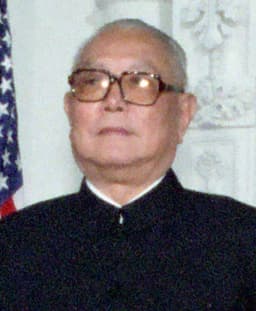
Li Xiannian
Politician · Modern
52.1Total
Basic Information
Born
1964
1909
Died
—
1992
Era
Modern
Modern
Nationality
Thailand
China
Occupation
Politician
Politician
Civilization
Eastern
Eastern
Score Comparison
Military (10%)
13.2
11.5
Political (20%)
46.6
60.0
Influence (20%)
50.2
56.4
Legacy (20%)
38.3
50.0
Leadership (15%)
58.8
80.0
Strategy (15%)
25.6
33.7
TOTAL
41.8
52.1
Abhisit Vejjajiva — Complete Timeline
2008 AD
Became Prime Minister of ThailandPolitical Action◆ Major
Abhisit Vejjajiva became Prime Minister of Thailand on December 15, 2008, after a parliamentary vote following the dissolution of the People Power Party. His rise to power occurred amid political turmoil and was supported by the military and the Democrat Party.
Thai PoliticsPrime MinisterDemocrat Party
Impact: national
2010 AD
Red Shirt Protests of 2010Political Action◆ Major
Abhisit's government faced massive protests by the United Front for Democracy Against Dictatorship (Red Shirts) from March to May 2010. The protests demanded new elections and ended with a military crackdown that resulted in over 90 deaths and widespread property damage in Bangkok.
Red ShirtsProtestsCrackdown
Impact: nationaltragic
2011 AD
Dissolved Parliament and Called ElectionsPolitical Action◆ Major
Under pressure from protests and political instability, Abhisit dissolved the House of Representatives on May 9, 2011, and called for general elections. The elections were held in July 2011 and resulted in a decisive victory for the Pheu Thai Party led by Yingluck Shinawatra.
ElectionDissolutionDemocrat Party
Impact: national
Li Xiannian — Complete Timeline
1934 AD
Participated in the Long MarchWar◆ Major
Li Xiannian joined the Long March as a political commissar, leading troops through harsh conditions. He later became a key military commander in the Communist forces during the Chinese Civil War.
Long MarchChinese Civil WarMilitary Commander
Impact: national
1954 AD
Served as Minister of FinancePolitical Action◆ Major
Li Xiannian was appointed Minister of Finance, overseeing China's economic planning during the First Five-Year Plan. He implemented Soviet-style central planning and managed the national budget.
Economic PlanningFive-Year PlanFinance
Impact: nationalconstructive
1978 AD
Supported Deng Xiaoping's economic reformsReform◆ Major
Li Xiannian supported Deng Xiaoping's market-oriented reforms, helping to shift China from a planned economy to a more market-based system. He advocated for agricultural decollectivization and foreign investment.
Deng XiaopingEconomic ReformMarket Economy
Impact: nationalconstructive
1983 AD
Became President of the People's Republic of ChinaPolitical Action◆ Major
Li Xiannian was elected President of the PRC, serving until 1988. He was a ceremonial head of state but also a member of the Politburo Standing Committee, influencing economic policy.
PresidencyPRCEconomic Policy
Impact: nationalconstructive
1992 AD
Died in office as PresidentOther
Li Xiannian died while still serving as President of the PRC. His death marked the end of an era of revolutionary-era leaders in Chinese politics.
DeathPresidencyRevolutionary Era
Impact: national
Expert Analysis
Origins
Abhisit Vejjajiva was born on August 3, 1964, in Newcastle upon Tyne, England, to a wealthy Thai family with political connections. His father was a medical professor and his mother a lecturer. He was educated in the UK, earning a degree in Philosophy, Politics, and Economics from Oxford University. This elite background shaped his technocratic, Western-oriented worldview.
Li Xiannian was born on June 23, 1909, in Hong'an, Hubei province, China, into a poor peasant family. He received little formal education but joined the Chinese Communist Party in 1927, participating in the Chinese Civil War. His formative experiences were shaped by rural poverty and revolutionary struggle, contrasting sharply with Abhisit's privileged upbringing.
Rise to Power
Abhisit entered Thai politics as a member of the Democrat Party, becoming a MP in 1992. He rose through party ranks, becoming party leader in 2005. His ascent to prime minister came on December 15, 2008, after a controversial parliamentary vote following the dissolution of the pro-Thaksin People Power Party. This was a turning point, as he led a coalition government amid deep political polarization.
Li Xiannian's rise was through military and party service. He participated in the Long March (1934-1935) as a political commissar, gaining military credentials. After the Communist victory, he held key economic posts: Minister of Finance from 1954 to 1970, overseeing China's First Five-Year Plan. His support for Deng Xiaoping's reforms in the late 1970s elevated him to the Politburo Standing Committee, and he became President of the PRC from 1983 to 1988.
Leadership & Governance
Abhisit's leadership style was cautious and legalistic. He focused on stabilizing Thailand's economy after the 2008 financial crisis, implementing stimulus measures. However, his government was paralyzed by the Red Shirt protests in 2010, which demanded new elections. Abhisit's response – using military force to crack down – resulted in over 90 deaths and widespread condemnation. His governance score of 58.8 reflects his inability to resolve the political crisis.
Li Xiannian was a pragmatic economic planner. As Minister of Finance, he enforced Soviet-style central planning, but later became a key supporter of Deng Xiaoping's market reforms. He advocated for price liberalization and enterprise autonomy. His leadership score of 80.0 reflects his effectiveness in transitioning China from a command economy to a mixed one. However, he remained a loyal party member, suppressing dissent when needed.
Triumph & Tragedy
Abhisit's greatest success was managing Thailand's economy during the global downturn, with GDP growth of 7.8% in 2010. His failure was the mishandling of the Red Shirt protests, leading to a violent crackdown and his eventual electoral defeat in 2011. His political score of 46.6 and legacy of 38.3 reflect his mixed record.
Li Xiannian's greatest triumph was his role in China's economic reform, which lifted hundreds of millions from poverty. His tragedy was his early enforcement of failed collectivization policies that contributed to the Great Leap Forward famine (1959-1961). His legacy score of 50.0 acknowledges his transformative impact but with a dark side.
Character & Destiny
Abhisit was seen as an intellectual, honest but aloof, unable to connect with rural voters. His reliance on military force during protests damaged his reputation. His destiny was to be a transitional figure in Thailand's turbulent democracy.
Li Xiannian was a survivor, adapting from revolutionary fighter to economic reformer. His pragmatism allowed him to thrive under Mao and Deng. His destiny was to be a builder of modern China, though his early policies caused suffering.
Legacy
Abhisit's legacy is limited to Thailand: he is remembered for his economic management but also for the 2010 crackdown. His influence score of 50.2 reflects his minor global impact.
Li Xiannian's legacy is vast: he helped shape China's economic rise, influencing global trade and development. His total score of 52.1 surpasses Abhisit's 41.8 by 10.3 points. However, his legacy is also tied to authoritarian governance.
Conclusion
Li Xiannian had greater impact due to his role in transforming China's economy, affecting billions. Abhisit's influence was confined to a small, volatile nation. Li's strategic score of 33.7 versus Abhisit's 25.6 reflects his superior long-term planning. While both had flaws, Li's contributions to global economic history are undeniable.
Rankings
🥇
Li XiannianLeader
Mil: 11.5Pol: 60.0Inf: 56.4
52.1
🥈
Abhisit Vejjajiva
Mil: 13.2Pol: 46.6Inf: 50.2
41.8
+10.3 behind
How This Comparison Works
Algorithm
Each figure is scored on 6 dimensions (0—100 scale) based on structured historical data: Military (10%), Political (20%), Influence (20%), Legacy (20%), Leadership (15%), Strategy (15%). The weighted total produces the final ranking.
Data Sources
Scores are computed from structured sub-indicators in the database. Scale factors adjust for era (Ancient ×0.85, Modern ×1.0) and civilization size (Eastern ×1.05, Other ×0.80) to account for differences in population and military scale.
Maximum 3 Figures
Comparisons are limited to 2—3 figures to ensure readability and statistical meaningfulness.
Error Margins
±5 points per dimension — Sub-scores are derived from historical records with inherent uncertainty. Two figures within 5 points on a dimension should be considered roughly equivalent in that area.
Total Score Accuracy
±3 points overall — The weighted combination of 6 dimensions produces a total score with approximately ±3 points of uncertainty. Differences of less than 3 points are not statistically significant— the figures are effectively tied.
Known Limitations
- Historical records are incomplete and uneven across civilizations
- Figures from oral-tradition societies may be underrepresented
- Occupation labels can misclassify multi-role figures
- Scores measure capability and impact, not moral character
- Quantitative scoring is a comparison tool, not absolute truth
Capability Radar
Military (10%) — Battles & Warfare
Battles
14
15
Win Rate
20
16
Expansion
18
22
Political (20%) — Governance & Reform
Reform
30
60
Diplomacy
40
65
Economy
30
70
Influence (20%) — Cultural & Global Reach
Cultural
15
30
Global
15
40
Legacy (20%) — Historical Impact
Historical
20
55
Longevity
10
40
Leadership (15%) — Power & Stability
Tenure
35
75
Stability
20
60
Strategy (15%) — Tactics & Innovation
Strategy
22
23
Tactics
28
29
Reform
30
26
Similar Comparisons
Comments & Discussion
No comments yet. Be the first to share your thoughts!