Loading...
Abdurrahman Wahid vs John Redmond
John Redmond leads by 1.0 pts · 2 figures compared
…

Abdurrahman Wahid
Politician · Modern
53.4Total
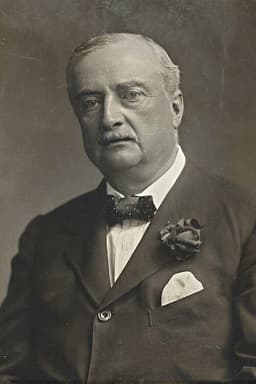
John Redmond
Politician · Modern
54.4Total
Basic Information
Born
1940
1856
Died
—
1918
Era
Modern
Modern
Nationality
Indonesia
Ireland
Occupation
Politician
Politician
Civilization
Eastern
Western
Score Comparison
Military (10%)
10.5
50.0
Political (20%)
72.0
68.0
Influence (20%)
58.3
54.1
Legacy (20%)
54.0
46.7
Leadership (15%)
65.7
65.7
Strategy (15%)
35.9
41.3
TOTAL
53.4
54.4
Abdurrahman Wahid — Complete Timeline
1998 AD
Founded the National Awakening Party (PKB)Political Action◆ Major
Wahid founded the National Awakening Party (PKB) as a political vehicle for traditionalist Muslims. The party became a major force in post-Suharto Indonesian politics, representing the Nahdlatul Ulama constituency.
Political PartyNahdlatul UlamaReformasi
Impact: nationalconstructive
1999 AD
Elected President of IndonesiaPolitical Action
Abdurrahman Wahid was elected by the People's Consultative Assembly as the fourth president of Indonesia, succeeding B.J. Habibie. His election marked a transition to democratic governance after the fall of Suharto's New Order regime.
DemocratizationPresidencyReformasi
Impact: nationalconstructive
2000 AD
Advocated for Religious Tolerance and PluralismCultural
As president, Wahid promoted interfaith dialogue and tolerance, including lifting the ban on Chinese cultural expressions and advocating for the rights of religious minorities. His policies faced opposition from conservative Islamic groups.
Religious TolerancePluralismHuman Rights
Impact: nationalprogressive
2001 AD
Impeachment and Removal from PresidencyPolitical Action◆ Major
The People's Consultative Assembly impeached and removed Abdurrahman Wahid from the presidency due to allegations of incompetence and involvement in financial scandals. He was succeeded by Vice President Megawati Sukarnoputri.
ImpeachmentPolitical CrisisSuccession
Impact: nationaldestructive
John Redmond — Complete Timeline
1900 AD
Election as Leader of the Irish Parliamentary PartyPolitical Action◆ Major
Redmond was elected chairman of the reunited Irish Parliamentary Party, succeeding the Parnell split. He led the party in the House of Commons, advocating for Home Rule for Ireland.
LeadershipHome RuleParliamentary Politics
Impact: nationalconstructive
1912 AD
Third Home Rule Bill Passed by CommonsPolitical Action◆ Major
The Third Home Rule Bill was introduced and passed by the House of Commons, thanks to the Parliament Act 1911 removing the Lords' veto. Redmond's party held the balance of power and secured the bill's passage.
Home RuleLegislationParliamentary Victory
Impact: nationalprogressive
1914 AD
Home Rule Bill Enacted but SuspendedPolitical Action◆ Major
The Government of Ireland Act 1914 (Home Rule) received royal assent but was suspended for the duration of World War I. Redmond accepted this compromise, urging Irishmen to support the British war effort.
Home RuleWorld War ICompromise
Impact: national
Call for Irishmen to Join the British ArmyPolitical Action◆ Major
Redmond made a speech at Woodenbridge, County Wicklow, calling on Irishmen to enlist in the British Army to fight in World War I. This split the Irish Volunteers, with a majority opposing his call.
World War IEnlistmentIrish Volunteers
Impact: national
1916 AD
Easter RisingWar
The Easter Rising in Dublin, led by republican opponents of Redmond's constitutional approach, took place. The rising was suppressed, but its execution of leaders shifted public opinion away from Redmond's Home Rule policy.
Easter RisingRebellionPolitical Shift
Impact: nationaldestructive
1917 AD
Irish ConventionPolitical Action◆ Major
Redmond chaired the Irish Convention, a failed attempt to reach a consensus on Home Rule implementation. The convention broke down over partition and Ulster's exclusion, marking the failure of Redmond's constitutional approach.
ConventionHome RuleFailure
Impact: nationaltragic
Expert Analysis
Origins
**Abdurrahman Wahid** was born on September 4, 1940, in Denanyar, East Java, into a highly influential Muslim clerical family. His grandfather founded the Nahdlatul Ulama (NU), Indonesia's largest Islamic organization. Wahid studied at Islamic schools in Indonesia and later abroad, including at Al-Azhar University in Cairo and the University of Baghdad. His background combined traditional Islamic scholarship with exposure to Western philosophy and pluralism.
**John Redmond** was born on September 1, 1856, in Ballytrent, County Wexford, Ireland, into a Catholic landowning family with a strong political tradition. His father was a Member of Parliament. Redmond was educated at Clongowes Wood College and later at Trinity College Dublin, though he did not graduate. He became involved in nationalist politics early, supporting land reform and Irish self-government.
Rise to Power
Wahid rose to prominence through his leadership in Nahdlatul Ulama. In 1984, he was elected chairman of NU, a position he used to modernize the organization and advocate for religious tolerance. After Suharto's fall in 1998, Wahid founded the National Awakening Party (PKB) and became a leading reform figure. He was elected president by the People's Consultative Assembly in October 1999, defeating Megawati Sukarnoputri.
Redmond rose through the Irish Parliamentary Party (IPP). He was elected to Parliament in 1881 and became leader of the IPP in 1900, reuniting the party after the Parnell split. He skillfully navigated British politics, leveraging the Parliament Act 1911 to force the Third Home Rule Bill through the Commons. By 1912, Home Rule seemed inevitable, with Redmond at the peak of his influence.
Leadership & Governance
Wahid's leadership style was unconventional and decentralized. He promoted pluralism by lifting bans on Chinese cultural expressions, establishing interfaith dialogue, and advocating for minority rights. However, his governance was chaotic; he frequently changed cabinet ministers and made contradictory statements. His political score of 72.0 reflects his ability to navigate Indonesia's transition to democracy, but his strategy score of 35.9 indicates poor planning and execution.
Redmond led the IPP with a constitutional, parliamentary approach. He secured the Third Home Rule Bill, a major legislative achievement. However, his leadership was rigid; he failed to anticipate the rise of militant republicanism. His political score of 68.0 is similar to Wahid's, but his strategy score of 41.3 shows limited adaptability. Redmond's call for Irishmen to join the British Army in World War I (1914) alienated many nationalists, undermining his support.
Triumph & Tragedy
Wahid's greatest success was guiding Indonesia through its early post-Suharto democratic transition, promoting civil liberties and religious tolerance. His greatest failure was his impeachment and removal in July 2001, due to allegations of corruption and incompetence. He was unable to manage the economy or political coalitions, leading to his downfall.
Redmond's triumph was the passage of the Government of Ireland Act 1914, granting Home Rule. His tragedy was that the act was suspended for World War I and never implemented. The Easter Rising in 1916 and the subsequent rise of Sinn Féin destroyed the IPP. Redmond died in 1918, seeing his life's work undone.
Character & Destiny
Wahid was intellectually curious, witty, and genuinely tolerant, but also erratic and often absent from key decisions. His character as a scholar-cleric shaped his pluralist vision, but his lack of administrative discipline led to political failure. He scored 65.7 in leadership but only 10.5 in military, reflecting his civilian, reformist nature.
Redmond was dignified, disciplined, and committed to constitutionalism. His character was that of a parliamentary gentleman, but he was outmaneuvered by more radical forces. His leadership score of 65.7 matches Wahid's, but his legacy score of 46.7 is lower, as his achievements were eclipsed by the Irish Free State's emergence.
Legacy
Wahid's legacy is as a symbol of moderate Islam and democracy in Indonesia. His advocacy for pluralism influenced later Indonesian politics, though his presidency is often seen as a failed experiment. He scored 54.0 in legacy, reflecting his lasting symbolic importance.
Redmond's legacy is more ambiguous. He is remembered as the man who nearly achieved Home Rule, but his approach was rejected by Irish nationalists. The Irish Free State, established in 1922, owed little to his methods. His legacy score of 46.7 reflects this diminished status.
Conclusion
While Redmond scored slightly higher overall (54.4 vs. 53.4), Wahid's impact on Indonesia's democratic transition and global perception of Islam was more profound. Redmond's achievements were undone by historical forces, whereas Wahid's pluralist ideals persist. Therefore, Abdurrahman Wahid had greater long-term impact despite his political failure. His influence on religious tolerance and democracy in the world's largest Muslim-majority country outweighs Redmond's constitutional victory that never materialized.
Rankings
🥇
John RedmondLeader
Mil: 50.0Pol: 68.0Inf: 54.1
54.4
🥈
Abdurrahman Wahid
Mil: 10.5Pol: 72.0Inf: 58.3
53.4
+1.0 behind
How This Comparison Works
Algorithm
Each figure is scored on 6 dimensions (0—100 scale) based on structured historical data: Military (10%), Political (20%), Influence (20%), Legacy (20%), Leadership (15%), Strategy (15%). The weighted total produces the final ranking.
Data Sources
Scores are computed from structured sub-indicators in the database. Scale factors adjust for era (Ancient ×0.85, Modern ×1.0) and civilization size (Eastern ×1.05, Other ×0.80) to account for differences in population and military scale.
Maximum 3 Figures
Comparisons are limited to 2—3 figures to ensure readability and statistical meaningfulness.
Error Margins
±5 points per dimension — Sub-scores are derived from historical records with inherent uncertainty. Two figures within 5 points on a dimension should be considered roughly equivalent in that area.
Total Score Accuracy
±3 points overall — The weighted combination of 6 dimensions produces a total score with approximately ±3 points of uncertainty. Differences of less than 3 points are not statistically significant— the figures are effectively tied.
Known Limitations
- Historical records are incomplete and uneven across civilizations
- Figures from oral-tradition societies may be underrepresented
- Occupation labels can misclassify multi-role figures
- Scores measure capability and impact, not moral character
- Quantitative scoring is a comparison tool, not absolute truth
Capability Radar
Military (10%) — Battles & Warfare
Battles
15
29
Win Rate
18
29
Expansion
22
36
Political (20%) — Governance & Reform
Reform
70
55
Diplomacy
75
50
Economy
40
30
Influence (20%) — Cultural & Global Reach
Cultural
65
35
Global
55
30
Legacy (20%) — Historical Impact
Historical
60
50
Longevity
55
30
Leadership (15%) — Power & Stability
Tenure
30
45
Stability
35
20
Strategy (15%) — Tactics & Innovation
Strategy
26
36
Tactics
24
41
Reform
27
43
Similar Comparisons
Comments & Discussion
No comments yet. Be the first to share your thoughts!