Loading...
This comparison has not been analyzed yet.
One-time AI generation (~1 minute). Scores and timeline are already available below.
Abdullah I of Jordan vs Pratap Singh of Jammu
Abdullah I of Jordan leads by 1.7 pts · 2 figures compared
…
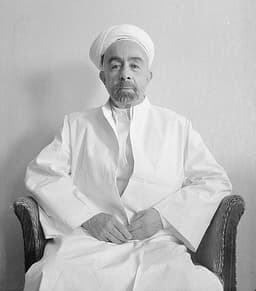
Abdullah I of Jordan
Emperor · Modern
48.4Total

Pratap Singh of Jammu
Emperor · Modern
46.7Total
Basic Information
Born
1882
1848
Died
1951
1925
Era
Modern
Modern
Nationality
Jordan
India
Occupation
Emperor
Emperor
Civilization
Middle Eastern
Indian
Score Comparison
Military (10%)
47.5
50.0
Political (20%)
62.7
43.7
Influence (20%)
53.3
48.6
Legacy (20%)
44.2
39.2
Leadership (15%)
40.0
68.0
Strategy (15%)
38.6
30.3
TOTAL
48.4
46.7
Abdullah I of Jordan — Complete Timeline
1921 AD
Establishment of the Emirate of TransjordanPolitical Action◆ Major
Abdullah I arrived in Transjordan in 1921 with a small force, aiming to reclaim the Syrian throne. The British recognized him as Emir of Transjordan, establishing a semi-autonomous emirate under the British Mandate, which later became the Kingdom of Jordan.
FoundingTransjordanBritish Mandate
Impact: regionalconstructive
1946 AD
Independence of JordanPolitical Action◆ Major
Abdullah I negotiated the Treaty of London in 1946, granting Jordan full independence from British mandate rule. He was proclaimed King of the Hashemite Kingdom of Jordan on May 25, 1946, marking the country's sovereignty.
IndependenceTreaty of LondonSovereignty
Impact: nationalconstructive
1950 AD
Annexation of the West BankPolitical Action◆ Major
After the 1948 Arab-Israeli War, Abdullah I annexed the West Bank and East Jerusalem in April 1950, renaming the country the Hashemite Kingdom of Jordan. This move was condemned by the Arab League and led to tensions with other Arab states.
AnnexationWest BankArab-Israeli Conflict
Impact: regional
1951 AD
Assassination at Al-Aqsa MosquePolitical Action◆ Major
Abdullah I was assassinated on July 20, 1951, while entering the Al-Aqsa Mosque in Jerusalem. A Palestinian gunman shot him, reportedly due to his perceived willingness to make peace with Israel. His death shocked the Arab world and led to a succession crisis.
AssassinationAl-AqsaSuccession
Impact: regionaltragic
Pratap Singh of Jammu — Complete Timeline
1885 AD
Accession to the Throne of Jammu and KashmirPolitical Action◆ Major
Pratap Singh became Maharaja of Jammu and Kashmir after the death of his father Maharaja Ranbir Singh. His reign lasted 40 years, during which he ruled as a British vassal under the Treaty of Amritsar.
AccessionJammu and KashmirBritish Raj
Impact: regional
1889 AD
Suspension of Powers by BritishPolitical Action◆ Major
The British suspended Pratap Singh's ruling powers due to allegations of misgovernment and corruption. A council of regency was appointed to administer the state, and he was restored only after agreeing to reforms.
British InterventionJammu and KashmirRegency
Impact: regionaldestructive
1900 AD
Construction of Pratap ParkCultural
Pratap Singh established Pratap Park in Srinagar, a public garden that became a landmark. The project reflected his interest in urban development and public works during his reign.
Urban DevelopmentJammu and KashmirPublic Works
constructive
This comparison has not been analyzed yet.
One-time AI generation (~1 minute). Scores and timeline are already available below.
Rankings
🥇
Abdullah I of JordanLeader
Mil: 47.5Pol: 62.7Inf: 53.3
48.4
🥈
Pratap Singh of Jammu
Mil: 50.0Pol: 43.7Inf: 48.6
46.7
+1.7 behind
How This Comparison Works
Algorithm
Each figure is scored on 6 dimensions (0—100 scale) based on structured historical data: Military (10%), Political (20%), Influence (20%), Legacy (20%), Leadership (15%), Strategy (15%). The weighted total produces the final ranking.
Data Sources
Scores are computed from structured sub-indicators in the database. Scale factors adjust for era (Ancient ×0.85, Modern ×1.0) and civilization size (Eastern ×1.05, Other ×0.80) to account for differences in population and military scale.
Maximum 3 Figures
Comparisons are limited to 2—3 figures to ensure readability and statistical meaningfulness.
Error Margins
±5 points per dimension — Sub-scores are derived from historical records with inherent uncertainty. Two figures within 5 points on a dimension should be considered roughly equivalent in that area.
Total Score Accuracy
±3 points overall — The weighted combination of 6 dimensions produces a total score with approximately ±3 points of uncertainty. Differences of less than 3 points are not statistically significant— the figures are effectively tied.
Known Limitations
- Historical records are incomplete and uneven across civilizations
- Figures from oral-tradition societies may be underrepresented
- Occupation labels can misclassify multi-role figures
- Scores measure capability and impact, not moral character
- Quantitative scoring is a comparison tool, not absolute truth
Capability Radar
Military (10%) — Battles & Warfare
Battles
20
25
Win Rate
25
30
Expansion
25
10
Political (20%) — Governance & Reform
Reform
50
30
Diplomacy
60
40
Economy
45
35
Influence (20%) — Cultural & Global Reach
Cultural
30
20
Global
30
10
Legacy (20%) — Historical Impact
Historical
40
25
Longevity
35
20
Leadership (15%) — Power & Stability
Tenure
55
60
Stability
40
45
Strategy (15%) — Tactics & Innovation
Strategy
25
20
Tactics
20
20
Reform
30
15
Similar Comparisons
Comments & Discussion
No comments yet. Be the first to share your thoughts!