Loading...
This comparison has not been analyzed yet.
One-time AI generation (~1 minute). Scores and timeline are already available below.
Abdulla Yameen vs Gligorov Kiro
Gligorov Kiro leads by 10.0 pts · 2 figures compared
…
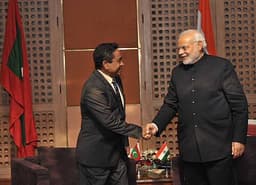
Abdulla Yameen
Politician · Modern
42.4Total
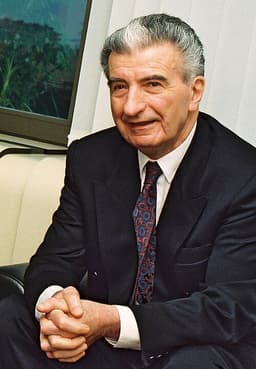
Gligorov Kiro
Politician · Modern
52.4Total
Basic Information
Born
1959
1917
Died
—
2012
Era
Modern
Modern
Nationality
Maldives
North Macedonia
Occupation
Politician
Politician
Civilization
Other
Western
Score Comparison
Military (10%)
15.3
49.1
Political (20%)
39.4
61.3
Influence (20%)
47.1
52.5
Legacy (20%)
37.5
45.0
Leadership (15%)
62.2
65.0
Strategy (15%)
44.4
41.7
TOTAL
42.4
52.4
Abdulla Yameen — Complete Timeline
2013 AD
Became President of the MaldivesPolitical Action◆ Major
Yameen was elected President of the Maldives, succeeding Mohamed Nasheed. His presidency was marked by authoritarian tendencies, including crackdowns on political opposition and the judiciary.
PresidentMaldivesAuthoritarianism
Impact: national
2015 AD
Imprisoned former President Mohamed NasheedPolitical Action◆ Major
Yameen's government arrested and imprisoned former President Nasheed on terrorism charges related to the arrest of a judge. The conviction was widely criticized internationally as politically motivated.
Political ImprisonmentNasheedHuman Rights
Impact: nationaldestructive
2018 AD
Lost re-election to Ibrahim Mohamed SolihPolitical Action◆ Major
Yameen was defeated in the presidential election by Ibrahim Mohamed Solih, ending his authoritarian rule. The election was seen as a victory for democracy and international pressure.
Election DefeatDemocratic Transition
Impact: national
2022 AD
Convicted of money laundering and corruptionPolitical Action◆ Major
Yameen was convicted of money laundering and corruption related to the sale of a resort island. He was sentenced to 11 years in prison, though the sentence was later reduced on appeal.
CorruptionMoney LaunderingConviction
Impact: nationaldestructive
Gligorov Kiro — Complete Timeline
1991 AD
Independence referendum and election as first presidentPolitical Action
Gligorov led Macedonia through a peaceful independence referendum from Yugoslavia in September 1991. He was elected as the first president of independent Macedonia in January 1991, overseeing the country's transition to sovereignty.
IndependenceReferendumPresidency
Impact: nationalconstructive
1995 AD
Assassination attemptPolitical Action◆ Major
Gligorov survived an assassination attempt in Skopje on October 3, 1995, when a car bomb exploded near his motorcade. He was seriously injured but recovered, while his driver was killed. The perpetrators were never identified.
Assassination attemptViolenceSurvival
Impact: nationaltragic
2001 AD
Presidency during the 2001 insurgencyWar◆ Major
Gligorov served as president during the 2001 insurgency by Albanian rebels, which threatened Macedonia's stability. He supported the Ohrid Framework Agreement in August 2001, which ended the conflict and granted greater rights to ethnic Albanians.
InsurgencyPeace agreementEthnic conflict
Impact: nationalconstructive
This comparison has not been analyzed yet.
One-time AI generation (~1 minute). Scores and timeline are already available below.
Rankings
🥇
Gligorov KiroLeader
Mil: 49.1Pol: 61.3Inf: 52.5
52.4
🥈
Abdulla Yameen
Mil: 15.3Pol: 39.4Inf: 47.1
42.4
+10.0 behind
How This Comparison Works
Algorithm
Each figure is scored on 6 dimensions (0—100 scale) based on structured historical data: Military (10%), Political (20%), Influence (20%), Legacy (20%), Leadership (15%), Strategy (15%). The weighted total produces the final ranking.
Data Sources
Scores are computed from structured sub-indicators in the database. Scale factors adjust for era (Ancient ×0.85, Modern ×1.0) and civilization size (Eastern ×1.05, Other ×0.80) to account for differences in population and military scale.
Maximum 3 Figures
Comparisons are limited to 2—3 figures to ensure readability and statistical meaningfulness.
Error Margins
±5 points per dimension — Sub-scores are derived from historical records with inherent uncertainty. Two figures within 5 points on a dimension should be considered roughly equivalent in that area.
Total Score Accuracy
±3 points overall — The weighted combination of 6 dimensions produces a total score with approximately ±3 points of uncertainty. Differences of less than 3 points are not statistically significant— the figures are effectively tied.
Known Limitations
- Historical records are incomplete and uneven across civilizations
- Figures from oral-tradition societies may be underrepresented
- Occupation labels can misclassify multi-role figures
- Scores measure capability and impact, not moral character
- Quantitative scoring is a comparison tool, not absolute truth
Capability Radar
Military (10%) — Battles & Warfare
Battles
19
28
Win Rate
22
34
Expansion
27
35
Political (20%) — Governance & Reform
Reform
30
40
Diplomacy
25
55
Economy
35
35
Influence (20%) — Cultural & Global Reach
Cultural
10
30
Global
10
25
Legacy (20%) — Historical Impact
Historical
15
40
Longevity
10
30
Leadership (15%) — Power & Stability
Tenure
45
50
Stability
15
30
Strategy (15%) — Tactics & Innovation
Strategy
28
37
Tactics
35
38
Reform
37
46
Similar Comparisons
Comments & Discussion
No comments yet. Be the first to share your thoughts!