Loading...
This comparison has not been analyzed yet.
One-time AI generation (~1 minute). Scores and timeline are already available below.
Abdelmalek Sellal vs Evelyn Baring
Evelyn Baring leads by 12.3 pts · 2 figures compared
…
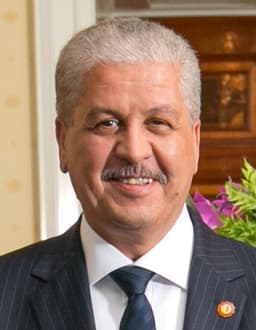
Abdelmalek Sellal
Politician · Modern
47.5Total

Evelyn Baring
Politician · Modern
59.8Total
Basic Information
Born
1948
1841
Died
—
1917
Era
Modern
Modern
Nationality
Algeria
Great Britain
Occupation
Politician
Politician
Civilization
Middle Eastern
Western
Score Comparison
Military (10%)
50.0
50.0
Political (20%)
68.0
70.3
Influence (20%)
49.4
55.0
Legacy (20%)
39.2
56.0
Leadership (15%)
40.0
80.0
Strategy (15%)
41.2
45.0
TOTAL
47.5
59.8
Abdelmalek Sellal — Complete Timeline
1999 AD
Appointed Minister of Interior and Local GovernmentPolitical Action◆ Major
Abdelmalek Sellal was appointed Minister of Interior and Local Government by President Abdelaziz Bouteflika in 1999, overseeing local administration and security. He played a key role in implementing Bouteflika's policies and managing the security situation during the civil war.
MinistryInteriorBouteflika
Impact: national
2012 AD
Appointed Prime Minister of Algeria (first term)Political Action◆ Major
Sellal was appointed Prime Minister of Algeria on September 3, 2012, by President Bouteflika, succeeding Ahmed Ouyahia. His first term focused on economic development, infrastructure projects, and maintaining political stability amid the Arab Spring protests in the region.
AppointmentGovernmentBouteflika
Impact: national
2014 AD
Reappointed Prime Minister (second term)Political Action◆ Major
Sellal was reappointed Prime Minister on April 29, 2014, after Bouteflika's re-election. His second term continued economic reforms and oversaw the 2014 constitutional amendment, which limited presidential terms and strengthened the role of the prime minister.
ReappointmentGovernmentConstitutional Reform
Impact: national
2017 AD
Resigned as Prime MinisterPolitical Action◆ Major
Sellal resigned as Prime Minister on May 24, 2017, after five years in office, following the 2017 legislative elections. His resignation was part of a routine government reshuffle, and he was succeeded by Abdelmadjid Tebboune, who later became president.
ResignationGovernment ChangeElection
Impact: national
2019 AD
Arrested and imprisoned on corruption chargesPolitical Action◆ Major
Sellal was arrested in May 2019 on corruption charges related to his time as prime minister and interior minister, as part of the post-Bouteflika anti-corruption campaign. He was sentenced to 15 years in prison in 2020 for abuse of office and embezzlement.
ArrestCorruptionPolitical Repression
Impact: nationaltragic
Evelyn Baring — Complete Timeline
1883 AD
Reorganized Egyptian FinancesReform◆ Major
Baring restructured Egypt's debt and finances after the Urabi Revolt, imposing austerity measures and prioritizing repayment to European creditors. This stabilized the economy but caused hardship for Egyptians and deepened British control.
Financial ReformDebtImperialism
Impact: regional
Appointed Consul-General of EgyptPolitical Action◆ Major
Baring became British Consul-General in Egypt, effectively ruling the country as a de facto governor. He implemented financial reforms and controlled Egyptian policy, earning the nickname 'Over-Baring' for his dominant influence.
Colonial AdministrationEgyptImperialism
Impact: regional
1898 AD
Oversaw the Reconquest of SudanWar◆ Major
Baring authorized and supported the Anglo-Egyptian reconquest of Sudan, culminating in the Battle of Omdurman. This reestablished Anglo-Egyptian control over Sudan, ending the Mahdist state.
Military CampaignSudanColonialism
Impact: regional
This comparison has not been analyzed yet.
One-time AI generation (~1 minute). Scores and timeline are already available below.
Rankings
🥇
Evelyn BaringLeader
Mil: 50.0Pol: 70.3Inf: 55.0
59.8
🥈
Abdelmalek Sellal
Mil: 50.0Pol: 68.0Inf: 49.4
47.5
+12.3 behind
How This Comparison Works
Algorithm
Each figure is scored on 6 dimensions (0—100 scale) based on structured historical data: Military (10%), Political (20%), Influence (20%), Legacy (20%), Leadership (15%), Strategy (15%). The weighted total produces the final ranking.
Data Sources
Scores are computed from structured sub-indicators in the database. Scale factors adjust for era (Ancient ×0.85, Modern ×1.0) and civilization size (Eastern ×1.05, Other ×0.80) to account for differences in population and military scale.
Maximum 3 Figures
Comparisons are limited to 2—3 figures to ensure readability and statistical meaningfulness.
Error Margins
±5 points per dimension — Sub-scores are derived from historical records with inherent uncertainty. Two figures within 5 points on a dimension should be considered roughly equivalent in that area.
Total Score Accuracy
±3 points overall — The weighted combination of 6 dimensions produces a total score with approximately ±3 points of uncertainty. Differences of less than 3 points are not statistically significant— the figures are effectively tied.
Known Limitations
- Historical records are incomplete and uneven across civilizations
- Figures from oral-tradition societies may be underrepresented
- Occupation labels can misclassify multi-role figures
- Scores measure capability and impact, not moral character
- Quantitative scoring is a comparison tool, not absolute truth
Capability Radar
Military (10%) — Battles & Warfare
Battles
23
27
Win Rate
25
31
Expansion
30
33
Political (20%) — Governance & Reform
Reform
40
75
Diplomacy
50
80
Economy
45
85
Influence (20%) — Cultural & Global Reach
Cultural
20
30
Global
15
55
Legacy (20%) — Historical Impact
Historical
20
60
Longevity
15
50
Leadership (15%) — Power & Stability
Tenure
60
70
Stability
35
65
Strategy (15%) — Tactics & Innovation
Strategy
29
35
Tactics
35
42
Reform
39
42
Similar Comparisons
Comments & Discussion
No comments yet. Be the first to share your thoughts!