Loading...
Abdel Fattah al-Burhan vs Gnassingbe Eyadema
Gnassingbe Eyadema leads by 6.4 pts · 2 figures compared
…
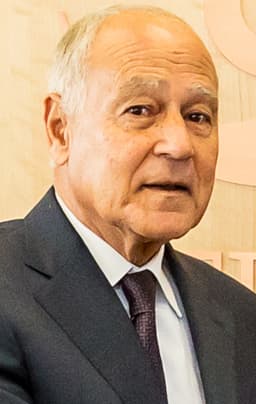
Abdel Fattah al-Burhan
General · Modern
42.5Total

Gnassingbe Eyadema
General · Modern
48.9Total
Basic Information
Born
1960
1935
Died
—
—
Era
Modern
Modern
Nationality
Sudan
Togo
Occupation
General
General
Civilization
Other
Other
Score Comparison
Military (10%)
50.0
50.0
Political (20%)
32.2
42.2
Influence (20%)
49.4
51.0
Legacy (20%)
37.5
40.8
Leadership (15%)
43.8
72.0
Strategy (15%)
43.7
38.6
TOTAL
42.5
48.9
Abdel Fattah al-Burhan — Complete Timeline
2019 AD
Became Chairman of the Sovereignty CouncilPolitical Action◆ Major
Abdel Fattah al-Burhan became Chairman of the Sovereignty Council, Sudan's collective head of state, after the ouster of Omar al-Bashir. He led the transitional military council that shared power with civilian forces.
TransitionMilitary RuleSudan
Impact: national
2020 AD
Signed the Juba Peace AgreementPolitical Action◆ Major
Al-Burhan signed the Juba Peace Agreement with several armed rebel groups, aiming to end conflicts in Darfur, South Kordofan, and Blue Nile. The agreement was a key step in Sudan's transition but faced implementation challenges.
Peace AgreementCivil WarSudan
Impact: nationalconstructive
2021 AD
Led the 2021 CoupPolitical Action◆ Major
Al-Burhan led a military coup in October 2021, dissolving the civilian-led government and declaring a state of emergency. The coup derailed Sudan's democratic transition and sparked widespread protests.
CoupDemocracySudan
Impact: nationaldestructive
Gnassingbe Eyadema — Complete Timeline
1967 AD
Seized Power in Military CoupPolitical Action◆ Major
Eyadema led a military coup that overthrew President Nicolas Grunitzky, establishing himself as head of state. He was then 32 years old, becoming one of Africa's youngest leaders at the time.
CoupTogoMilitary
Impact: nationaldestructive
1969 AD
Established One-Party StatePolitical Action◆ Major
Eyadema established the Rally of the Togolese People as the sole legal party, creating a one-party state. He suppressed political opposition, controlled the media, and ruled with an iron fist for decades.
One-Party StateRepressionTogo
Impact: nationaldestructive
1970 AD
Survived Assassination AttemptPolitical Action
Eyadema survived an assassination attempt when his plane was attacked by a group of Togolese exiles. The attack failed, and Eyadema used it to consolidate power and crack down on opposition.
Assassination AttemptTogoSurvival
Impact: national
1991 AD
Transitioned to Multiparty PoliticsReform◆ Major
Under pressure from pro-democracy movements and international donors, Eyadema allowed multiparty elections. However, he manipulated the process to retain power, winning disputed elections in 1993, 1998, 2003, and 2005.
MultipartyElectionTogo
Impact: national
2005 AD
Died in OfficeOther◆ Major
Eyadema died of a heart attack on February 5, 2005, after 38 years in power. His death ended one of Africa's longest-serving presidencies. He was succeeded by his son, Faure Gnassingb
DeathTogoDynastic Succession
Impact: national
Expert Analysis
Origins
Abdel Fattah al-Burhan was born in 1960 in Sudan, likely in the Nile River region. He attended the Sudanese Military Academy, graduating in the 1980s. His early career was shaped by the regime of Omar al-Bashir, where he rose through the ranks of the Sudanese Armed Forces. Little is known of his family background, but he is a Sunni Muslim from the Ja'alin tribe, a riverain group that has traditionally dominated Sudanese politics.
Gnassingbe Eyadema was born on December 26, 1935, in Pya, a village in northern Togo, to a Kabye family. He attended local schools but left at age 14 to join the French Army. He served in French Indochina and Algeria, gaining military experience. After Togo's independence, he joined the Togolese army and quickly rose due to his French connections and leadership.
Rise to Power
Al-Burhan's rise was gradual within the Sudanese military. After the 2019 Sudanese Revolution, which ousted Omar al-Bashir, al-Burhan became Chairman of the Transitional Military Council. He later chaired the Sovereignty Council, a hybrid civilian-military body. His key turning point was the 2021 coup, where he dissolved the civilian government and declared a state of emergency, consolidating power.
Eyadema seized power on January 13, 1967, through a military coup that overthrew President Nicolas Grunitzky. He was just 32 years old. He quickly eliminated rivals, including a 1969 assassination attempt that he survived. He established the Rally of the Togolese People (RPT) as the sole legal party in 1969, creating a one-party state. He maintained power through military force and ethnic patronage, favoring the northern Kabye people.
Leadership & Governance
Al-Burhan's leadership has been characterized by a balancing act between civilian and military factions. He signed the Juba Peace Agreement in 2020 with rebel groups, aiming to end conflicts in Darfur and other regions. However, his 2021 coup undermined democratic transition. His governance score is 43.8, reflecting limited reforms but a focus on military control. He has not implemented major economic or social policies.
Eyadema's leadership was autocratic. He scored 72.0 in leadership, using a mix of repression and manipulation. He established a one-party state, suppressed opposition, and controlled the media. Under pressure, he transitioned to multiparty politics in the early 1990s but rigged elections to retain power. He maintained stability through ethnic favoritism and military loyalty. His political score is 42.2, reflecting his long tenure but flawed democratic practices.
Triumph & Tragedy
Al-Burhan's greatest success is the Juba Peace Agreement, which brought some rebel groups into the political process. However, his coup derailed Sudan's democratic transition, leading to international isolation and economic crisis. His military score is 50.0, reflecting his role in maintaining army cohesion but failing to resolve the country's conflicts.
Eyadema's triumph was his longevity: 38 years in power, one of Africa's longest. He survived an assassination attempt in 1986 and maintained stability in a diverse country. However, his tragedy was the suppression of democracy and human rights. His legacy score is 40.8, as his rule left Togo with weak institutions and a culture of corruption. He died in office in 2005, succeeded by his son.
Character & Destiny
Al-Burhan is seen as cautious and pragmatic, often deferring to military interests. His decision-making has been reactive, responding to protests and international pressure. His character shaped his fate: he sought to preserve the military's power, leading to the 2021 coup. Historical assessments view him as a transitional figure, lacking a clear vision for Sudan.
Eyadema was charismatic and ruthless, with a strong survival instinct. He used his military background to consolidate power and eliminate threats. His character led to a long, stable rule but also entrenched authoritarianism. He is remembered as a 'strongman' who prioritized personal power over institutional development.
Legacy
Al-Burhan's legacy is incomplete. He will be remembered as the general who both signed a peace deal and staged a coup. His actions have deepened Sudan's political crisis, with ongoing conflict between the army and paramilitary forces. His influence score is 49.4, reflecting his role in a volatile region.
Eyadema's legacy is more defined. He transformed Togo from a fragile state into a stable, if repressive, regime. He established a political dynasty, as his son Faure Gnassingbé succeeded him. However, his rule left a legacy of poverty and limited freedoms. His influence score is 51.0, slightly higher than al-Burhan's.
Conclusion
Gnassingbe Eyadema had a greater impact than Abdel Fattah al-Burhan. Eyadema's total score of 48.9 exceeds al-Burhan's 42.5, with significant advantages in leadership (72.0 vs 43.8) and influence (51.0 vs 49.4). While al-Burhan's actions have immediate consequences for Sudan's transition, Eyadema's 38-year rule fundamentally shaped Togo's political landscape, creating a stable but authoritarian system that persists today. Al-Burhan's tenure is too brief and tumultuous to match Eyadema's sustained control. Eyadema's legacy, for better or worse, is more enduring.
Rankings
🥇
Gnassingbe EyademaLeader
Mil: 50.0Pol: 42.2Inf: 51.0
48.9
🥈
Abdel Fattah al-Burhan
Mil: 50.0Pol: 32.2Inf: 49.4
42.5
+6.4 behind
How This Comparison Works
Algorithm
Each figure is scored on 6 dimensions (0—100 scale) based on structured historical data: Military (10%), Political (20%), Influence (20%), Legacy (20%), Leadership (15%), Strategy (15%). The weighted total produces the final ranking.
Data Sources
Scores are computed from structured sub-indicators in the database. Scale factors adjust for era (Ancient ×0.85, Modern ×1.0) and civilization size (Eastern ×1.05, Other ×0.80) to account for differences in population and military scale.
Maximum 3 Figures
Comparisons are limited to 2—3 figures to ensure readability and statistical meaningfulness.
Error Margins
±5 points per dimension — Sub-scores are derived from historical records with inherent uncertainty. Two figures within 5 points on a dimension should be considered roughly equivalent in that area.
Total Score Accuracy
±3 points overall — The weighted combination of 6 dimensions produces a total score with approximately ±3 points of uncertainty. Differences of less than 3 points are not statistically significant— the figures are effectively tied.
Known Limitations
- Historical records are incomplete and uneven across civilizations
- Figures from oral-tradition societies may be underrepresented
- Occupation labels can misclassify multi-role figures
- Scores measure capability and impact, not moral character
- Quantitative scoring is a comparison tool, not absolute truth
Capability Radar
Military (10%) — Battles & Warfare
Battles
15
15
Win Rate
10
10
Expansion
10
10
Political (20%) — Governance & Reform
Reform
15
20
Diplomacy
25
40
Economy
10
25
Influence (20%) — Cultural & Global Reach
Cultural
10
20
Global
15
15
Legacy (20%) — Historical Impact
Historical
15
25
Longevity
10
20
Leadership (15%) — Power & Stability
Tenure
30
80
Stability
10
30
Strategy (15%) — Tactics & Innovation
Strategy
20
15
Tactics
20
20
Reform
15
25
Similar Comparisons
Comments & Discussion
No comments yet. Be the first to share your thoughts!