Loading...
Abd al-Aziz Khan vs Hussein of Jordan
Hussein of Jordan leads by 0.8 pts · 2 figures compared
…
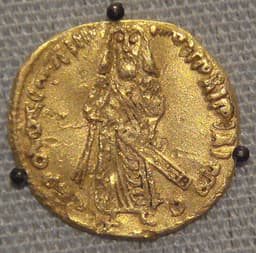
Abd al-Aziz Khan
Emperor · Modern
54.9Total

Hussein of Jordan
Emperor · Modern
55.7Total
Basic Information
Born
1614
1935
Died
1681
—
Era
Modern
Modern
Nationality
Khanate of Bukhara
Jordan
Occupation
Emperor
Emperor
Civilization
Eastern
Middle Eastern
Score Comparison
Military (10%)
40.0
50.0
Political (20%)
68.0
60.0
Influence (20%)
57.2
59.0
Legacy (20%)
46.7
49.2
Leadership (15%)
68.0
72.0
Strategy (15%)
45.0
38.6
TOTAL
54.9
55.7
Abd al-Aziz Khan — Complete Timeline
1651 AD
Accession to the throne of BukharaPolitical Action◆ Major
Abd al-Aziz Khan became the Jani-Begid ruler of the Khanate of Bukhara after deposing his father Nadir Muhammad. His reign was marked by efforts to restore the khanate's power and prestige.
Jani-BegidsAccessionBukhara
Impact: regionalconstructive
1660 AD
Patronage of Islamic arts and architectureCultural◆ Major
Abd al-Aziz Khan became a notable patron of Islamic arts and architecture. He commissioned the construction of madrasas and mosques in Bukhara, including the Abd al-Aziz Khan Madrasa, which became a center of learning.
Jani-BegidsPatronageArchitecture
Impact: regionalconstructive
1670 AD
Conflict with the SafavidsWar
Abd al-Aziz Khan engaged in military conflicts with the Safavid Empire over control of Khorasan. These campaigns were largely defensive and prevented Safavid expansion into Transoxiana.
Jani-BegidsWarSafavids
Impact: regional
1681 AD
Death and end of strong rulePolitical Action◆ Major
Abd al-Aziz Khan died in 1681, marking the end of the last strong Ashtarkhanid rule in Bukhara. His successors were weaker, leading to the gradual decline of the khanate.
Jani-BegidsDeathDecline
Impact: regionaltragic
Hussein of Jordan — Complete Timeline
1951 AD
Assassination of King Abdullah IPolitical Action◆ Major
Hussein, then 15, witnessed the assassination of his grandfather King Abdullah I in Jerusalem. This event shaped his political outlook and prepared him for his future role as king.
AssassinationRoyal FamilyJerusalem
Impact: nationaltragic
1952 AD
Ascension to the ThronePolitical Action◆ Major
Hussein became King of Jordan at age 17 after his father King Talal was declared unfit to rule due to mental illness. He was formally crowned in 1953.
SuccessionMonarchy
Impact: national
1956 AD
Arab Dismissal of Glubb PashaPolitical Action◆ Major
Hussein dismissed British General John Glubb, commander of the Arab Legion, asserting Jordanian sovereignty. This reduced British influence and aligned Jordan with Arab nationalism.
DecolonizationArab NationalismMilitary
Impact: national
1967 AD
Six-Day WarWar
Jordan entered the Six-Day War against Israel alongside Egypt and Syria. Israel captured the West Bank and East Jerusalem from Jordan, resulting in a massive influx of Palestinian refugees into Jordan.
Arab-Israeli WarTerritorial LossRefugees
Impact: regionaldestructive
1970 AD
Black September ConflictWar
Hussein ordered the Jordanian military to suppress Palestinian militant groups (PLO) that threatened his rule. The conflict resulted in thousands of casualties and the expulsion of the PLO from Jordan to Lebanon.
Civil ConflictPLOPalestinian Refugees
Impact: regionaldestructive
1994 AD
Signing of the Israel-Jordan Peace TreatyPolitical Action
Hussein signed a peace treaty with Israel at the Arava border crossing, normalizing relations. Jordan became the second Arab state to make peace with Israel, ending a 46-year state of war.
Peace TreatyArab-Israeli RelationsDiplomacy
Impact: regionalconstructive
Expert Analysis
Origins
Abd al-Aziz Khan was born around 1614 into the Ashtarkhanid dynasty, ruling the Khanate of Bukhara in Central Asia. He was the son of Nadir Muhammad Khan, and his early life was marked by court intrigue. He received education in Islamic law and governance, preparing him for leadership. In contrast, Hussein bin Talal was born on November 14, 1935, in Amman, Jordan, into the Hashemite dynasty. He was the grandson of King Abdullah I and son of King Talal. Hussein witnessed political turmoil from a young age, including the assassination of his grandfather in 1951, which profoundly shaped his worldview. He studied at Victoria College in Alexandria and Harrow School in England, acquiring a Western education.
Rise to Power
Abd al-Aziz Khan rose to power in 1645 by deposing his father, Nadir Muhammad, who had ruled for a decade. This coup was supported by factions within the Bukharan nobility. He consolidated power through patronage of religious institutions, securing legitimacy. His reign from 1645 to 1681 was marked by relative stability. Hussein became king on August 11, 1952, at age 17, after his father King Talal was declared unfit due to mental illness. He was formally crowned on May 2, 1953. His early years were challenged by Arab nationalism and pressure from neighboring countries. He survived multiple assassination attempts and coup plots, gradually establishing his authority.
Leadership & Governance
Abd al-Aziz Khan ruled as an absolute monarch, focusing on cultural patronage. He commissioned the construction of major madrasas and mosques in Bukhara, such as the Abd al-Aziz Khan Madrasa. His governance relied on traditional Islamic structures and alliances with religious scholars. He engaged in defensive military campaigns against the Safavids but avoided major expansions. His political score of 68.0 reflects his ability to maintain power through patronage. Hussein of Jordan adopted a more modern approach, balancing tribal loyalties with political reforms. He introduced a constitutional monarchy in 1952, allowing for a parliament. His leadership score of 72.0 is higher, as he navigated regional conflicts and internal threats. He suppressed the PLO in Black September (1970) and signed a peace treaty with Israel in 1994, demonstrating pragmatism.
Triumph & Tragedy
Abd al-Aziz Khan's greatest success was his patronage of Islamic arts, leaving a lasting architectural legacy in Bukhara. His madrasa is a UNESCO World Heritage site. However, his failure was the decline of Bukhara after his death; his successors were weak, leading to gradual fragmentation. His military score of 40.0 reflects limited conquests. Hussein's triumph was surviving as a monarch in a volatile region, maintaining Jordan's stability. He signed the Israel-Jordan Peace Treaty, normalizing relations. His tragedy was the loss of the West Bank and East Jerusalem in the Six-Day War (1967), which cost Jordan territory and prestige. The Black September conflict also resulted in thousands of casualties, damaging his reputation among Palestinians.
Character & Destiny
Abd al-Aziz Khan was a devout patron, prioritizing cultural over military expansion. His character was shaped by Islamic piety and a desire to legitimize his rule through religious works. This choice led to a stable but ultimately fragile reign. Hussein was pragmatic and resilient, shaped by the assassination of his grandfather. He learned to balance alliances with the West and Arab neighbors. His decision-making was cautious, often seeking compromise. His strategy score of 38.6 is lower, reflecting a reactive rather than proactive approach to regional conflicts. Both leaders were products of their environments, but Hussein's ability to adapt to modern challenges gave him a more dynamic legacy.
Legacy
Abd al-Aziz Khan is remembered as the last strong Ashtarkhanid ruler, with his architectural works surviving as symbols of Bukhara's cultural heritage. However, his political impact was limited to his reign. His legacy score of 46.7 reflects his regional importance. Hussein's legacy is more global: he stabilized Jordan, became a key US ally, and advanced Arab-Israeli peace. His legacy score of 49.2 is slightly higher. The peace treaty with Israel endures, though criticized. He also modernized Jordan's infrastructure and education. While both left marks, Hussein's influence extends beyond his borders.
Conclusion
Hussein of Jordan had a greater impact than Abd al-Aziz Khan, as measured by their total scores (55.7 vs 54.9) and broader geopolitical significance. Hussein navigated the 20th century's challenges, shaping a nation's survival and peace. Abd al-Aziz Khan's cultural contributions are notable but confined to a fading empire. In a world of nation-states, Hussein's pragmatic leadership and peace legacy outweigh the artistic patronage of a Central Asian khan. The score gap of 0.8 points underlines this judgment, but the qualitative differences in scale and modernity make Hussein the more consequential figure.
Rankings
🥇
Hussein of JordanLeader
Mil: 50.0Pol: 60.0Inf: 59.0
55.7
🥈
Abd al-Aziz Khan
Mil: 40.0Pol: 68.0Inf: 57.2
54.9
+0.8 behind
How This Comparison Works
Algorithm
Each figure is scored on 6 dimensions (0—100 scale) based on structured historical data: Military (10%), Political (20%), Influence (20%), Legacy (20%), Leadership (15%), Strategy (15%). The weighted total produces the final ranking.
Data Sources
Scores are computed from structured sub-indicators in the database. Scale factors adjust for era (Ancient ×0.85, Modern ×1.0) and civilization size (Eastern ×1.05, Other ×0.80) to account for differences in population and military scale.
Maximum 3 Figures
Comparisons are limited to 2—3 figures to ensure readability and statistical meaningfulness.
Error Margins
±5 points per dimension — Sub-scores are derived from historical records with inherent uncertainty. Two figures within 5 points on a dimension should be considered roughly equivalent in that area.
Total Score Accuracy
±3 points overall — The weighted combination of 6 dimensions produces a total score with approximately ±3 points of uncertainty. Differences of less than 3 points are not statistically significant— the figures are effectively tied.
Known Limitations
- Historical records are incomplete and uneven across civilizations
- Figures from oral-tradition societies may be underrepresented
- Occupation labels can misclassify multi-role figures
- Scores measure capability and impact, not moral character
- Quantitative scoring is a comparison tool, not absolute truth
Capability Radar
Military (10%) — Battles & Warfare
Battles
45
15
Win Rate
40
20
Expansion
35
10
Political (20%) — Governance & Reform
Reform
40
60
Diplomacy
45
80
Economy
50
55
Influence (20%) — Cultural & Global Reach
Cultural
55
40
Global
30
55
Legacy (20%) — Historical Impact
Historical
50
55
Longevity
40
50
Leadership (15%) — Power & Stability
Tenure
60
85
Stability
45
65
Strategy (15%) — Tactics & Innovation
Strategy
40
25
Tactics
35
20
Reform
30
30
Similar Comparisons
Comments & Discussion
No comments yet. Be the first to share your thoughts!