Loading...
Analysis will be generated on first visit.
Scores and timeline are available below. The page will refresh automatically when ready.
Qin Shi Huang vs Ur-Nammu
Qin Shi Huang leads by 20.1 pts · 2 figures compared
…
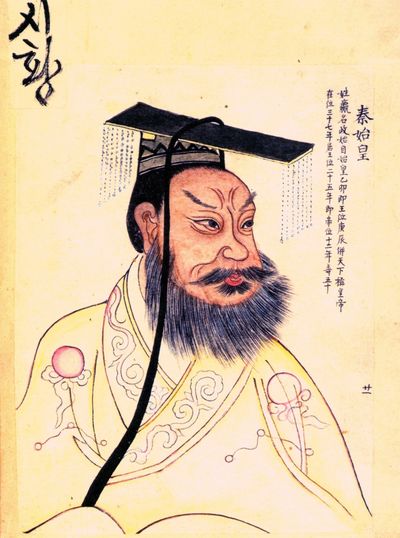
Qin Shi Huang
Emperor · Ancient
83.5Total
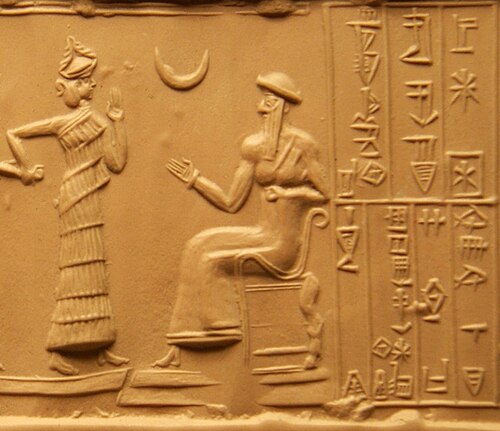
Ur-Nammu
Emperor · Ancient
63.4Total
Basic Information
Born
-259
-2112
Died
-210
-2095
Era
Ancient
Ancient
Nationality
China
Sumer
Occupation
Emperor
Emperor
Civilization
Eastern
Middle Eastern
Score Comparison
Military (10%)
80.0
46.7
Political (20%)
88.0
64.9
Influence (20%)
82.0
77.1
Legacy (20%)
85.0
65.2
Leadership (15%)
88.0
72.9
Strategy (15%)
75.0
42.6
TOTAL
83.5
63.4
Rankings
🥇
Qin Shi HuangLeader
Mil: 80.0Pol: 88.0Inf: 82.0
83.5
🥈
Ur-Nammu
Mil: 46.7Pol: 64.9Inf: 77.1
63.4
+20.1 behind
How This Comparison Works
Algorithm
Each figure is scored on 6 dimensions (0—100 scale) based on structured historical data: Military (10%), Political (20%), Influence (20%), Legacy (20%), Leadership (15%), Strategy (15%). The weighted total produces the final ranking.
Data Sources
Scores are computed from structured sub-indicators in the database. Scale factors adjust for era (Ancient ×0.85, Modern ×1.0) and civilization size (Eastern ×1.05, Other ×0.80) to account for differences in population and military scale.
Maximum 3 Figures
Comparisons are limited to 2—3 figures to ensure readability and statistical meaningfulness.
Error Margins
±5 points per dimension — Sub-scores are derived from historical records with inherent uncertainty. Two figures within 5 points on a dimension should be considered roughly equivalent in that area.
Total Score Accuracy
±3 points overall — The weighted combination of 6 dimensions produces a total score with approximately ±3 points of uncertainty. Differences of less than 3 points are not statistically significant— the figures are effectively tied.
Known Limitations
- Historical records are incomplete and uneven across civilizations
- Figures from oral-tradition societies may be underrepresented
- Occupation labels can misclassify multi-role figures
- Scores measure capability and impact, not moral character
- Quantitative scoring is a comparison tool, not absolute truth
Capability Radar
Military (10%) — Battles & Warfare
Battles
85
45
Win Rate
90
50
Expansion
90
55
Political (20%) — Governance & Reform
Reform
95
85
Diplomacy
75
55
Economy
90
70
Influence (20%) — Cultural & Global Reach
Cultural
95
70
Global
85
55
Legacy (20%) — Historical Impact
Historical
95
75
Longevity
95
70
Leadership (15%) — Power & Stability
Tenure
70
60
Stability
65
65
Strategy (15%) — Tactics & Innovation
Strategy
85
55
Tactics
80
40
Reform
95
60
Analysis will be generated on first visit.
Scores and timeline are available below. The page will refresh automatically when ready.
Qin Shi Huang — Complete Timeline
246 BC
Construction of the Mausoleum and Terracotta ArmyOther◆ Major
Qin Shi Huang commissioned a vast mausoleum complex near Xi'an, guarded by thousands of life-sized terracotta soldiers, horses, and chariots. The project employed hundreds of thousands of workers and reflected his obsession with immortality and imperial power.
Impact: global
230 BC
Conquest of the Six Warring StatesWar
From 230 to 221 BCE, Ying Zheng led the Qin state in a series of campaigns that conquered the Han, Zhao, Wei, Chu, Yan, and Qi states. This unified China under a single ruler for the first time, ending the Warring States period.
Impact: global
221 BC
Standardization of Writing, Currency, and MeasurementsReform◆ Major
Qin Shi Huang ordered the standardization of Chinese script, currency, and weights and measures across the unified empire. This facilitated administration, trade, and cultural integration, laying a foundation for future dynasties.
Impact: globalconstructive
Proclamation of the Qin DynastyPolitical Action
After conquering the last independent state, Ying Zheng declared himself Shi Huangdi (First Emperor), founding the Qin Dynasty. He adopted a new title to signify his supreme authority and initiated centralized imperial rule.
Impact: global
214 BC
Initiation of the Great Wall ConstructionOther◆ Major
Qin Shi Huang ordered the connection and extension of existing northern fortifications to create a unified defensive wall against nomadic Xiongnu raids. This project involved massive conscripted labor and became the precursor to the later Great Wall.
Impact: regional
213 BC
Burning of Books and Burying of ScholarsPolitical Action◆ Major
On the advice of Li Si, Qin Shi Huang ordered the burning of historical records and philosophical texts not aligned with Legalist doctrine. He also had 460 Confucian scholars buried alive to suppress dissent and consolidate ideological control.
Impact: nationaldestructive
Ur-Nammu — Complete Timeline
2112 BC
Defeated the Gutians and expelled them from SumerWar◆ Major
Ur-Nammu led a military campaign against the Gutian rulers who had dominated Sumer for decades. He defeated them and drove them out of the region, restoring Sumerian independence and establishing his dynasty.
WarGutiansIndependence
Impact: regional
Founded the Third Dynasty of UrPolitical Action◆ Major
Ur-Nammu overthrew the Gutian rulers and established the Third Dynasty of Ur, reuniting Sumer under a single rule. This marked the beginning of the Ur III period, a time of centralized administration and cultural revival in Mesopotamia.
DynastySumerUnification
Impact: regionalconstructive
2100 BC
Promulgated the Code of Ur-NammuReform
Ur-Nammu issued the oldest known written legal code, predating Hammurabi's code by three centuries. The code established laws covering property, family, and criminal justice, with penalties including fines and compensation rather than physical punishment.
LawCodeJustice
Impact: globalconstructive
Built the Great Ziggurat of Ur (initial construction)Cultural◆ Major
Ur-Nammu began construction of the Great Ziggurat of Ur, a massive stepped temple dedicated to the moon god Nanna. The project was later completed by his son Shulgi and became one of the most iconic structures of ancient Mesopotamia.
ArchitectureZigguratReligion
Impact: regionalconstructive
Similar Comparisons
Comments & Discussion
Stargazer_Sumer6/17/2026
Ur-Nammu's famous law code is often called the first, but that's a historian's vanity—Hammurabi's stele is just more photogenic. Ur-Nammu wrote on clay, not stone, so it's easy forget his code predates Babylon by centuries. He literally set the standard for "an eye for an eye" centuries before Leviticus. Qin Shi Huang conquered flesh; Ur-Nammu conquered justice itself.
史海铁粉6/17/2026
秦始皇统一六国,修长城、焚书坑儒,那是政治大师;但乌尔纳姆才是真正的人类秩序的奠基人——他用泥板写下法律,比孔子还早一千年!没有他,苏美尔的城邦可能还停留在神权统治的黑暗中。嬴政是人间帝王,乌尔纳姆是文明守护者。
Tech_Reckoner6/17/2026
Both rulers imposed order, but let's be honest: Qin's legalism was just authoritarian efficiency wrapped in philosopher's robes—every Shang Yang decree was a police state move. Ur-Nammu's code, meanwhile, actually addressed property rights and women's protections, including a specific clause punishing rape with death. One codified mercy; the other codified state control.
草原烽火6/17/2026
你拿乌尔纳姆跟秦始皇比,有点像拿草原上的第一缕炊烟比长城城墙。嬴政不仅是征服者,他还是度量衡、文字、车轨的统一者——这些基础建设让中国两千年不散。乌尔纳姆虽好,他的苏美尔王国不到两百年就灰飞烟灭了。制度没有硬实力支撑,法律就是一纸空谈。
Classics_Vanguard6/17/2026
Please. Ur-Nammu's code wasn't even original—he cribbed from Urukagina's earlier reforms, which were more about temple exemptions than universal justice. Qin Shi Huang at least had the audacity to engineer a wholly new governance model from the ground up: bureaucracy over bloodlines, merit over clan loyalty. That's real innovation, not just rewriting old hymns on clay.