Loading...
Analysis will be generated on first visit.
Scores and timeline are available below. The page will refresh automatically when ready.
Mustafa Kemal Ataturk vs Qin Shi Huang
Qin Shi Huang leads by 11.8 pts · 2 figures compared
…
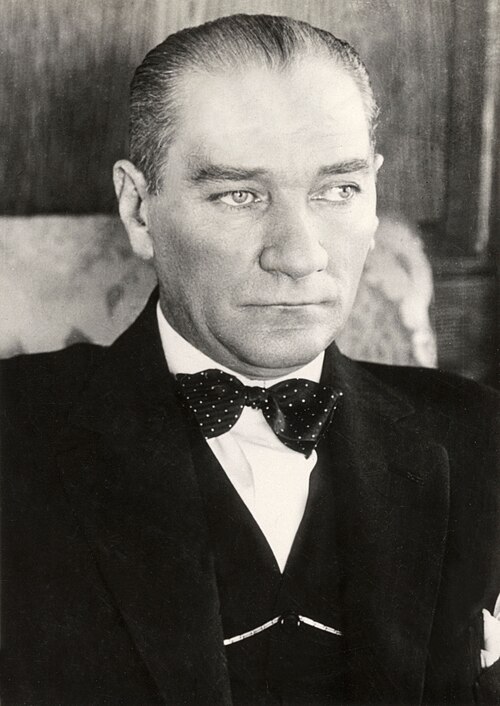
Mustafa Kemal Ataturk
Politician · Modern
71.7Total
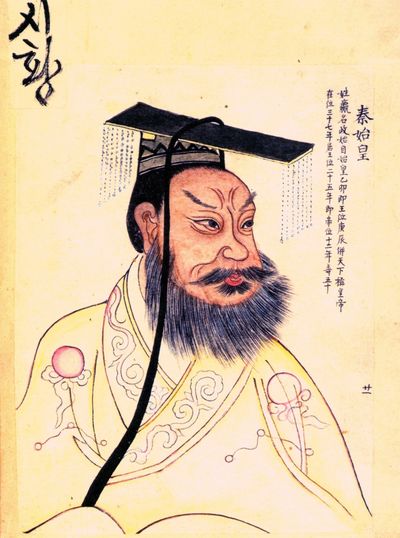
Qin Shi Huang
Emperor · Ancient
83.5Total
Basic Information
Born
1881
-259
Died
1938
-210
Era
Modern
Ancient
Nationality
Turkey
China
Occupation
Politician
Emperor
Civilization
Middle Eastern
Eastern
Score Comparison
Military (10%)
75.0
80.0
Political (20%)
65.9
88.0
Influence (20%)
70.5
82.0
Legacy (20%)
73.0
85.0
Leadership (15%)
80.0
88.0
Strategy (15%)
68.6
75.0
TOTAL
71.7
83.5
Rankings
🥇
Qin Shi HuangLeader
Mil: 80.0Pol: 88.0Inf: 82.0
83.5
🥈
Mustafa Kemal Ataturk
Mil: 75.0Pol: 65.9Inf: 70.5
71.7
+11.8 behind
How This Comparison Works
Algorithm
Each figure is scored on 6 dimensions (0—100 scale) based on structured historical data: Military (10%), Political (20%), Influence (20%), Legacy (20%), Leadership (15%), Strategy (15%). The weighted total produces the final ranking.
Data Sources
Scores are computed from structured sub-indicators in the database. Scale factors adjust for era (Ancient ×0.85, Modern ×1.0) and civilization size (Eastern ×1.05, Other ×0.80) to account for differences in population and military scale.
Maximum 3 Figures
Comparisons are limited to 2—3 figures to ensure readability and statistical meaningfulness.
Error Margins
±5 points per dimension — Sub-scores are derived from historical records with inherent uncertainty. Two figures within 5 points on a dimension should be considered roughly equivalent in that area.
Total Score Accuracy
±3 points overall — The weighted combination of 6 dimensions produces a total score with approximately ±3 points of uncertainty. Differences of less than 3 points are not statistically significant— the figures are effectively tied.
Known Limitations
- Historical records are incomplete and uneven across civilizations
- Figures from oral-tradition societies may be underrepresented
- Occupation labels can misclassify multi-role figures
- Scores measure capability and impact, not moral character
- Quantitative scoring is a comparison tool, not absolute truth
Capability Radar
Military (10%) — Battles & Warfare
Battles
85
85
Win Rate
90
90
Expansion
60
90
Political (20%) — Governance & Reform
Reform
98
95
Diplomacy
85
75
Economy
75
90
Influence (20%) — Cultural & Global Reach
Cultural
90
95
Global
80
85
Legacy (20%) — Historical Impact
Historical
95
95
Longevity
85
95
Leadership (15%) — Power & Stability
Tenure
85
70
Stability
70
65
Strategy (15%) — Tactics & Innovation
Strategy
85
85
Tactics
88
80
Reform
80
95
Analysis will be generated on first visit.
Scores and timeline are available below. The page will refresh automatically when ready.
Mustafa Kemal Ataturk — Complete Timeline
1915 AD
Battle of GallipoliWar
As a colonel, Mustafa Kemal commanded Ottoman forces at Gallipoli, successfully repelling Allied landings. His leadership at critical points like Chunuk Bair made him a national hero and laid the foundation for his political career.
World War IOttoman EmpireMilitary Victory
Impact: regional
1919 AD
Turkish War of IndependenceWar
Kemal organized and led the Turkish National Movement against the Allied occupation of Anatolia and the Treaty of S
Independence WarNational MovementAnkara
Impact: nationalconstructive
1922 AD
Abolition of the SultanatePolitical Action◆ Major
The Grand National Assembly of Turkey, under Kemal's leadership, abolished the Ottoman Sultanate, ending 600 years of imperial rule. This severed the link with the old regime and paved the way for the proclamation of the Republic.
SultanateRepublicPolitical Reform
Impact: nationalprogressive
1923 AD
Proclamation of the Republic of TurkeyPolitical Action
Kemal declared Turkey a republic, becoming its first president. He moved the capital to Ankara and initiated a series of radical reforms to modernize and secularize the state, including the adoption of a new legal code and the Latin alphabet.
RepublicModernizationSecularism
Impact: globalprogressive
1925 AD
Adoption of the Hat LawReform◆ Major
Kemal introduced the Hat Law, banning the fez and encouraging Western-style hats. This was part of his broader cultural revolution to secularize and Westernize Turkish society, symbolizing the break with Ottoman traditions.
Cultural ReformSecularismWesternization
Impact: nationalprogressive
1934 AD
Granting of Women's SuffrageReform◆ Major
Kemal's government granted women the right to vote and stand for election in national elections, ahead of many European countries. This reform was part of his commitment to gender equality and modernization of Turkish society.
Women's RightsSuffrageModernization
Impact: nationalprogressive
Qin Shi Huang — Complete Timeline
246 BC
Construction of the Mausoleum and Terracotta ArmyOther◆ Major
Qin Shi Huang commissioned a vast mausoleum complex near Xi'an, guarded by thousands of life-sized terracotta soldiers, horses, and chariots. The project employed hundreds of thousands of workers and reflected his obsession with immortality and imperial power.
Impact: global
230 BC
Conquest of the Six Warring StatesWar
From 230 to 221 BCE, Ying Zheng led the Qin state in a series of campaigns that conquered the Han, Zhao, Wei, Chu, Yan, and Qi states. This unified China under a single ruler for the first time, ending the Warring States period.
Impact: global
221 BC
Standardization of Writing, Currency, and MeasurementsReform◆ Major
Qin Shi Huang ordered the standardization of Chinese script, currency, and weights and measures across the unified empire. This facilitated administration, trade, and cultural integration, laying a foundation for future dynasties.
Impact: globalconstructive
Proclamation of the Qin DynastyPolitical Action
After conquering the last independent state, Ying Zheng declared himself Shi Huangdi (First Emperor), founding the Qin Dynasty. He adopted a new title to signify his supreme authority and initiated centralized imperial rule.
Impact: global
214 BC
Initiation of the Great Wall ConstructionOther◆ Major
Qin Shi Huang ordered the connection and extension of existing northern fortifications to create a unified defensive wall against nomadic Xiongnu raids. This project involved massive conscripted labor and became the precursor to the later Great Wall.
Impact: regional
213 BC
Burning of Books and Burying of ScholarsPolitical Action◆ Major
On the advice of Li Si, Qin Shi Huang ordered the burning of historical records and philosophical texts not aligned with Legalist doctrine. He also had 460 Confucian scholars buried alive to suppress dissent and consolidate ideological control.
Impact: nationaldestructive
Similar Comparisons
Comments & Discussion
秦扇SCEPTIC6/17/2026
"Quantity vs Quality? Ataturk gets romanticized for 'reforms' that mostly copied European templates wholesale, while Qin Shihuang actually invented the bureaucratic state from scratch. China's writing standardization alone outlasts any Turkish alphabet change. You're comparing a remix artist to an original composer. Try building something that survives 2000 years, then we talk."
铁血执法官6/17/2026
"拿秦始皇跟凯末尔比?别逗了。焚书坑儒是粗暴,但凯末尔直接把奥斯曼历史都抹了,这算哪门子改革?一边用铁血统一度量衡,一边硬推拉丁字母。哪个更专制,自个儿掂量。我站始皇,至少人家打造了个能扛两千年的框架。"
MILITIA GAZETTE6/17/2026
"Sure, Ataturk modernized Turkey—but at what cultural cost? He banned the fez and veil by decree, imposed a state religion of secularism, and rewrote history to erase Ottoman achievements. Qin Shi Huang was brutal but honest about it. At least he didn't pretend his book burnings were 'enlightened progress.' Both were dictators; let's not polish one with nationalist myth."
长城守望者6/17/2026
"凯末尔拿什么跟始皇帝比?一个打了几年独立战争,一个终结五百年战国。一个改几个字母叫改革,一个统一文字度量衡建帝国骨架。凯末尔最多算个修补匠,始皇帝是真正的文明奠基人。别拿二手货碰瓷原创。"