Loading...
Analysis will be generated on first visit.
Scores and timeline are available below. The page will refresh automatically when ready.
Lykurgos of Sparta vs Qin Shi Huang
Qin Shi Huang leads by 4.7 pts · 2 figures compared
…

Lykurgos of Sparta
Politician · Ancient
78.8Total
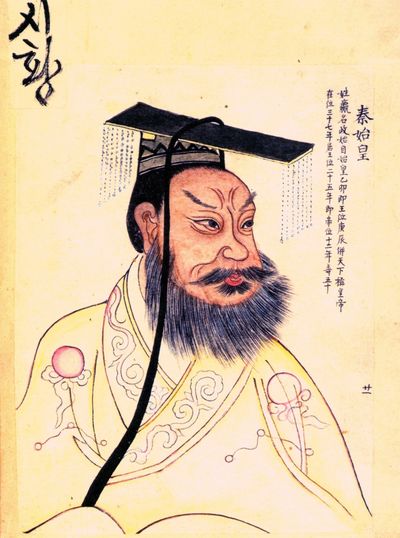
Qin Shi Huang
Emperor · Ancient
83.5Total
Basic Information
Born
-800
-259
Died
-750
-210
Era
Ancient
Ancient
Nationality
Sparta
China
Occupation
Politician
Emperor
Civilization
Western
Eastern
Score Comparison
Military (10%)
64.5
80.0
Political (20%)
72.0
88.0
Influence (20%)
87.8
82.0
Legacy (20%)
94.4
85.0
Leadership (15%)
77.8
88.0
Strategy (15%)
65.8
75.0
TOTAL
78.8
83.5
Rankings
🥇
Qin Shi HuangLeader
Mil: 80.0Pol: 88.0Inf: 82.0
83.5
🥈
Lykurgos of Sparta
Mil: 64.5Pol: 72.0Inf: 87.8
78.8
+4.7 behind
How This Comparison Works
Algorithm
Each figure is scored on 6 dimensions (0—100 scale) based on structured historical data: Military (10%), Political (20%), Influence (20%), Legacy (20%), Leadership (15%), Strategy (15%). The weighted total produces the final ranking.
Data Sources
Scores are computed from structured sub-indicators in the database. Scale factors adjust for era (Ancient ×0.85, Modern ×1.0) and civilization size (Eastern ×1.05, Other ×0.80) to account for differences in population and military scale.
Maximum 3 Figures
Comparisons are limited to 2—3 figures to ensure readability and statistical meaningfulness.
Error Margins
±5 points per dimension — Sub-scores are derived from historical records with inherent uncertainty. Two figures within 5 points on a dimension should be considered roughly equivalent in that area.
Total Score Accuracy
±3 points overall — The weighted combination of 6 dimensions produces a total score with approximately ±3 points of uncertainty. Differences of less than 3 points are not statistically significant— the figures are effectively tied.
Known Limitations
- Historical records are incomplete and uneven across civilizations
- Figures from oral-tradition societies may be underrepresented
- Occupation labels can misclassify multi-role figures
- Scores measure capability and impact, not moral character
- Quantitative scoring is a comparison tool, not absolute truth
Capability Radar
Military (10%) — Battles & Warfare
Battles
0
85
Win Rate
0
90
Expansion
0
90
Political (20%) — Governance & Reform
Reform
95
95
Diplomacy
50
75
Economy
70
90
Influence (20%) — Cultural & Global Reach
Cultural
90
95
Global
85
85
Legacy (20%) — Historical Impact
Historical
95
95
Longevity
95
95
Leadership (15%) — Power & Stability
Tenure
40
70
Stability
85
65
Strategy (15%) — Tactics & Innovation
Strategy
0
85
Tactics
0
80
Reform
95
95
Analysis will be generated on first visit.
Scores and timeline are available below. The page will refresh automatically when ready.
Lykurgos of Sparta — Complete Timeline
775 BC
Institution of the Great RhetraReform
Lykurgos established the Great Rhetra, a foundational constitution for Sparta. It created the dual kingship, the Gerousia (council of elders), and the Apella (assembly), forming the basis of the Spartan mixed government.
Spartan ConstitutionGreat RhetraGovernment Reform
Impact: nationalconstructive
Introduction of the Agoge SystemReform◆ Major
Lykurgos is credited with creating the agoge, the rigorous state-sponsored education and training system for Spartan boys. This system emphasized discipline, military prowess, and loyalty to the state, defining Spartan society for centuries.
AgogeSpartan EducationMilitary Training
Impact: nationalconstructive
Economic Reforms: Iron Currency and Communal MessesReform◆ Major
Lykurgos replaced gold and silver currency with heavy iron bars to discourage trade and luxury. He also instituted common messes (syssitia), requiring all male citizens to dine together, fostering equality and military bonding.
Economic ReformIron CurrencySyssitia
Impact: nationalconstructive
Qin Shi Huang — Complete Timeline
246 BC
Construction of the Mausoleum and Terracotta ArmyOther◆ Major
Qin Shi Huang commissioned a vast mausoleum complex near Xi'an, guarded by thousands of life-sized terracotta soldiers, horses, and chariots. The project employed hundreds of thousands of workers and reflected his obsession with immortality and imperial power.
Impact: global
230 BC
Conquest of the Six Warring StatesWar
From 230 to 221 BCE, Ying Zheng led the Qin state in a series of campaigns that conquered the Han, Zhao, Wei, Chu, Yan, and Qi states. This unified China under a single ruler for the first time, ending the Warring States period.
Impact: global
221 BC
Standardization of Writing, Currency, and MeasurementsReform◆ Major
Qin Shi Huang ordered the standardization of Chinese script, currency, and weights and measures across the unified empire. This facilitated administration, trade, and cultural integration, laying a foundation for future dynasties.
Impact: globalconstructive
Proclamation of the Qin DynastyPolitical Action
After conquering the last independent state, Ying Zheng declared himself Shi Huangdi (First Emperor), founding the Qin Dynasty. He adopted a new title to signify his supreme authority and initiated centralized imperial rule.
Impact: global
214 BC
Initiation of the Great Wall ConstructionOther◆ Major
Qin Shi Huang ordered the connection and extension of existing northern fortifications to create a unified defensive wall against nomadic Xiongnu raids. This project involved massive conscripted labor and became the precursor to the later Great Wall.
Impact: regional
213 BC
Burning of Books and Burying of ScholarsPolitical Action◆ Major
On the advice of Li Si, Qin Shi Huang ordered the burning of historical records and philosophical texts not aligned with Legalist doctrine. He also had 460 Confucian scholars buried alive to suppress dissent and consolidate ideological control.
Impact: nationaldestructive
Similar Comparisons
Comments & Discussion
铁血律令者6/17/2026
立法者比的是血肉,不是兵马俑!吕库古的改革让斯巴达成为300勇士的传奇——30岁结婚、共餐制、铁币流通,这些制度比秦朝的焚书坑儒要人性化得多。你用半掩门的陶俑充量,不如用真实的纪律来对比。吕库古没有留下任何遗迹,但他的秩序活在整个希腊的恐惧里。秦皇帝只会用砖头埋入地底,而吕库古用规则锻造了一个战斗民族。|zh
Lex Imperator6/17/2026
This is comparing apples to orbital lasers. Qin Shi Huang unified weights, measures, writing, and road systems across a territory larger than any European empire of his time. The man standardized axle widths, for crying out loud. Lykurgos gave Sparta a constitution that worked for roughly 5,000 warriors and their helots. One created institutional scalability; the other designed a boutique military commune. I know who I'd rather have running an actual civilization. |en
古典基石er6/17/2026
你们忽略了一个关键点:吕库古的存在本身就是对历史的挑战。考古学家至今没找到他的墓、铭文甚至是同时代的记载。而秦始皇的陵墓有确凿的地宫分布图。这种模糊性赋予吕库古一种神话般的权威——他的法律不需要署名,因为它们是"来自德尔斐的神谕"。秦法再严密,终究是帝王一人的意志;吕库古的法则是整个群体认同的基石,这决定了斯巴达近五百年的稳定。|zh
Revisionist_Hammer6/17/2026
Spare me the Spartan fetishization. Lykurgos' "constitution" practically enslaved the helot population, which outnumbered Spartans 7:1. That's not a stable society; that's a powder keg with a 500-year fuse. Qin Shi Huang at least attempted to consolidate rule by breaking the power of feudal aristocrats and creating a unified bureaucracy. The Spartan system was deliberately stagnant—they outlawed coinage, foreign travel, and even architectural innovation. One created a blueprint for empire; the o
暗黑数字派6/17/2026
数据狂来拆台:吕库古的改革在公元前8世纪左右落地,但斯巴达在公元前371年的留克特拉战役后就断了脊骨——所谓五百年的稳定,有近两百年是在走下坡路。而秦始皇统一中国的框架,尽管秦朝只存在15年,但郡县制和文字统一直接影响了此后2000年的中国帝制。别跟我谈什么"不朽的法规",看看哪个系统产生了更持久的功能性:不是斯巴达的精锐小国,而是秦的超级基础设施。|zh