Loading...
Analysis will be generated on first visit.
Scores and timeline are available below. The page will refresh automatically when ready.
Leo III the Isaurian vs Qin Shi Huang
Qin Shi Huang leads by 8.0 pts · 2 figures compared
…
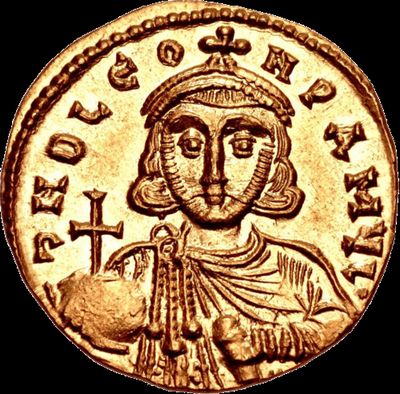
Leo III the Isaurian
Emperor · Medieval
75.5Total
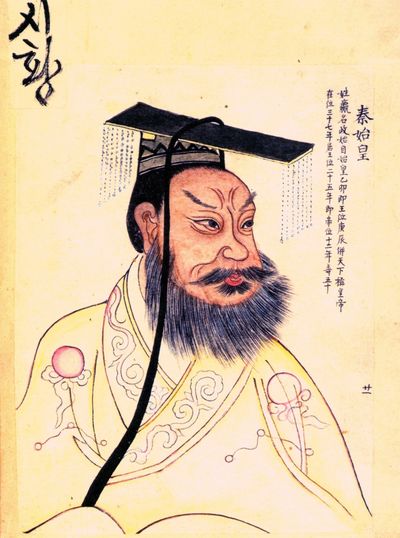
Qin Shi Huang
Emperor · Ancient
83.5Total
Basic Information
Born
685
-259
Died
741
-210
Era
Medieval
Ancient
Nationality
Byzantine Empire
China
Occupation
Emperor
Emperor
Civilization
Western
Eastern
Score Comparison
Military (10%)
63.9
80.0
Political (20%)
77.2
88.0
Influence (20%)
68.7
82.0
Legacy (20%)
79.7
85.0
Leadership (15%)
86.2
88.0
Strategy (15%)
73.7
75.0
TOTAL
75.5
83.5
Rankings
🥇
Qin Shi HuangLeader
Mil: 80.0Pol: 88.0Inf: 82.0
83.5
🥈
Leo III the Isaurian
Mil: 63.9Pol: 77.2Inf: 68.7
75.5
+8.0 behind
How This Comparison Works
Algorithm
Each figure is scored on 6 dimensions (0—100 scale) based on structured historical data: Military (10%), Political (20%), Influence (20%), Legacy (20%), Leadership (15%), Strategy (15%). The weighted total produces the final ranking.
Data Sources
Scores are computed from structured sub-indicators in the database. Scale factors adjust for era (Ancient ×0.85, Modern ×1.0) and civilization size (Eastern ×1.05, Other ×0.80) to account for differences in population and military scale.
Maximum 3 Figures
Comparisons are limited to 2—3 figures to ensure readability and statistical meaningfulness.
Error Margins
±5 points per dimension — Sub-scores are derived from historical records with inherent uncertainty. Two figures within 5 points on a dimension should be considered roughly equivalent in that area.
Total Score Accuracy
±3 points overall — The weighted combination of 6 dimensions produces a total score with approximately ±3 points of uncertainty. Differences of less than 3 points are not statistically significant— the figures are effectively tied.
Known Limitations
- Historical records are incomplete and uneven across civilizations
- Figures from oral-tradition societies may be underrepresented
- Occupation labels can misclassify multi-role figures
- Scores measure capability and impact, not moral character
- Quantitative scoring is a comparison tool, not absolute truth
Capability Radar
Military (10%) — Battles & Warfare
Battles
75
85
Win Rate
80
90
Expansion
60
90
Political (20%) — Governance & Reform
Reform
85
95
Diplomacy
65
75
Economy
70
90
Influence (20%) — Cultural & Global Reach
Cultural
75
95
Global
65
85
Legacy (20%) — Historical Impact
Historical
80
95
Longevity
70
95
Leadership (15%) — Power & Stability
Tenure
72
70
Stability
60
65
Strategy (15%) — Tactics & Innovation
Strategy
82
85
Tactics
78
80
Reform
70
95
Analysis will be generated on first visit.
Scores and timeline are available below. The page will refresh automatically when ready.
Leo III the Isaurian — Complete Timeline
717 AD
Defense of Constantinople (Second Arab Siege)War
Leo III successfully defended Constantinople from a massive Arab siege by the Umayyad Caliphate. The siege lasted from 717 to 718. Leo used Greek fire and a harsh winter to defeat the Arab fleet and army, saving the Byzantine Empire from conquest and halting Arab expansion into Europe.
Arab SiegeDefenseConstantinople
Impact: globalconstructive
720 AD
Administrative and Military ReformsReform◆ Major
Leo III reorganized the Byzantine military and administrative system, strengthening the theme system. He created new themes and improved the defense of the empire. These reforms increased the empire's military effectiveness and administrative efficiency.
Military ReformTheme SystemAdministration
Impact: nationalconstructive
726 AD
Promulgation of the EclogaReform◆ Major
Leo III issued the Ecloga, a legal code that revised and simplified Roman law. The code was written in Greek and emphasized Christian principles, including greater protection for the poor and women. It influenced later Byzantine and Slavic legal systems.
Legal ReformEclogaLaw
Impact: nationalconstructive
Institution of IconoclasmCultural◆ Major
Leo III issued an edict banning the veneration of icons, initiating the first period of Byzantine Iconoclasm. He ordered the destruction of religious images and persecuted iconodules. This policy caused deep religious divisions within the empire and strained relations with the Papacy.
IconoclasmReligious PolicyControversy
Impact: globaldestructive
740 AD
Battle of AkroinonWar◆ Major
Leo III led the Byzantine army to a decisive victory over the Umayyad Arabs at the Battle of Akroinon. The Byzantine forces destroyed the Arab army, ending the Arab threat to Anatolia for decades. This victory consolidated Byzantine control over Asia Minor.
BattleArab-Byzantine WarsVictory
Impact: regionalconstructive
Qin Shi Huang — Complete Timeline
246 BC
Construction of the Mausoleum and Terracotta ArmyOther◆ Major
Qin Shi Huang commissioned a vast mausoleum complex near Xi'an, guarded by thousands of life-sized terracotta soldiers, horses, and chariots. The project employed hundreds of thousands of workers and reflected his obsession with immortality and imperial power.
Impact: global
230 BC
Conquest of the Six Warring StatesWar
From 230 to 221 BCE, Ying Zheng led the Qin state in a series of campaigns that conquered the Han, Zhao, Wei, Chu, Yan, and Qi states. This unified China under a single ruler for the first time, ending the Warring States period.
Impact: global
221 BC
Standardization of Writing, Currency, and MeasurementsReform◆ Major
Qin Shi Huang ordered the standardization of Chinese script, currency, and weights and measures across the unified empire. This facilitated administration, trade, and cultural integration, laying a foundation for future dynasties.
Impact: globalconstructive
Proclamation of the Qin DynastyPolitical Action
After conquering the last independent state, Ying Zheng declared himself Shi Huangdi (First Emperor), founding the Qin Dynasty. He adopted a new title to signify his supreme authority and initiated centralized imperial rule.
Impact: global
214 BC
Initiation of the Great Wall ConstructionOther◆ Major
Qin Shi Huang ordered the connection and extension of existing northern fortifications to create a unified defensive wall against nomadic Xiongnu raids. This project involved massive conscripted labor and became the precursor to the later Great Wall.
Impact: regional
213 BC
Burning of Books and Burying of ScholarsPolitical Action◆ Major
On the advice of Li Si, Qin Shi Huang ordered the burning of historical records and philosophical texts not aligned with Legalist doctrine. He also had 460 Confucian scholars buried alive to suppress dissent and consolidate ideological control.
Impact: nationaldestructive
Similar Comparisons
Comments & Discussion
LeoLens6/17/2026
Qin Shi Huang built a wall to keep chaos out; Leo III broke it by standing firm. The First Emperor unified through brutal laws and standardization—weights, script, even thought. Leo unified by holding a city and letting faith do the work. One created a machine state that snapped under pressure; the other built a shield that lasted a thousand years. Power imposed vs. power endured.
烽火戏诸侯6/17/2026
比什么比?秦始皇修长城是把敌人拦在门外,利奥三世守君士坦丁堡是被围到城墙上发抖。一个手捏百万秦军横扫六国,一个靠希腊火烧船保住半条命。利奥的江山后来被十字军糟蹋,秦始皇的帝国虽说短命,但书同文车同轨的基础至今还在。论格局,嬴政甩他十条街。
GrecoBias6/17/2026
Classic case of the Western historian fetishizing the plucky underdog. Sure, Leo saved Constantinople with Greek fire and a prayer, but that's a defensive win against a tired Arab army. Qin Shi Huang crushed six rival states, built a state apparatus that defined governance for millennia, and connected China with roads and canals. One held a siege; the other built a civilization.
数据钩沉6/17/2026
别被故事骗了。秦始皇修长城累死数十万民夫,法律严苛到让人不敢抬头。利奥三世推行圣像破坏政策,把拜占庭教会搅得鸡飞狗跳,国内叛乱一堆。两人都靠铁腕稳住局面,但代价是血流成河。你选哪一个当老板?都不选。历史喜欢把残酷包装成伟大,咱们别太入戏。
ClassicsMatters6/17/2026
Qin Shi Huang saw himself as a god-king, his tomb a miniature universe guarded by terracotta armies. Leo III saw himself as God's servant, stripping churches of icons to purify faith. The First Emperor wanted to conquer death; the Isaurian wanted to define how the living worshipped. Both were obsessed with order—one through control over bodies, the other over souls. Different temples, same hubris.