Loading...
Analysis will be generated on first visit.
Scores and timeline are available below. The page will refresh automatically when ready.
Kamaladevi Chattopadhyay vs Qin Shi Huang
Qin Shi Huang leads by 10.0 pts · 2 figures compared
…

Kamaladevi Chattopadhyay
Politician · Modern
73.5Total
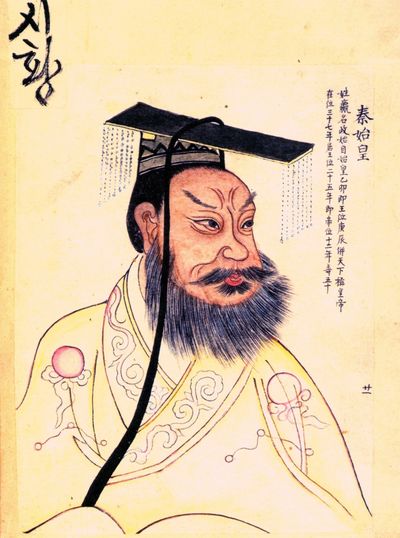
Qin Shi Huang
Emperor · Ancient
83.5Total
Basic Information
Born
1903
-259
Died
1988
-210
Era
Modern
Ancient
Nationality
India
China
Occupation
Politician
Emperor
Civilization
Indian
Eastern
Score Comparison
Military (10%)
52.2
80.0
Political (20%)
74.0
88.0
Influence (20%)
78.0
82.0
Legacy (20%)
80.0
85.0
Leadership (15%)
87.4
88.0
Strategy (15%)
58.7
75.0
TOTAL
73.5
83.5
Rankings
🥇
Qin Shi HuangLeader
Mil: 80.0Pol: 88.0Inf: 82.0
83.5
🥈
Kamaladevi Chattopadhyay
Mil: 52.2Pol: 74.0Inf: 78.0
73.5
+10.0 behind
How This Comparison Works
Algorithm
Each figure is scored on 6 dimensions (0—100 scale) based on structured historical data: Military (10%), Political (20%), Influence (20%), Legacy (20%), Leadership (15%), Strategy (15%). The weighted total produces the final ranking.
Data Sources
Scores are computed from structured sub-indicators in the database. Scale factors adjust for era (Ancient ×0.85, Modern ×1.0) and civilization size (Eastern ×1.05, Other ×0.80) to account for differences in population and military scale.
Maximum 3 Figures
Comparisons are limited to 2—3 figures to ensure readability and statistical meaningfulness.
Error Margins
±5 points per dimension — Sub-scores are derived from historical records with inherent uncertainty. Two figures within 5 points on a dimension should be considered roughly equivalent in that area.
Total Score Accuracy
±3 points overall — The weighted combination of 6 dimensions produces a total score with approximately ±3 points of uncertainty. Differences of less than 3 points are not statistically significant— the figures are effectively tied.
Known Limitations
- Historical records are incomplete and uneven across civilizations
- Figures from oral-tradition societies may be underrepresented
- Occupation labels can misclassify multi-role figures
- Scores measure capability and impact, not moral character
- Quantitative scoring is a comparison tool, not absolute truth
Capability Radar
Military (10%) — Battles & Warfare
Battles
41
85
Win Rate
44
90
Expansion
51
90
Political (20%) — Governance & Reform
Reform
70
95
Diplomacy
60
75
Economy
65
90
Influence (20%) — Cultural & Global Reach
Cultural
75
95
Global
60
85
Legacy (20%) — Historical Impact
Historical
70
95
Longevity
65
95
Leadership (15%) — Power & Stability
Tenure
30
70
Stability
40
65
Strategy (15%) — Tactics & Innovation
Strategy
54
85
Tactics
57
80
Reform
57
95
Analysis will be generated on first visit.
Scores and timeline are available below. The page will refresh automatically when ready.
Kamaladevi Chattopadhyay — Complete Timeline
1930 AD
Participated in Salt SatyagrahaPolitical Action◆ Major
Chattopadhyay actively participated in the Salt Satyagraha, a nonviolent protest against the British salt tax. She was arrested and imprisoned for her role in the civil disobedience campaign.
Salt SatyagrahaCivil Disobedience
Impact: nationalconstructive
1944 AD
Founded Indian National TheatreCultural
Chattopadhyay co-founded the Indian National Theatre (INT) to promote performing arts and cultural expression. The organization staged plays and performances that highlighted social issues and Indian traditions.
TheatreCultural Revival
Impact: nationalconstructive
1948 AD
Founded Indian Cooperative UnionReform◆ Major
Kamaladevi Chattopadhyay founded the Indian Cooperative Union to promote cooperative societies for economic development. This initiative supported small-scale industries and rural livelihoods.
Cooperative MovementEconomic Reform
Impact: nationalconstructive
1952 AD
Revived Indian handicrafts through All India Handicrafts BoardReform◆ Major
As chairperson of the All India Handicrafts Board, Chattopadhyay led efforts to revive traditional Indian crafts. She established training centers, exhibitions, and marketing channels, preserving cultural heritage and providing livelihoods.
HandicraftsCultural Preservation
Impact: nationalconstructive
Qin Shi Huang — Complete Timeline
246 BC
Construction of the Mausoleum and Terracotta ArmyOther◆ Major
Qin Shi Huang commissioned a vast mausoleum complex near Xi'an, guarded by thousands of life-sized terracotta soldiers, horses, and chariots. The project employed hundreds of thousands of workers and reflected his obsession with immortality and imperial power.
Impact: global
230 BC
Conquest of the Six Warring StatesWar
From 230 to 221 BCE, Ying Zheng led the Qin state in a series of campaigns that conquered the Han, Zhao, Wei, Chu, Yan, and Qi states. This unified China under a single ruler for the first time, ending the Warring States period.
Impact: global
221 BC
Standardization of Writing, Currency, and MeasurementsReform◆ Major
Qin Shi Huang ordered the standardization of Chinese script, currency, and weights and measures across the unified empire. This facilitated administration, trade, and cultural integration, laying a foundation for future dynasties.
Impact: globalconstructive
Proclamation of the Qin DynastyPolitical Action
After conquering the last independent state, Ying Zheng declared himself Shi Huangdi (First Emperor), founding the Qin Dynasty. He adopted a new title to signify his supreme authority and initiated centralized imperial rule.
Impact: global
214 BC
Initiation of the Great Wall ConstructionOther◆ Major
Qin Shi Huang ordered the connection and extension of existing northern fortifications to create a unified defensive wall against nomadic Xiongnu raids. This project involved massive conscripted labor and became the precursor to the later Great Wall.
Impact: regional
213 BC
Burning of Books and Burying of ScholarsPolitical Action◆ Major
On the advice of Li Si, Qin Shi Huang ordered the burning of historical records and philosophical texts not aligned with Legalist doctrine. He also had 460 Confucian scholars buried alive to suppress dissent and consolidate ideological control.
Impact: nationaldestructive
Similar Comparisons
Comments & Discussion
QIN IRON FIST6/17/2026
Spare me the romanticizing of Kamaladevi's "craft and community." Qin Shi Huang united China through standardized writing, weights, and roads—tangible achievements that lasted millennia. Her looms? Nice hobby for the elite. He built the Great Wall and terracotta army; she started some cooperatives. When your empire fragments into warring states, you don't weave baskets to fix it—you impose order with iron. She's a footnote; he's the architect of civilization.
织布汉6/17/2026
搞什么鬼?拿织布机跟秦始皇比?大秦统一度量衡、车同轨、书同文,两千年前就搞标准化了。她那些合作社,连个县级规模都没撑起来。别被西方自由主义那套忽悠了,历史不是靠心灵手巧改变的,是靠铁血手腕。你问她留下什么?一些手工盆子。他又留下什么?一个民族。高下立判。
NUMBERS GUY6/17/2026
Ignore the hype. Let's talk data: Qin Shi Huang's population reached around 40 million under his consolidation, with a unified tax system and military mobilization of 300,000+ for the Great Wall. Kamaladevi's Indian Cooperative Union? Peak membership maybe 5,000 craftspeople, mostly selling overpriced textiles to rich Bombay ladies. Scale matters. He controlled half of East Asia; she couldn't even unionize a village. Call it "spirit" if you want—I call it irrelevance in global impact comparison.
古典学者6/17/2026
《史记》里写得明明白白:焚书坑儒不是传说,是政策。她保护民间手艺,他烧典籍。他杀方士,她扶持纺织。一个问题:你要活在哪个世界?一个能读诸子百家,一个只能读官方史。别说什么“统一文字”就伟大,没有思想自由,字统一了就是用来写诏书。他造的兵马俑再壮观,也不过是坟墓里的死物。
SOLIDARITY SCEPTIC6/17/2026
Let's not pretend Kamaladevi was some peaceful saint either. She smuggled arms, supported revolutionaries, and her "craft" movement was a direct attack on British industrial capitalism—admirable, sure. But compare impact: Qin's legal code influenced 2,000 years of Chinese governance. Her cooperative banks? Failed by the 1970s. She's a romantic figure for NGO seminars; he's the reason China exists as a unitary state. One built a civilization; the other made nice scarves.