Loading...
Analysis will be generated on first visit.
Scores and timeline are available below. The page will refresh automatically when ready.
Jose Maria Morelos vs Qin Shi Huang
Qin Shi Huang leads by 12.9 pts · 2 figures compared
…

Jose Maria Morelos
Revolutionary · Modern
70.6Total
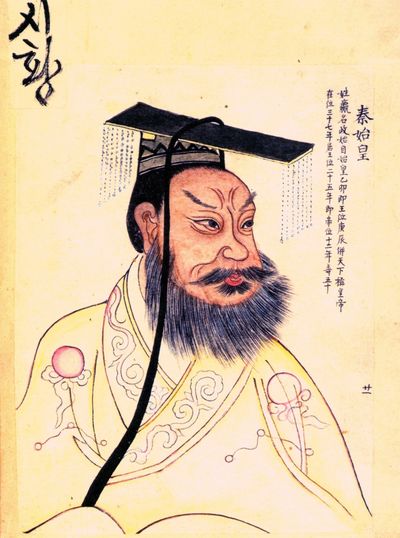
Qin Shi Huang
Emperor · Ancient
83.5Total
Basic Information
Born
1765
-259
Died
1815
-210
Era
Modern
Ancient
Nationality
Mexico
China
Occupation
Revolutionary
Emperor
Civilization
Western
Eastern
Score Comparison
Military (10%)
60.1
80.0
Political (20%)
69.8
88.0
Influence (20%)
74.6
82.0
Legacy (20%)
70.0
85.0
Leadership (15%)
73.0
88.0
Strategy (15%)
72.0
75.0
TOTAL
70.6
83.5
Rankings
🥇
Qin Shi HuangLeader
Mil: 80.0Pol: 88.0Inf: 82.0
83.5
🥈
Jose Maria Morelos
Mil: 60.1Pol: 69.8Inf: 74.6
70.6
+12.9 behind
How This Comparison Works
Algorithm
Each figure is scored on 6 dimensions (0—100 scale) based on structured historical data: Military (10%), Political (20%), Influence (20%), Legacy (20%), Leadership (15%), Strategy (15%). The weighted total produces the final ranking.
Data Sources
Scores are computed from structured sub-indicators in the database. Scale factors adjust for era (Ancient ×0.85, Modern ×1.0) and civilization size (Eastern ×1.05, Other ×0.80) to account for differences in population and military scale.
Maximum 3 Figures
Comparisons are limited to 2—3 figures to ensure readability and statistical meaningfulness.
Error Margins
±5 points per dimension — Sub-scores are derived from historical records with inherent uncertainty. Two figures within 5 points on a dimension should be considered roughly equivalent in that area.
Total Score Accuracy
±3 points overall — The weighted combination of 6 dimensions produces a total score with approximately ±3 points of uncertainty. Differences of less than 3 points are not statistically significant— the figures are effectively tied.
Known Limitations
- Historical records are incomplete and uneven across civilizations
- Figures from oral-tradition societies may be underrepresented
- Occupation labels can misclassify multi-role figures
- Scores measure capability and impact, not moral character
- Quantitative scoring is a comparison tool, not absolute truth
Capability Radar
Military (10%) — Battles & Warfare
Battles
65
85
Win Rate
60
90
Expansion
55
90
Political (20%) — Governance & Reform
Reform
70
95
Diplomacy
55
75
Economy
45
90
Influence (20%) — Cultural & Global Reach
Cultural
55
95
Global
45
85
Legacy (20%) — Historical Impact
Historical
65
95
Longevity
60
95
Leadership (15%) — Power & Stability
Tenure
50
70
Stability
30
65
Strategy (15%) — Tactics & Innovation
Strategy
75
85
Tactics
70
80
Reform
60
95
Analysis will be generated on first visit.
Scores and timeline are available below. The page will refresh automatically when ready.
Jose Maria Morelos — Complete Timeline
1811 AD
Took command of the independence movementPolitical Action
After Hidalgo's execution, Morelos, a priest and military leader, assumed leadership of the Mexican independence movement. He organized the insurgent forces in southern Mexico, capturing Acapulco and establishing a base of operations. His leadership revitalized the rebellion.
LeadershipInsurgencyIndependence
Impact: nationalconstructive
1813 AD
Defeated at the Siege of ValladolidWar◆ Major
Morelos attempted to capture Valladolid (now Morelia) but was defeated by royalist forces under Agust
DefeatRoyalist VictoryTurning Point
Impact: regionaltragic
Convened the Congress of ChilpancingoPolitical Action◆ Major
Morelos convened the Congress of Chilpancingo on September 13, 1813, which declared Mexican independence from Spain and drafted the first constitution. The congress also abolished slavery, caste distinctions, and torture. Morelos was named 'Servant of the Nation' and executive power was vested in him.
CongressConstitutionDeclaration of Independence
Impact: nationalconstructive
1815 AD
Captured and executed by Spanish forcesPolitical Action◆ Major
Morelos was captured by Spanish forces on November 5, 1815, while escorting the Congress. He was tried by the Inquisition, defrocked, and executed by firing squad on December 22, 1815, in San Crist
ExecutionMartyrdomEnd of Phase
Impact: nationaltragic
Qin Shi Huang — Complete Timeline
246 BC
Construction of the Mausoleum and Terracotta ArmyOther◆ Major
Qin Shi Huang commissioned a vast mausoleum complex near Xi'an, guarded by thousands of life-sized terracotta soldiers, horses, and chariots. The project employed hundreds of thousands of workers and reflected his obsession with immortality and imperial power.
Impact: global
230 BC
Conquest of the Six Warring StatesWar
From 230 to 221 BCE, Ying Zheng led the Qin state in a series of campaigns that conquered the Han, Zhao, Wei, Chu, Yan, and Qi states. This unified China under a single ruler for the first time, ending the Warring States period.
Impact: global
221 BC
Standardization of Writing, Currency, and MeasurementsReform◆ Major
Qin Shi Huang ordered the standardization of Chinese script, currency, and weights and measures across the unified empire. This facilitated administration, trade, and cultural integration, laying a foundation for future dynasties.
Impact: globalconstructive
Proclamation of the Qin DynastyPolitical Action
After conquering the last independent state, Ying Zheng declared himself Shi Huangdi (First Emperor), founding the Qin Dynasty. He adopted a new title to signify his supreme authority and initiated centralized imperial rule.
Impact: global
214 BC
Initiation of the Great Wall ConstructionOther◆ Major
Qin Shi Huang ordered the connection and extension of existing northern fortifications to create a unified defensive wall against nomadic Xiongnu raids. This project involved massive conscripted labor and became the precursor to the later Great Wall.
Impact: regional
213 BC
Burning of Books and Burying of ScholarsPolitical Action◆ Major
On the advice of Li Si, Qin Shi Huang ordered the burning of historical records and philosophical texts not aligned with Legalist doctrine. He also had 460 Confucian scholars buried alive to suppress dissent and consolidate ideological control.
Impact: nationaldestructive
Similar Comparisons
Comments & Discussion
CHARIOT OF IRON6/17/2026
Anyone who puts a military strategist like Morelos against a world-conqueror like Qin Shi Huang fundamentally misunderstands warfare. Morelos fought guerrilla campaigns with peasant armies against decaying Spanish colonial forces—impressive, but tiny in scale. Qin unified seven warring kingdoms over decades, commanding armies of hundreds of thousands, implementing standardized tactics and logistics across a continent. This isn't a contest; it's a category error. Morelos was a priest playing gene
青铜烈火6/17/2026
数据不会骗人:秦始皇统一中国时,人口约3000万,他推行了标准化文字、货币、度量衡,建立郡县制,修了5000公里驰道。莫雷洛斯呢?领导了一堆分散的叛乱,从未控制超过半个墨西哥,连首都都打不下来。他死后墨西哥继续被西班牙统治了十年。把一个地方反抗领袖和一个重塑世界格局的帝王并列?这是对历史的侮辱。秦朝的基础设施和制度化影响持续了两千年,莫雷洛斯连个稳定政府都没建成。
THE LEXICON LEGION6/17/2026
Forget the military nonsense—the real gap is linguistic. Qin Shi Huang didn't just conquer; he *standardized written Chinese* across a fractious empire, turning dozens of regional scripts into one unified system. That single act created a common literary culture that lasted until the 20th century. Morelos? He wrote some letters and drafted a sentimental constitution that was dead on arrival. One man gave a billion people a shared written language; the other gave a few hundred thousand a rallying
断碑残简6/17/2026
从史料角度看,秦始皇帝的信息多如牛毛——史记、竹简、考古发现,细节惊人。莫雷洛斯的资料呢?一堆被过滤过的教会记录和起义信件,很多还是败军之将写的宣传稿。他不是伟大领袖,而是被浪漫化的失败者。墨西哥独立后的混乱——三十年换了五十个政府——恰恰证明他根本没建立可持续的制度。秦始皇严酷但有效,他制定的官僚体系持续到1911年。把神父和皇帝放一起比,就像拿萤火虫比太阳。
TEMPERED REBELS6/17/2026
You're all missing the moral dimension. Qin Shi Huang was a tyrant who buried scholars alive, burned books, and worked millions to death on the Great Wall and his tomb. Morelos was a genuine reformer who abolished slavery, ended racial caste systems, and fought for a democratic republic. One is celebrated for raw power; the other for ideals. Yes, Qin's empire lasted longer—but it was built on bones and silence. Morelos lost, but he died for freedom. History isn't just a scoreboard of who built m