Loading...
Analysis will be generated on first visit.
Scores and timeline are available below. The page will refresh automatically when ready.
Iancu de Hunedoara vs Qin Shi Huang
Qin Shi Huang leads by 8.1 pts · 2 figures compared
…

Iancu de Hunedoara
General · Medieval
75.4Total
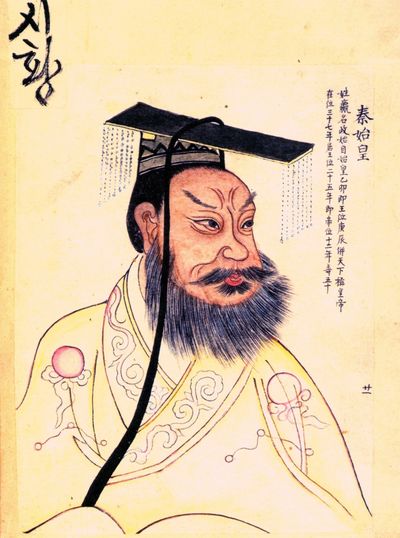
Qin Shi Huang
Emperor · Ancient
83.5Total
Basic Information
Born
1406
-259
Died
1456
-210
Era
Medieval
Ancient
Nationality
Hungary
China
Occupation
General
Emperor
Civilization
Western
Eastern
Score Comparison
Military (10%)
76.4
80.0
Political (20%)
74.3
88.0
Influence (20%)
73.6
82.0
Legacy (20%)
69.7
85.0
Leadership (15%)
77.5
88.0
Strategy (15%)
84.1
75.0
TOTAL
75.4
83.5
Rankings
🥇
Qin Shi HuangLeader
Mil: 80.0Pol: 88.0Inf: 82.0
83.5
🥈
Iancu de Hunedoara
Mil: 76.4Pol: 74.3Inf: 73.6
75.4
+8.1 behind
How This Comparison Works
Algorithm
Each figure is scored on 6 dimensions (0—100 scale) based on structured historical data: Military (10%), Political (20%), Influence (20%), Legacy (20%), Leadership (15%), Strategy (15%). The weighted total produces the final ranking.
Data Sources
Scores are computed from structured sub-indicators in the database. Scale factors adjust for era (Ancient ×0.85, Modern ×1.0) and civilization size (Eastern ×1.05, Other ×0.80) to account for differences in population and military scale.
Maximum 3 Figures
Comparisons are limited to 2—3 figures to ensure readability and statistical meaningfulness.
Error Margins
±5 points per dimension — Sub-scores are derived from historical records with inherent uncertainty. Two figures within 5 points on a dimension should be considered roughly equivalent in that area.
Total Score Accuracy
±3 points overall — The weighted combination of 6 dimensions produces a total score with approximately ±3 points of uncertainty. Differences of less than 3 points are not statistically significant— the figures are effectively tied.
Known Limitations
- Historical records are incomplete and uneven across civilizations
- Figures from oral-tradition societies may be underrepresented
- Occupation labels can misclassify multi-role figures
- Scores measure capability and impact, not moral character
- Quantitative scoring is a comparison tool, not absolute truth
Capability Radar
Military (10%) — Battles & Warfare
Battles
85
85
Win Rate
80
90
Expansion
70
90
Political (20%) — Governance & Reform
Reform
60
95
Diplomacy
75
75
Economy
60
90
Influence (20%) — Cultural & Global Reach
Cultural
60
95
Global
65
85
Legacy (20%) — Historical Impact
Historical
75
95
Longevity
70
95
Leadership (15%) — Power & Stability
Tenure
65
70
Stability
55
65
Strategy (15%) — Tactics & Innovation
Strategy
90
85
Tactics
85
80
Reform
75
95
Analysis will be generated on first visit.
Scores and timeline are available below. The page will refresh automatically when ready.
Iancu de Hunedoara — Complete Timeline
1444 AD
Battle of VarnaWar◆ Major
John Hunyadi commanded the Christian coalition forces at the Battle of Varna against the Ottomans. The battle ended in a decisive Ottoman victory, with King W
CrusadeDefeatVarna
Impact: regionaltragic
1448 AD
Second Battle of KosovoWar◆ Major
John Hunyadi led a Hungarian army against the Ottomans at the Second Battle of Kosovo. The battle resulted in a Hungarian defeat, with Hunyadi barely escaping capture.
Ottoman WarsDefeat
Impact: regionaltragic
1456 AD
Siege of BelgradeWar
John Hunyadi successfully defended Belgrade against a massive Ottoman army led by Sultan Mehmed II. The victory halted Ottoman expansion into Hungary and was a major Christian triumph.
SiegeVictoryOttoman Defeat
Impact: regionalconstructive
Death from PlagueOther◆ Major
John Hunyadi died of plague shortly after the Siege of Belgrade. His death removed a key leader from the anti-Ottoman struggle in the Balkans.
DeathPlague
Impact: regionaltragic
Qin Shi Huang — Complete Timeline
246 BC
Construction of the Mausoleum and Terracotta ArmyOther◆ Major
Qin Shi Huang commissioned a vast mausoleum complex near Xi'an, guarded by thousands of life-sized terracotta soldiers, horses, and chariots. The project employed hundreds of thousands of workers and reflected his obsession with immortality and imperial power.
Impact: global
230 BC
Conquest of the Six Warring StatesWar
From 230 to 221 BCE, Ying Zheng led the Qin state in a series of campaigns that conquered the Han, Zhao, Wei, Chu, Yan, and Qi states. This unified China under a single ruler for the first time, ending the Warring States period.
Impact: global
221 BC
Standardization of Writing, Currency, and MeasurementsReform◆ Major
Qin Shi Huang ordered the standardization of Chinese script, currency, and weights and measures across the unified empire. This facilitated administration, trade, and cultural integration, laying a foundation for future dynasties.
Impact: globalconstructive
Proclamation of the Qin DynastyPolitical Action
After conquering the last independent state, Ying Zheng declared himself Shi Huangdi (First Emperor), founding the Qin Dynasty. He adopted a new title to signify his supreme authority and initiated centralized imperial rule.
Impact: global
214 BC
Initiation of the Great Wall ConstructionOther◆ Major
Qin Shi Huang ordered the connection and extension of existing northern fortifications to create a unified defensive wall against nomadic Xiongnu raids. This project involved massive conscripted labor and became the precursor to the later Great Wall.
Impact: regional
213 BC
Burning of Books and Burying of ScholarsPolitical Action◆ Major
On the advice of Li Si, Qin Shi Huang ordered the burning of historical records and philosophical texts not aligned with Legalist doctrine. He also had 460 Confucian scholars buried alive to suppress dissent and consolidate ideological control.
Impact: nationaldestructive
Similar Comparisons
Comments & Discussion
铩羽将军6/17/2026
拿十字军指挥官和中国第一位皇帝比?完全跑偏。秦始皇统一度量衡、文字、车轨,这些制度遗产活了两千年。胡尼奥迪再厉害,他的匈牙利王国也没撑过一百年。真要论"改变世界",始皇帝甩他十条街。
TERRACOTTA TRUTHER6/17/2026
Qin Shi Huang's terracotta army isn't a "monument to himself" — it's an archaeological goldmine that tells us more about ancient Chinese warfare than any text. The distinct facial features and actual weapon types show standardization the likes of which Rome never saw. Hunyadi left us what? Some castles and exaggerated chronicles.
BATTLEFIELD NUMBERS GUY6/17/2026
Let's talk kill ratios. Hunyadi at Belgrade in 1456 had about 20,000 men against 100,000 Ottomans — a 1:5 disadvantage. Qin Shi Huang unified China with armies that fought in total wars of annihilation. We're talking hundreds of thousands dead per campaign. Hunyadi's siege defense is impressive, but that's tactical. Qin's conquests changed the demographic map of East Asia.
史海沉钩6/17/2026
有个细节特别有意思:胡尼奥迪的军事生涯全靠教会和贵族支持,本质上是个军阀。秦始皇十三岁登基,二十二岁就铲除吕不韦和嫪毐,干净利落地把权力收归中央。一个靠别人给饭吃的将军,跟一个自己造饭碗的皇帝,根本不是同一个量级。