Loading...
Analysis will be generated on first visit.
Scores and timeline are available below. The page will refresh automatically when ready.
Georgy Zhukov vs Qin Shi Huang
Qin Shi Huang leads by 4.3 pts · 2 figures compared
…

Georgy Zhukov
General · Modern
79.2Total
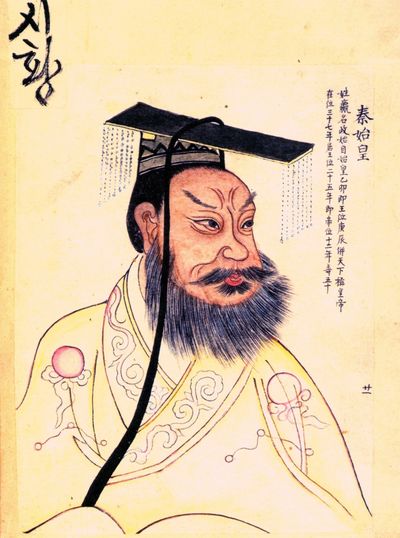
Qin Shi Huang
Emperor · Ancient
83.5Total
Basic Information
Born
1896
-259
Died
1974
-210
Era
Modern
Ancient
Nationality
Russia
China
Occupation
General
Emperor
Civilization
Western
Eastern
Score Comparison
Military (10%)
88.1
80.0
Political (20%)
77.1
88.0
Influence (20%)
82.0
82.0
Legacy (20%)
73.2
85.0
Leadership (15%)
81.2
88.0
Strategy (15%)
78.4
75.0
TOTAL
79.2
83.5
Rankings
🥇
Qin Shi HuangLeader
Mil: 80.0Pol: 88.0Inf: 82.0
83.5
🥈
Georgy Zhukov
Mil: 88.1Pol: 77.1Inf: 82.0
79.2
+4.3 behind
How This Comparison Works
Algorithm
Each figure is scored on 6 dimensions (0—100 scale) based on structured historical data: Military (10%), Political (20%), Influence (20%), Legacy (20%), Leadership (15%), Strategy (15%). The weighted total produces the final ranking.
Data Sources
Scores are computed from structured sub-indicators in the database. Scale factors adjust for era (Ancient ×0.85, Modern ×1.0) and civilization size (Eastern ×1.05, Other ×0.80) to account for differences in population and military scale.
Maximum 3 Figures
Comparisons are limited to 2—3 figures to ensure readability and statistical meaningfulness.
Error Margins
±5 points per dimension — Sub-scores are derived from historical records with inherent uncertainty. Two figures within 5 points on a dimension should be considered roughly equivalent in that area.
Total Score Accuracy
±3 points overall — The weighted combination of 6 dimensions produces a total score with approximately ±3 points of uncertainty. Differences of less than 3 points are not statistically significant— the figures are effectively tied.
Known Limitations
- Historical records are incomplete and uneven across civilizations
- Figures from oral-tradition societies may be underrepresented
- Occupation labels can misclassify multi-role figures
- Scores measure capability and impact, not moral character
- Quantitative scoring is a comparison tool, not absolute truth
Capability Radar
Military (10%) — Battles & Warfare
Battles
95
85
Win Rate
90
90
Expansion
90
90
Political (20%) — Governance & Reform
Reform
40
95
Diplomacy
55
75
Economy
30
90
Influence (20%) — Cultural & Global Reach
Cultural
65
95
Global
80
85
Legacy (20%) — Historical Impact
Historical
85
95
Longevity
75
95
Leadership (15%) — Power & Stability
Tenure
60
70
Stability
45
65
Strategy (15%) — Tactics & Innovation
Strategy
95
85
Tactics
92
80
Reform
85
95
Analysis will be generated on first visit.
Scores and timeline are available below. The page will refresh automatically when ready.
Georgy Zhukov — Complete Timeline
1939 AD
Battle of Khalkhin GolWar
Zhukov commanded Soviet and Mongolian forces against the Japanese Kwantung Army at Khalkhin Gol. His use of combined arms tactics, including encirclement and artillery, resulted in a decisive Soviet victory that secured the Soviet eastern border.
Soviet-Japanese Border ConflictsCombined ArmsDecisive Victory
Impact: regional
1941 AD
Battle of MoscowWar
Zhukov took command of the defense of Moscow in October 1941. He organized a counteroffensive in December, pushing German forces back 100-250 miles from the capital. The victory was the first major defeat of the German army in World War II.
World War IIEastern FrontFirst German Defeat
Impact: global
1942 AD
Battle of StalingradWar
Zhukov planned and coordinated Operation Uranus, the Soviet counteroffensive that encircled the German 6th Army at Stalingrad. The operation led to the surrender of German forces in February 1943, a turning point in the war.
World War IIEastern FrontTurning Point
Impact: global
1943 AD
Battle of KurskWar◆ Major
Zhukov coordinated the Soviet defense at Kursk, the largest tank battle in history. The Soviet victory halted the German offensive and allowed the Red Army to launch a counteroffensive that pushed German forces back to the Dnieper River.
World War IIEastern FrontTank Battle
Impact: global
1945 AD
Battle of BerlinWar
Zhukov commanded the 1st Belorussian Front in the assault on Berlin. His forces captured the Reichstag and accepted the German surrender on May 8, 1945. The victory ended World War II in Europe and made Zhukov a national hero.
World War IIEastern FrontFall of Berlin
Impact: global
Qin Shi Huang — Complete Timeline
246 BC
Construction of the Mausoleum and Terracotta ArmyOther◆ Major
Qin Shi Huang commissioned a vast mausoleum complex near Xi'an, guarded by thousands of life-sized terracotta soldiers, horses, and chariots. The project employed hundreds of thousands of workers and reflected his obsession with immortality and imperial power.
Impact: global
230 BC
Conquest of the Six Warring StatesWar
From 230 to 221 BCE, Ying Zheng led the Qin state in a series of campaigns that conquered the Han, Zhao, Wei, Chu, Yan, and Qi states. This unified China under a single ruler for the first time, ending the Warring States period.
Impact: global
221 BC
Standardization of Writing, Currency, and MeasurementsReform◆ Major
Qin Shi Huang ordered the standardization of Chinese script, currency, and weights and measures across the unified empire. This facilitated administration, trade, and cultural integration, laying a foundation for future dynasties.
Impact: globalconstructive
Proclamation of the Qin DynastyPolitical Action
After conquering the last independent state, Ying Zheng declared himself Shi Huangdi (First Emperor), founding the Qin Dynasty. He adopted a new title to signify his supreme authority and initiated centralized imperial rule.
Impact: global
214 BC
Initiation of the Great Wall ConstructionOther◆ Major
Qin Shi Huang ordered the connection and extension of existing northern fortifications to create a unified defensive wall against nomadic Xiongnu raids. This project involved massive conscripted labor and became the precursor to the later Great Wall.
Impact: regional
213 BC
Burning of Books and Burying of ScholarsPolitical Action◆ Major
On the advice of Li Si, Qin Shi Huang ordered the burning of historical records and philosophical texts not aligned with Legalist doctrine. He also had 460 Confucian scholars buried alive to suppress dissent and consolidate ideological control.
Impact: nationaldestructive
Similar Comparisons
Comments & Discussion
锤镰骑士6/17/2026
Sure, the First Emperor built the Great Wall, but Zhukov beat the Nazis without walls. I'd take the man who stopped Hitler at Moscow over the guy who burned scholars alive. Qin's terracotta army is just expensive decorations—Zhukov's were real soldiers who bled for victory. Give me the marshal who saved millions over the emperor who buried them alive.
史料侦探6/17/2026
你的数据比对有个致命的漏洞:秦始皇统一了中国所有已知的文字、度量衡和车道宽度——这相当于给两千年后的中国装上了统一的操作系统。而朱可夫元帅连自己的政治命运都没法保障,1946年被赫鲁晓夫流放,他的胜利只持续了十几年。你算算谁的统治寿命长?统一帝国的文化基因能延续到今天,朱可夫的荣耀能吗?
铁血兵书6/17/2026
You're comparing apples to nuclear warheads. Zhukov's artillery barrages at Berlin used 40,000 guns—that's logistics on a scale Qin couldn't dream of. But here's the twist: the First Emperor's standardization of weapons (crossbow triggers with interchangeable parts) was proto-industrial warfare. Both understood that battles are won by supplies as much as guts. Zhukov had railways; Qin had horse relays. It's the same principle, different millennia.
青铜帝业6/17/2026
别被西方史书骗了。秦始皇的“焚书坑儒”实际上是统一思想的文化革命,把战国“百家争鸣”的混乱编码变成单一帝国标准——朱可夫顶多是战术天才,而嬴政是文明架构师。你问问自己:朱可夫能留下长城级别的物理遗产吗?他的勋章能成为今天中国的文化符号吗?秦始皇的灵魂还在兵马俑里站着呢。