Loading...
Analysis will be generated on first visit.
Scores and timeline are available below. The page will refresh automatically when ready.
Erich Ludendorff vs Napoleon Bonaparte
Napoleon Bonaparte leads by 6.3 pts · 2 figures compared
…
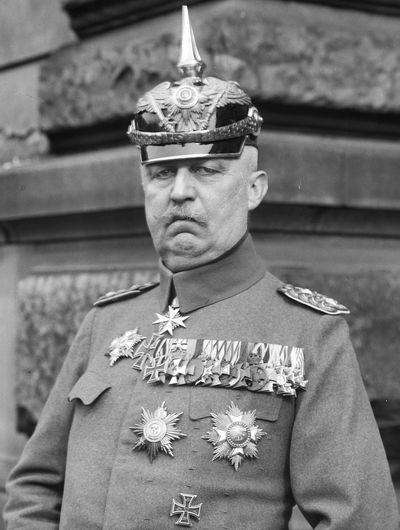
Erich Ludendorff
General · Modern
76.1Total
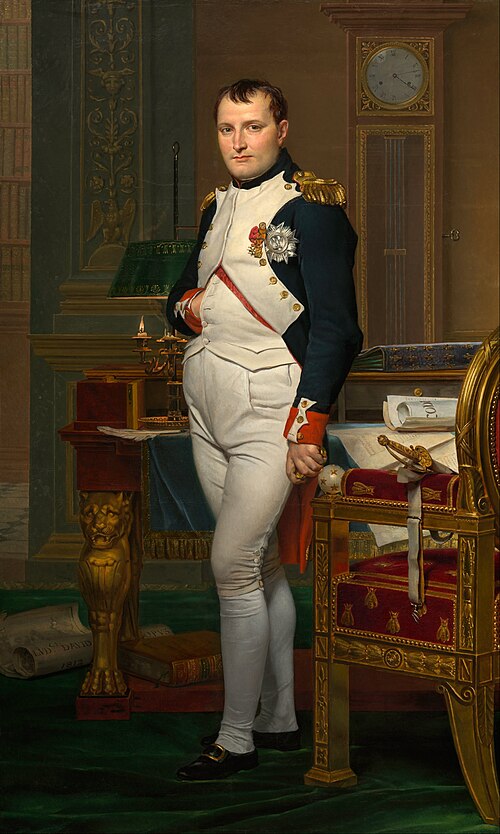
Napoleon Bonaparte
General · Modern
82.4Total
Basic Information
Born
1865
1769
Died
1937
1821
Era
Modern
Modern
Nationality
Germany
France
Occupation
General
General
Civilization
Western
Western
Score Comparison
Military (10%)
81.3
94.0
Political (20%)
72.0
75.0
Influence (20%)
66.7
82.0
Legacy (20%)
75.0
78.0
Leadership (15%)
87.4
80.0
Strategy (15%)
80.5
93.0
TOTAL
76.1
82.4
Rankings
🥇
Napoleon BonaparteLeader
Mil: 94.0Pol: 75.0Inf: 82.0
82.4
🥈
Erich Ludendorff
Mil: 81.3Pol: 72.0Inf: 66.7
76.1
+6.3 behind
How This Comparison Works
Algorithm
Each figure is scored on 6 dimensions (0—100 scale) based on structured historical data: Military (10%), Political (20%), Influence (20%), Legacy (20%), Leadership (15%), Strategy (15%). The weighted total produces the final ranking.
Data Sources
Scores are computed from structured sub-indicators in the database. Scale factors adjust for era (Ancient ×0.85, Modern ×1.0) and civilization size (Eastern ×1.05, Other ×0.80) to account for differences in population and military scale.
Maximum 3 Figures
Comparisons are limited to 2—3 figures to ensure readability and statistical meaningfulness.
Error Margins
±5 points per dimension — Sub-scores are derived from historical records with inherent uncertainty. Two figures within 5 points on a dimension should be considered roughly equivalent in that area.
Total Score Accuracy
±3 points overall — The weighted combination of 6 dimensions produces a total score with approximately ±3 points of uncertainty. Differences of less than 3 points are not statistically significant— the figures are effectively tied.
Known Limitations
- Historical records are incomplete and uneven across civilizations
- Figures from oral-tradition societies may be underrepresented
- Occupation labels can misclassify multi-role figures
- Scores measure capability and impact, not moral character
- Quantitative scoring is a comparison tool, not absolute truth
Capability Radar
Military (10%) — Battles & Warfare
Battles
85
95
Win Rate
75
90
Expansion
60
95
Political (20%) — Governance & Reform
Reform
20
95
Diplomacy
25
80
Economy
15
85
Influence (20%) — Cultural & Global Reach
Cultural
40
85
Global
60
90
Legacy (20%) — Historical Impact
Historical
70
95
Longevity
55
90
Leadership (15%) — Power & Stability
Tenure
65
85
Stability
10
70
Strategy (15%) — Tactics & Innovation
Strategy
85
95
Tactics
80
98
Reform
70
92
Analysis will be generated on first visit.
Scores and timeline are available below. The page will refresh automatically when ready.
Erich Ludendorff — Complete Timeline
1914 AD
Battle of TannenbergWar
As chief of staff to Hindenburg, Ludendorff planned the encirclement and destruction of the Russian Second Army. The victory established his reputation as a brilliant military strategist and made him a national hero.
World War IEastern FrontVictory
Impact: regional
1916 AD
Appointed Quartermaster GeneralPolitical Action◆ Major
Ludendorff was appointed First Quartermaster General of the German Army, effectively becoming the deputy to Hindenburg and the de facto military dictator of Germany. He directed all military and much civilian policy for the remainder of the war.
World War ICommandDictatorship
Impact: national
1917 AD
Unrestricted Submarine Warfare ResumedWar◆ Major
Ludendorff and Hindenburg convinced the German government to resume unrestricted submarine warfare, despite the risk of drawing the United States into the war. This decision led to the US declaration of war in April 1917.
World War INaval WarfareUS Entry
Impact: globaldestructive
1918 AD
Spring Offensive (Kaiserschlacht)War◆ Major
Ludendorff planned and launched a series of massive German offensives on the Western Front, aiming to win the war before American forces arrived. The offensives initially gained ground but ultimately failed due to Allied resistance and logistical problems.
World War IWestern FrontOffensive
Impact: global
Fled to Sweden After ArmisticePolitical Action
After the German collapse and armistice, Ludendorff fled to Sweden in disguise, fearing retribution. He later returned to Germany and became involved in far-right political movements, including the Kapp Putsch.
World War IExilePost-War
Impact: national
1923 AD
Participated in the Beer Hall PutschPolitical Action
Ludendorff marched alongside Adolf Hitler and other Nazis in the failed Beer Hall Putsch in Munich. He was later acquitted of treason charges, but his involvement linked him to the early Nazi movement.
Nazi MovementPutschFar-Right
Impact: nationaldestructive
Similar Comparisons
Comments & Discussion
No comments yet. Be the first to share your thoughts!