Loading...
Analysis will be generated on first visit.
Scores and timeline are available below. The page will refresh automatically when ready.
Empress Dowager Cixi vs Napoleon Bonaparte
Napoleon Bonaparte leads by 18.2 pts · 2 figures compared
…
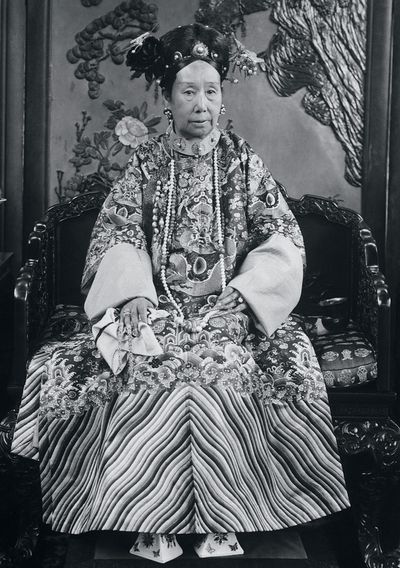
Empress Dowager Cixi
Politician · Modern
64.2Total
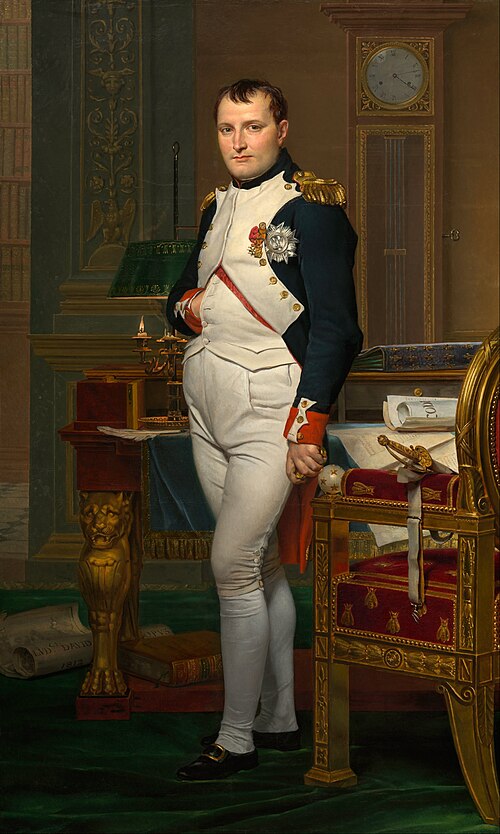
Napoleon Bonaparte
General · Modern
82.4Total
Basic Information
Born
1835
1769
Died
1908
1821
Era
Modern
Modern
Nationality
China
France
Occupation
Politician
General
Civilization
Eastern
Western
Score Comparison
Military (10%)
34.8
94.0
Political (20%)
67.2
75.0
Influence (20%)
67.0
82.0
Legacy (20%)
78.5
78.0
Leadership (15%)
71.8
80.0
Strategy (15%)
49.6
93.0
TOTAL
64.2
82.4
Rankings
🥇
Napoleon BonaparteLeader
Mil: 94.0Pol: 75.0Inf: 82.0
82.4
🥈
Empress Dowager Cixi
Mil: 34.8Pol: 67.2Inf: 67.0
64.2
+18.2 behind
How This Comparison Works
Algorithm
Each figure is scored on 6 dimensions (0—100 scale) based on structured historical data: Military (10%), Political (20%), Influence (20%), Legacy (20%), Leadership (15%), Strategy (15%). The weighted total produces the final ranking.
Data Sources
Scores are computed from structured sub-indicators in the database. Scale factors adjust for era (Ancient ×0.85, Modern ×1.0) and civilization size (Eastern ×1.05, Other ×0.80) to account for differences in population and military scale.
Maximum 3 Figures
Comparisons are limited to 2—3 figures to ensure readability and statistical meaningfulness.
Error Margins
±5 points per dimension — Sub-scores are derived from historical records with inherent uncertainty. Two figures within 5 points on a dimension should be considered roughly equivalent in that area.
Total Score Accuracy
±3 points overall — The weighted combination of 6 dimensions produces a total score with approximately ±3 points of uncertainty. Differences of less than 3 points are not statistically significant— the figures are effectively tied.
Known Limitations
- Historical records are incomplete and uneven across civilizations
- Figures from oral-tradition societies may be underrepresented
- Occupation labels can misclassify multi-role figures
- Scores measure capability and impact, not moral character
- Quantitative scoring is a comparison tool, not absolute truth
Capability Radar
Military (10%) — Battles & Warfare
Battles
30
95
Win Rate
25
90
Expansion
15
95
Political (20%) — Governance & Reform
Reform
65
95
Diplomacy
60
80
Economy
50
85
Influence (20%) — Cultural & Global Reach
Cultural
60
85
Global
60
90
Legacy (20%) — Historical Impact
Historical
75
95
Longevity
55
90
Leadership (15%) — Power & Stability
Tenure
85
85
Stability
40
70
Strategy (15%) — Tactics & Innovation
Strategy
55
95
Tactics
40
98
Reform
70
92
Analysis will be generated on first visit.
Scores and timeline are available below. The page will refresh automatically when ready.
Empress Dowager Cixi — Complete Timeline
1861 AD
Self-Strengthening MovementReform◆ Major
Cixi supported the Self-Strengthening Movement, which modernized China's military and infrastructure. Arsenals, shipyards, and railways were built, and the Tongwen Guan language school was established. However, the movement avoided political reform, limiting its effectiveness.
Qing dynastyModernizationReform
Impact: nationalconstructive
Xinyou CoupPolitical Action
Cixi, with Prince Gong, staged a coup against the eight regents appointed by the dying Xianfeng Emperor. She had the regents arrested and executed, establishing herself as co-regent for the young Tongzhi Emperor. This began her effective control over the Qing government.
Qing dynastyCoupRegency
Impact: national
1898 AD
Hundred Days' Reform CoupPolitical Action◆ Major
Cixi staged a coup to end the Hundred Days' Reform, a series of modernization edicts by the Guangxu Emperor. She imprisoned the emperor, executed six reform leaders, and rescinded most reforms. This reversed political liberalization and strengthened conservative forces.
Qing dynastyReform suppressionCoup
Impact: nationaldestructive
1900 AD
Boxer RebellionWar◆ Major
Cixi declared war on eight foreign powers after the Boxers besieged foreign legations in Beijing. The Eight-Nation Alliance invaded, defeated Qing forces, and occupied Beijing. Cixi fled to Xi'an. The resulting Boxer Protocol imposed heavy reparations and further weakened the Qing.
Qing dynastyForeign interventionWar
Impact: globaldestructive
1901 AD
Late Qing ReformsReform◆ Major
After the Boxer Rebellion, Cixi initiated the Late Qing Reforms, including abolition of the civil service examination, establishment of modern schools, and military modernization. These reforms aimed to strengthen the dynasty but came too late to prevent its collapse.
Qing dynastyModernizationReform
Impact: nationalconstructive
Similar Comparisons
Comments & Discussion
No comments yet. Be the first to share your thoughts!