Loading...
Analysis will be generated on first visit.
Scores and timeline are available below. The page will refresh automatically when ready.
Duke of Wellington vs Qin Shi Huang
Qin Shi Huang leads by 3.7 pts · 2 figures compared
…

Duke of Wellington
General · Modern
79.8Total
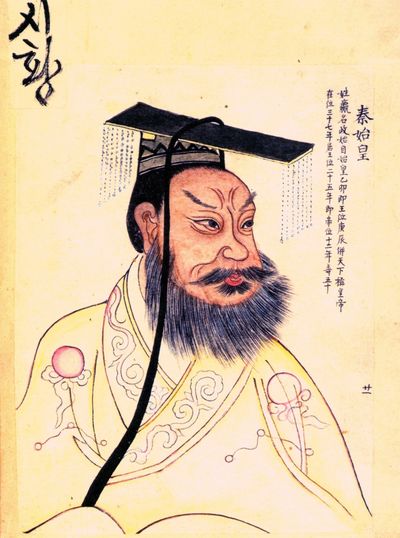
Qin Shi Huang
Emperor · Ancient
83.5Total
Basic Information
Born
1769
-259
Died
1852
-210
Era
Modern
Ancient
Nationality
United Kingdom
China
Occupation
General
Emperor
Civilization
Western
Eastern
Score Comparison
Military (10%)
81.8
80.0
Political (20%)
79.7
88.0
Influence (20%)
84.4
82.0
Legacy (20%)
78.0
85.0
Leadership (15%)
75.5
88.0
Strategy (15%)
79.5
75.0
TOTAL
79.8
83.5
Rankings
🥇
Qin Shi HuangLeader
Mil: 80.0Pol: 88.0Inf: 82.0
83.5
🥈
Duke of Wellington
Mil: 81.8Pol: 79.7Inf: 84.4
79.8
+3.7 behind
How This Comparison Works
Algorithm
Each figure is scored on 6 dimensions (0—100 scale) based on structured historical data: Military (10%), Political (20%), Influence (20%), Legacy (20%), Leadership (15%), Strategy (15%). The weighted total produces the final ranking.
Data Sources
Scores are computed from structured sub-indicators in the database. Scale factors adjust for era (Ancient ×0.85, Modern ×1.0) and civilization size (Eastern ×1.05, Other ×0.80) to account for differences in population and military scale.
Maximum 3 Figures
Comparisons are limited to 2—3 figures to ensure readability and statistical meaningfulness.
Error Margins
±5 points per dimension — Sub-scores are derived from historical records with inherent uncertainty. Two figures within 5 points on a dimension should be considered roughly equivalent in that area.
Total Score Accuracy
±3 points overall — The weighted combination of 6 dimensions produces a total score with approximately ±3 points of uncertainty. Differences of less than 3 points are not statistically significant— the figures are effectively tied.
Known Limitations
- Historical records are incomplete and uneven across civilizations
- Figures from oral-tradition societies may be underrepresented
- Occupation labels can misclassify multi-role figures
- Scores measure capability and impact, not moral character
- Quantitative scoring is a comparison tool, not absolute truth
Capability Radar
Military (10%) — Battles & Warfare
Battles
85
85
Win Rate
90
90
Expansion
75
90
Political (20%) — Governance & Reform
Reform
65
95
Diplomacy
80
75
Economy
60
90
Influence (20%) — Cultural & Global Reach
Cultural
75
95
Global
80
85
Legacy (20%) — Historical Impact
Historical
85
95
Longevity
80
95
Leadership (15%) — Power & Stability
Tenure
75
70
Stability
70
65
Strategy (15%) — Tactics & Innovation
Strategy
88
85
Tactics
92
80
Reform
70
95
Analysis will be generated on first visit.
Scores and timeline are available below. The page will refresh automatically when ready.
Duke of Wellington — Complete Timeline
1803 AD
Battle of AssayeWar◆ Major
Wellington, then Sir Arthur Wellesley, led a British-Indian force to victory against the Maratha Confederacy at Assaye in India. Despite being outnumbered, his tactical skill secured British dominance in central India.
Maratha WarIndiaBattle
Impact: regional
1808 AD
Battle of VimeiroWar◆ Major
Wellington commanded British forces to defeat the French army at Vimeiro in Portugal. The victory halted the French invasion of Portugal and marked the beginning of the Peninsular War.
Peninsular WarPortugalBattle
Impact: regional
1815 AD
Battle of WaterlooWar
Wellington, commanding an Anglo-Allied army, defeated Napoleon Bonaparte at Waterloo in present-day Belgium. The battle ended the Napoleonic Wars and led to Napoleon's final exile to Saint Helena.
Napoleonic WarsBattleWaterloo
Impact: global
1828 AD
Prime Minister of the United KingdomPolitical Action◆ Major
Wellington served as Prime Minister of the UK from 1828 to 1830. His government passed the Catholic Relief Act 1829, granting Catholic emancipation, but his opposition to parliamentary reform led to his resignation.
PoliticsCatholic EmancipationReform
Impact: nationalconstructive
Qin Shi Huang — Complete Timeline
246 BC
Construction of the Mausoleum and Terracotta ArmyOther◆ Major
Qin Shi Huang commissioned a vast mausoleum complex near Xi'an, guarded by thousands of life-sized terracotta soldiers, horses, and chariots. The project employed hundreds of thousands of workers and reflected his obsession with immortality and imperial power.
Impact: global
230 BC
Conquest of the Six Warring StatesWar
From 230 to 221 BCE, Ying Zheng led the Qin state in a series of campaigns that conquered the Han, Zhao, Wei, Chu, Yan, and Qi states. This unified China under a single ruler for the first time, ending the Warring States period.
Impact: global
221 BC
Standardization of Writing, Currency, and MeasurementsReform◆ Major
Qin Shi Huang ordered the standardization of Chinese script, currency, and weights and measures across the unified empire. This facilitated administration, trade, and cultural integration, laying a foundation for future dynasties.
Impact: globalconstructive
Proclamation of the Qin DynastyPolitical Action
After conquering the last independent state, Ying Zheng declared himself Shi Huangdi (First Emperor), founding the Qin Dynasty. He adopted a new title to signify his supreme authority and initiated centralized imperial rule.
Impact: global
214 BC
Initiation of the Great Wall ConstructionOther◆ Major
Qin Shi Huang ordered the connection and extension of existing northern fortifications to create a unified defensive wall against nomadic Xiongnu raids. This project involved massive conscripted labor and became the precursor to the later Great Wall.
Impact: regional
213 BC
Burning of Books and Burying of ScholarsPolitical Action◆ Major
On the advice of Li Si, Qin Shi Huang ordered the burning of historical records and philosophical texts not aligned with Legalist doctrine. He also had 460 Confucian scholars buried alive to suppress dissent and consolidate ideological control.
Impact: nationaldestructive
Similar Comparisons
Comments & Discussion
SIEGE_TACTICIAN6/17/2026
Wellington's defensive brilliance at Waterloo would've been useless against Qin's unified logistics. The First Emperor connected 5,000 miles of roads and standardized axle widths across his empire - Try maneuvering the British square formation when your supply wagons can't even use the same roads. Wellington won battles; Qin won civilizations. Every Chinese road system still echoes his measurements.
复古计算者6/17/2026
拿滑铁卢伤亡数据对比兵马俑数量纯属误导。秦朝军队估算百万级别的动员靠的是纸张刚刚发明、统计技术原始的时代。惠灵顿的伤亡统计有现代官僚体系支持,而秦始皇的数字全靠司马迁百年后的估算。拿现代数据对比古代估计,这不是历史比较,这是用iPhone比算盘。
KAISER_RESEARCHER6/17/2026
The real comparison isn't battlefield tactics - it's institutional genius. Qin standardized writing, currency, and law across a territory the size of Western Europe. Wellington's greatest legacy is the Belgian constitution and European balance of power. One gave China its civilizational DNA; the other gave Europe a 40-year peace. Both succeeded brilliantly at their historical moments, but Qin's impact scales like Rome's, not like a general's.
青铜时代6/17/2026
你们总拿秦的恐怖宣传说事,但惠灵顿在印度镇压马拉地人时同样冷酷。萨拉加里之战中英军屠杀了马拉地战士,而秦将白起在长平之战后坑杀降卒。技术进步让屠杀效率提高,但残忍本质未变。帝国建设从来不是文明课,而是血与铁的选择题。别把惠灵顿浪漫化,他一样是个殖民帝国的征服者。
REFORMED_WARRIOR6/17/2026
Both men understood that order requires terror, but Wellington's restraint matters. After Waterloo, he refused to execute Napoleon or purge France - he wanted Europe stable, not crushed. Qin's burning of books and burying of scholars shows a mind that couldn't tolerate opposition. Wellington built coalitions; Qin built concentration camps. Here's your test: Which leader's system did people willingly maintain after their deaths?