Loading...
Analysis will be generated on first visit.
Scores and timeline are available below. The page will refresh automatically when ready.
Douglas Haig vs Qin Shi Huang
Qin Shi Huang leads by 11.8 pts · 2 figures compared
…

Douglas Haig
General · Modern
71.7Total
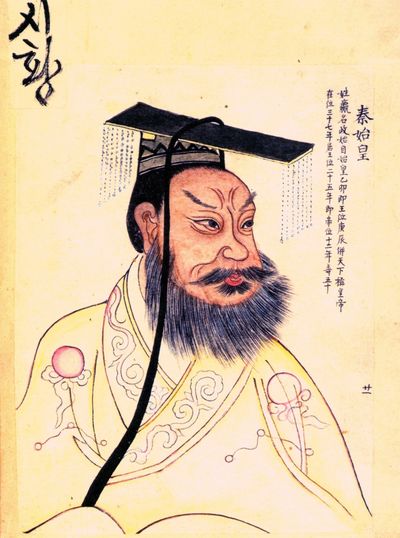
Qin Shi Huang
Emperor · Ancient
83.5Total
Basic Information
Born
1861
-259
Died
1928
-210
Era
Modern
Ancient
Nationality
Great Britain
China
Occupation
General
Emperor
Civilization
Western
Eastern
Score Comparison
Military (10%)
69.1
80.0
Political (20%)
91.2
88.0
Influence (20%)
68.5
82.0
Legacy (20%)
55.0
85.0
Leadership (15%)
81.2
88.0
Strategy (15%)
64.5
75.0
TOTAL
71.7
83.5
Rankings
🥇
Qin Shi HuangLeader
Mil: 80.0Pol: 88.0Inf: 82.0
83.5
🥈
Douglas Haig
Mil: 69.1Pol: 91.2Inf: 68.5
71.7
+11.8 behind
How This Comparison Works
Algorithm
Each figure is scored on 6 dimensions (0—100 scale) based on structured historical data: Military (10%), Political (20%), Influence (20%), Legacy (20%), Leadership (15%), Strategy (15%). The weighted total produces the final ranking.
Data Sources
Scores are computed from structured sub-indicators in the database. Scale factors adjust for era (Ancient ×0.85, Modern ×1.0) and civilization size (Eastern ×1.05, Other ×0.80) to account for differences in population and military scale.
Maximum 3 Figures
Comparisons are limited to 2—3 figures to ensure readability and statistical meaningfulness.
Error Margins
±5 points per dimension — Sub-scores are derived from historical records with inherent uncertainty. Two figures within 5 points on a dimension should be considered roughly equivalent in that area.
Total Score Accuracy
±3 points overall — The weighted combination of 6 dimensions produces a total score with approximately ±3 points of uncertainty. Differences of less than 3 points are not statistically significant— the figures are effectively tied.
Known Limitations
- Historical records are incomplete and uneven across civilizations
- Figures from oral-tradition societies may be underrepresented
- Occupation labels can misclassify multi-role figures
- Scores measure capability and impact, not moral character
- Quantitative scoring is a comparison tool, not absolute truth
Capability Radar
Military (10%) — Battles & Warfare
Battles
75
85
Win Rate
60
90
Expansion
50
90
Political (20%) — Governance & Reform
Reform
55
95
Diplomacy
50
75
Economy
40
90
Influence (20%) — Cultural & Global Reach
Cultural
55
95
Global
60
85
Legacy (20%) — Historical Impact
Historical
70
95
Longevity
65
95
Leadership (15%) — Power & Stability
Tenure
60
70
Stability
45
65
Strategy (15%) — Tactics & Innovation
Strategy
70
85
Tactics
45
80
Reform
65
95
Analysis will be generated on first visit.
Scores and timeline are available below. The page will refresh automatically when ready.
Douglas Haig — Complete Timeline
1915 AD
Battle of Neuve ChapelleWar
Haig commanded the First Army at the Battle of Neuve Chapelle. This was the first major British offensive of 1915. The attack achieved a limited breakthrough but failed to exploit it due to communication and supply problems, foreshadowing later trench warfare difficulties.
World War IWestern FrontOffensive
Impact: regional
1916 AD
Battle of the SommeWar
Haig commanded the British Expeditionary Force during the Battle of the Somme. The offensive resulted in over 400,000 British casualties for minimal territorial gains. The first day, 1 July 1916, saw 57,470 British casualties, the bloodiest day in British military history.
World War IWestern FrontAttrition
Impact: nationaltragic
1917 AD
Third Battle of Ypres (Passchendaele)War◆ Major
Haig launched the Third Battle of Ypres in Flanders. The offensive aimed to break through German lines and capture the Belgian coast. After months of fighting in mud, the Allies gained about five miles at a cost of over 300,000 casualties, with no strategic breakthrough achieved.
World War IWestern FrontAttrition
Impact: regionaltragic
1918 AD
Hundred Days OffensiveWar
Haig commanded the British forces during the final Allied offensive that broke the German army. Beginning with the Battle of Amiens on 8 August 1918, the offensive pushed the Germans back continuously until the Armistice on 11 November 1918, ending World War I.
World War IVictoryAllied Offensive
Impact: globalconstructive
Qin Shi Huang — Complete Timeline
246 BC
Construction of the Mausoleum and Terracotta ArmyOther◆ Major
Qin Shi Huang commissioned a vast mausoleum complex near Xi'an, guarded by thousands of life-sized terracotta soldiers, horses, and chariots. The project employed hundreds of thousands of workers and reflected his obsession with immortality and imperial power.
Impact: global
230 BC
Conquest of the Six Warring StatesWar
From 230 to 221 BCE, Ying Zheng led the Qin state in a series of campaigns that conquered the Han, Zhao, Wei, Chu, Yan, and Qi states. This unified China under a single ruler for the first time, ending the Warring States period.
Impact: global
221 BC
Standardization of Writing, Currency, and MeasurementsReform◆ Major
Qin Shi Huang ordered the standardization of Chinese script, currency, and weights and measures across the unified empire. This facilitated administration, trade, and cultural integration, laying a foundation for future dynasties.
Impact: globalconstructive
Proclamation of the Qin DynastyPolitical Action
After conquering the last independent state, Ying Zheng declared himself Shi Huangdi (First Emperor), founding the Qin Dynasty. He adopted a new title to signify his supreme authority and initiated centralized imperial rule.
Impact: global
214 BC
Initiation of the Great Wall ConstructionOther◆ Major
Qin Shi Huang ordered the connection and extension of existing northern fortifications to create a unified defensive wall against nomadic Xiongnu raids. This project involved massive conscripted labor and became the precursor to the later Great Wall.
Impact: regional
213 BC
Burning of Books and Burying of ScholarsPolitical Action◆ Major
On the advice of Li Si, Qin Shi Huang ordered the burning of historical records and philosophical texts not aligned with Legalist doctrine. He also had 460 Confucian scholars buried alive to suppress dissent and consolidate ideological control.
Impact: nationaldestructive
Similar Comparisons
Comments & Discussion
HaigTheButcher6/17/2026
Haig wasn't a visionary—he was a stubborn butcher who learned nothing. At the Somme, he kept sending waves into machine guns while his enemy built stronger defenses. Qin Shi Huang unified China with brutal efficiency, standardizing writing and weights. Haig just standardized death. One built an empire; the other just built cemeteries. Revisionist criticism ignores his failure of imagination.
秦始皇御厨6/17/2026
拿哈克跟秦皇比?哈克在帕森达勒一天损失四万人就为抢几米烂泥地,始皇帝十年灭六国统一天下,连长城都修起来了。哈克的“战略”就是拿人命填,秦王的法家治国好歹留下郡县制。一个废物,一个真皇帝,高下立判。
DataSkeptic6/17/2026
Let’s not romanticize: Qin’s unification cost roughly a million lives over a decade, while Haig’s Western Front battles killed around 600,000 in just a few months. Per capita, Haig’s casualty rate was exponentially higher, and his gains were negligible. Qin’s brutal efficiency produced lasting state infrastructure; Haig’s stubbornness produced only defensive stalemates. Pure mathematical loss vs. strategic return. Haig fails.
经典癖好6/17/2026
军事史家老爱吹哈克的“消耗战”理论,但事实是:他1917年在帕森达勒损失了50万人,连德军防线都没突破。秦皇用李斯变法,统一文字货币,奠定中国两千年版图。哈克除了杀自己人,啥也没留下。这比较就像拿锤子砸瓷器—锤子自嗨,瓷器碎了也没用。
TrenchPoet6/17/2026
Haig's tragedy wasn’t malice—it was industrial scale incompetence. He had tanks, planes, and intelligence, yet chose frontal assaults. Qin had bronze swords and crossbows, yet conquered six kingdoms through logistics and legal reforms. Haig wasted modern resources; Qin maximized ancient ones. One shaped history; the other shaped mud. History should judge not by blood spilled, but by structure built.