Loading...
Analysis will be generated on first visit.
Scores and timeline are available below. The page will refresh automatically when ready.
Dong Zhongshu vs Qin Shi Huang
Qin Shi Huang leads by 9.2 pts · 2 figures compared
…

Dong Zhongshu
Politician · Ancient
74.3Total
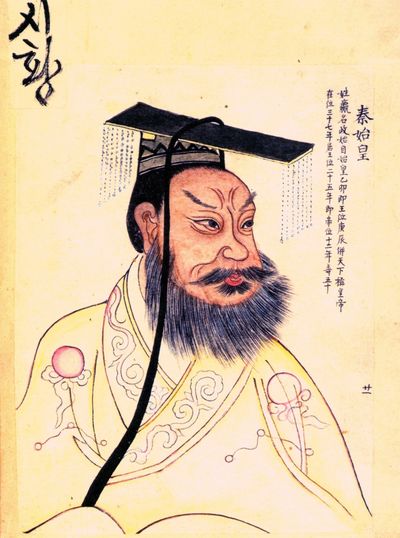
Qin Shi Huang
Emperor · Ancient
83.5Total
Basic Information
Born
-179
-259
Died
-104
-210
Era
Ancient
Ancient
Nationality
China
China
Occupation
Politician
Emperor
Civilization
Eastern
Eastern
Score Comparison
Military (10%)
49.4
80.0
Political (20%)
77.3
88.0
Influence (20%)
84.2
82.0
Legacy (20%)
94.2
85.0
Leadership (15%)
81.5
88.0
Strategy (15%)
39.8
75.0
TOTAL
74.3
83.5
Rankings
🥇
Qin Shi HuangLeader
Mil: 80.0Pol: 88.0Inf: 82.0
83.5
🥈
Dong Zhongshu
Mil: 49.4Pol: 77.3Inf: 84.2
74.3
+9.2 behind
How This Comparison Works
Algorithm
Each figure is scored on 6 dimensions (0—100 scale) based on structured historical data: Military (10%), Political (20%), Influence (20%), Legacy (20%), Leadership (15%), Strategy (15%). The weighted total produces the final ranking.
Data Sources
Scores are computed from structured sub-indicators in the database. Scale factors adjust for era (Ancient ×0.85, Modern ×1.0) and civilization size (Eastern ×1.05, Other ×0.80) to account for differences in population and military scale.
Maximum 3 Figures
Comparisons are limited to 2—3 figures to ensure readability and statistical meaningfulness.
Error Margins
±5 points per dimension — Sub-scores are derived from historical records with inherent uncertainty. Two figures within 5 points on a dimension should be considered roughly equivalent in that area.
Total Score Accuracy
±3 points overall — The weighted combination of 6 dimensions produces a total score with approximately ±3 points of uncertainty. Differences of less than 3 points are not statistically significant— the figures are effectively tied.
Known Limitations
- Historical records are incomplete and uneven across civilizations
- Figures from oral-tradition societies may be underrepresented
- Occupation labels can misclassify multi-role figures
- Scores measure capability and impact, not moral character
- Quantitative scoring is a comparison tool, not absolute truth
Capability Radar
Military (10%) — Battles & Warfare
Battles
43
85
Win Rate
43
90
Expansion
47
90
Political (20%) — Governance & Reform
Reform
85
95
Diplomacy
60
75
Economy
30
90
Influence (20%) — Cultural & Global Reach
Cultural
95
95
Global
80
85
Legacy (20%) — Historical Impact
Historical
95
95
Longevity
95
95
Leadership (15%) — Power & Stability
Tenure
40
70
Stability
70
65
Strategy (15%) — Tactics & Innovation
Strategy
49
85
Tactics
50
80
Reform
56
95
Analysis will be generated on first visit.
Scores and timeline are available below. The page will refresh automatically when ready.
Dong Zhongshu — Complete Timeline
134 BC
Proposed the Abolition of Other Schools of ThoughtPolitical Action
Dong Zhongshu submitted a memorial to Emperor Wu of Han recommending that all non-Confucian philosophies be suppressed and that Confucianism be established as the sole state orthodoxy. This policy led to the dominance of Confucianism in Chinese government and education.
Han DynastyConfucianismState Orthodoxy
Impact: globalconstructive
130 BC
Developed the Theory of the Mandate of Heaven and Yin-YangCultural◆ Major
Dong Zhongshu synthesized Confucian ethics with cosmological theories of yin-yang and the five elements. He argued that natural disasters were signs of Heaven's displeasure with the ruler, providing a moral framework for imperial governance.
Han DynastyPhilosophyCosmology
Impact: globalconstructive
125 BC
Served as Chancellor of the Kingdom of JiaoxiPolitical Action
Dong Zhongshu was appointed chancellor of the Kingdom of Jiaoxi, where he implemented Confucian policies and promoted education. His tenure was marked by efforts to reform local governance according to Confucian principles.
Han DynastyGovernanceConfucianism
constructive
120 BC
Authored the Luxuriant Dew of the Spring and Autumn AnnalsCultural◆ Major
Dong Zhongshu wrote the Chunqiu Fanlu, a major Confucian text that interpreted the Spring and Autumn Annals through a cosmological lens. The work became a foundational text for Han Confucianism and influenced Chinese political thought for centuries.
Han DynastyPhilosophyLiterature
Impact: globalconstructive
Qin Shi Huang — Complete Timeline
246 BC
Construction of the Mausoleum and Terracotta ArmyOther◆ Major
Qin Shi Huang commissioned a vast mausoleum complex near Xi'an, guarded by thousands of life-sized terracotta soldiers, horses, and chariots. The project employed hundreds of thousands of workers and reflected his obsession with immortality and imperial power.
Impact: global
230 BC
Conquest of the Six Warring StatesWar
From 230 to 221 BCE, Ying Zheng led the Qin state in a series of campaigns that conquered the Han, Zhao, Wei, Chu, Yan, and Qi states. This unified China under a single ruler for the first time, ending the Warring States period.
Impact: global
221 BC
Standardization of Writing, Currency, and MeasurementsReform◆ Major
Qin Shi Huang ordered the standardization of Chinese script, currency, and weights and measures across the unified empire. This facilitated administration, trade, and cultural integration, laying a foundation for future dynasties.
Impact: globalconstructive
Proclamation of the Qin DynastyPolitical Action
After conquering the last independent state, Ying Zheng declared himself Shi Huangdi (First Emperor), founding the Qin Dynasty. He adopted a new title to signify his supreme authority and initiated centralized imperial rule.
Impact: global
214 BC
Initiation of the Great Wall ConstructionOther◆ Major
Qin Shi Huang ordered the connection and extension of existing northern fortifications to create a unified defensive wall against nomadic Xiongnu raids. This project involved massive conscripted labor and became the precursor to the later Great Wall.
Impact: regional
213 BC
Burning of Books and Burying of ScholarsPolitical Action◆ Major
On the advice of Li Si, Qin Shi Huang ordered the burning of historical records and philosophical texts not aligned with Legalist doctrine. He also had 460 Confucian scholars buried alive to suppress dissent and consolidate ideological control.
Impact: nationaldestructive
Similar Comparisons
Comments & Discussion
WarHammer 4016/17/2026
Qin Shihuang gets all the credit as China’s unifier, but let’s be real—his “burn the books” stunt was just barbaric censorship that didn’t even last. Dong Zhongshu’s idea of making Confucianism state orthodoxy? That’s the real masterstroke. It’s like comparing a sledgehammer to a scalpel; the Qin dynasty collapsed in a decade, but Han Confucianism lasted two millennia. A true classicist knows: ideas outlast empires.
数据侦探6/17/2026
把秦朝崩溃怪到焚书坑儒?数据呢?秦朝十五年亡,但西汉用儒家也撑了四百年,这不是正反打脸?关键变量是官僚系统,不是儒学。要是董仲舒真有用,王莽篡汉时怎么没人拦着?拿一个儒生吹跨时代影响力,历史课的因果链含水量太高。
Yuan's Wrath6/17/2026
Revisionist alert: Dong Zhongshu wasn’t some peace-loving philosopher—he was the architect of ideological monopoly. Think about it: his “abolish all other schools” is just Qin Shihuang’s book burning with a smile. Both guys hated diversity of thought; one used fire, the other used state exams. That’s not a contrast, that’s one violent idea evolving into a subtler cage. I’m not buying the “good scholar vs. bad emperor” story.
边塞老兵6/17/2026
我懂战争,也懂统一。始皇帝没用儒家,他用法家铁腕压住六国旧贵族,但没解决人心。董仲舒给了汉武一把软刀子:考经典、尊儒学,把士人吸进体制,比杀人埋人高明百倍。打天下靠刀,治天下靠儒,否则汉武帝北驱匈奴哪来那么多读书人管后勤?这俩一个硬一个软,缺一不可。
Ivory Tower Breaker6/17/2026
Stop romanticizing Dong Zhongshu as a visionary—he was a political hack. Emperor Wu didn’t adopt Confucianism because of some grand ideology; he just needed a unifying doctrine after decades of war, and Dong came peddling a neat package that justified autocracy. Qin Shihuang’s Legalism failed because it was too harsh, but Han’s “Confucianism” was just Legalism in a robe. Read the “Han Feizi” then the “Chunqiu Fanlu” – same centralized control, different marketing.