Loading...
Analysis will be generated on first visit.
Scores and timeline are available below. The page will refresh automatically when ready.
Chu Suiliang vs Qin Shi Huang
Qin Shi Huang leads by 11.7 pts · 2 figures compared
…

Chu Suiliang
Politician · Medieval
71.8Total
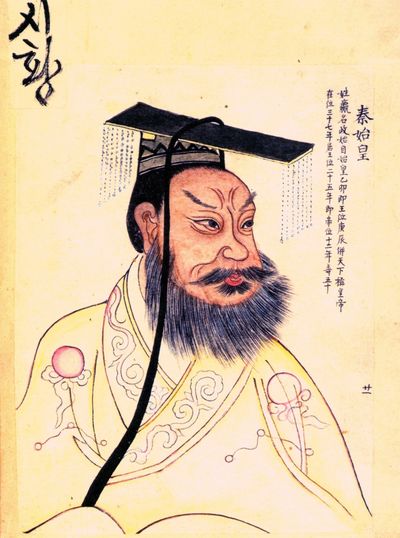
Qin Shi Huang
Emperor · Ancient
83.5Total
Basic Information
Born
596
-259
Died
658
-210
Era
Medieval
Ancient
Nationality
China
China
Occupation
Politician
Emperor
Civilization
Eastern
Eastern
Score Comparison
Military (10%)
47.0
80.0
Political (20%)
83.8
88.0
Influence (20%)
68.7
82.0
Legacy (20%)
70.1
85.0
Leadership (15%)
83.4
88.0
Strategy (15%)
67.1
75.0
TOTAL
71.8
83.5
Rankings
🥇
Qin Shi HuangLeader
Mil: 80.0Pol: 88.0Inf: 82.0
83.5
🥈
Chu Suiliang
Mil: 47.0Pol: 83.8Inf: 68.7
71.8
+11.7 behind
How This Comparison Works
Algorithm
Each figure is scored on 6 dimensions (0—100 scale) based on structured historical data: Military (10%), Political (20%), Influence (20%), Legacy (20%), Leadership (15%), Strategy (15%). The weighted total produces the final ranking.
Data Sources
Scores are computed from structured sub-indicators in the database. Scale factors adjust for era (Ancient ×0.85, Modern ×1.0) and civilization size (Eastern ×1.05, Other ×0.80) to account for differences in population and military scale.
Maximum 3 Figures
Comparisons are limited to 2—3 figures to ensure readability and statistical meaningfulness.
Error Margins
±5 points per dimension — Sub-scores are derived from historical records with inherent uncertainty. Two figures within 5 points on a dimension should be considered roughly equivalent in that area.
Total Score Accuracy
±3 points overall — The weighted combination of 6 dimensions produces a total score with approximately ±3 points of uncertainty. Differences of less than 3 points are not statistically significant— the figures are effectively tied.
Known Limitations
- Historical records are incomplete and uneven across civilizations
- Figures from oral-tradition societies may be underrepresented
- Occupation labels can misclassify multi-role figures
- Scores measure capability and impact, not moral character
- Quantitative scoring is a comparison tool, not absolute truth
Capability Radar
Military (10%) — Battles & Warfare
Battles
36
85
Win Rate
43
90
Expansion
44
90
Political (20%) — Governance & Reform
Reform
60
95
Diplomacy
55
75
Economy
50
90
Influence (20%) — Cultural & Global Reach
Cultural
75
95
Global
55
85
Legacy (20%) — Historical Impact
Historical
70
95
Longevity
75
95
Leadership (15%) — Power & Stability
Tenure
65
70
Stability
55
65
Strategy (15%) — Tactics & Innovation
Strategy
49
85
Tactics
51
80
Reform
54
95
Analysis will be generated on first visit.
Scores and timeline are available below. The page will refresh automatically when ready.
Chu Suiliang — Complete Timeline
640 AD
Renowned as a Calligrapher of the Tang DynastyCultural◆ Major
Chu Suiliang was recognized as one of the Four Great Calligraphers of the early Tang dynasty. He developed a distinctive style known for its elegance and strength. His calligraphy was highly influential and was studied by later generations. Many of his works were preserved as models.
CalligraphyFour Great CalligraphersTang Art
Impact: nationalconstructive
649 AD
Appointed Grand Chancellor under Emperor GaozongPolitical Action◆ Major
Chu Suiliang was appointed Grand Chancellor (Shangshu You Pushe) by Emperor Gaozong after the death of Emperor Taizong. He was one of the regents entrusted with assisting the young emperor. His appointment reflected his high status as a trusted advisor from the previous reign.
Grand ChancellorEmperor GaozongRegency
Impact: nationalconstructive
655 AD
Opposed Emperor Gaozong's Appointment of Wu Zetian as EmpressPolitical Action◆ Major
Chu Suiliang strongly opposed Emperor Gaozong's plan to depose Empress Wang and appoint Wu Zetian as empress. He argued that Wu was not of suitable background and that the emperor should not act against tradition. His opposition angered the emperor and Wu Zetian.
Wu ZetianEmpress AppointmentCourt Conflict
Impact: national
Exiled to TanzhouPolitical Action◆ Major
After opposing the appointment of Wu Zetian as empress, Chu Suiliang was demoted and exiled to Tanzhou (modern Changsha, Hunan). He was later moved to a more remote post in Guizhou. His exile marked the end of his political career and the rise of Wu Zetian's faction.
ExileWu ZetianPolitical Downfall
Impact: nationaltragic
658 AD
Death in ExileOther◆ Major
Chu Suiliang died in exile in 658 AD at the age of 63. His death occurred in Guizhou, where he had been sent as a local official. He was later posthumously rehabilitated during the reign of Emperor Zhongzong, and his reputation as a loyal minister was restored.
Death in ExilePosthumous RehabilitationLoyal Minister
Impact: nationaltragic
Qin Shi Huang — Complete Timeline
246 BC
Construction of the Mausoleum and Terracotta ArmyOther◆ Major
Qin Shi Huang commissioned a vast mausoleum complex near Xi'an, guarded by thousands of life-sized terracotta soldiers, horses, and chariots. The project employed hundreds of thousands of workers and reflected his obsession with immortality and imperial power.
Impact: global
230 BC
Conquest of the Six Warring StatesWar
From 230 to 221 BCE, Ying Zheng led the Qin state in a series of campaigns that conquered the Han, Zhao, Wei, Chu, Yan, and Qi states. This unified China under a single ruler for the first time, ending the Warring States period.
Impact: global
221 BC
Standardization of Writing, Currency, and MeasurementsReform◆ Major
Qin Shi Huang ordered the standardization of Chinese script, currency, and weights and measures across the unified empire. This facilitated administration, trade, and cultural integration, laying a foundation for future dynasties.
Impact: globalconstructive
Proclamation of the Qin DynastyPolitical Action
After conquering the last independent state, Ying Zheng declared himself Shi Huangdi (First Emperor), founding the Qin Dynasty. He adopted a new title to signify his supreme authority and initiated centralized imperial rule.
Impact: global
214 BC
Initiation of the Great Wall ConstructionOther◆ Major
Qin Shi Huang ordered the connection and extension of existing northern fortifications to create a unified defensive wall against nomadic Xiongnu raids. This project involved massive conscripted labor and became the precursor to the later Great Wall.
Impact: regional
213 BC
Burning of Books and Burying of ScholarsPolitical Action◆ Major
On the advice of Li Si, Qin Shi Huang ordered the burning of historical records and philosophical texts not aligned with Legalist doctrine. He also had 460 Confucian scholars buried alive to suppress dissent and consolidate ideological control.
Impact: nationaldestructive
Similar Comparisons
Comments & Discussion
NemesisArchitect6/17/2026
A military historian sees tactics here, not tragedy: Qin Shi Huang burned books to erase strategic alternatives for future rebels. Chu Suiliang wept before Wu Zetian because he knew her regency meant replacing Confucian order with a military command economy. Both men fought for command structures—Qin with fire, Chu with tears. Neither was wrong; they just understood different battlefields.
史海刀笔6/17/2026
我是数据怀疑论者。说秦皇焚书“毁万卷”,实则多是占卜农书副本,六国档案早被秦吏抄录归档。褚遂良反对立武曌?表面忠君,实为关陇集团排挤山东寒族。所谓“8万卷烧毁”是后世儒生注水,“血诏拒后”是旧贵族的最后挣扎。史书数据,从来不是镜子,而是胜者的账单。
ClassicsQuill6/17/2026
As a scholar of primary sources, I’m struck by their shared fatal contradiction: both men weaponized textual authority to preserve hierarchy. Qin Shi Huang’s book burnings targeted the *Shi Ji* tradition—oral histories of rival states that questioned centralized narrative. Chu Suiliang’s protest cited the *Zhou Li* to block Wu Zetian—yet that very text was a Han-era compilation, not authentic Zhou. They died defending fictions, but fictions that held worlds together.
竹简侠6/17/2026
我褚遂良粉,不接受洗白秦始皇。书同文车同轨是功,但坑儒杀降是罪。褚遂良哪怕被贬死,也守住了臣子的底线——他反对武昭仪,不是为个人荣辱,而是为祖制防外戚。一个焚书活埋谏臣,一个因谏言被活埋。拿制度需求替暴行开脱?历史不谈情怀?那请你别用汉字。
RevisionistRift6/17/2026
The real story isn’t tyranny vs. integrity—it’s about two men who both chose loyalty to an ideal over humans. Qin killed philosophers to protect the state from skepticism; Chu exiled himself to protect the monarchy from female power. Both lost. Neither vision survived intact. The burning pits of Xianyang and the tear-soaked robes of Chang’an are the same cloth: the arrogance of men who believed they could freeze history.