Loading...
Analysis will be generated on first visit.
Scores and timeline are available below. The page will refresh automatically when ready.
B. N. Rau vs Qin Shi Huang
Qin Shi Huang leads by 11.8 pts · 2 figures compared
…
B. N. Rau
Politician · Modern
71.7Total
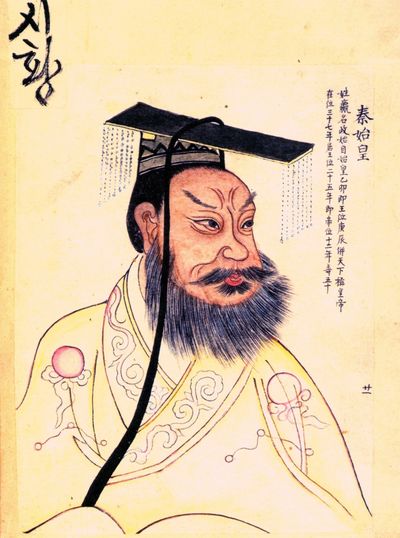
Qin Shi Huang
Emperor · Ancient
83.5Total
Basic Information
Born
1887
-259
Died
1953
-210
Era
Modern
Ancient
Nationality
India
China
Occupation
Politician
Emperor
Civilization
Indian
Eastern
Score Comparison
Military (10%)
52.2
80.0
Political (20%)
77.0
88.0
Influence (20%)
68.4
82.0
Legacy (20%)
80.0
85.0
Leadership (15%)
83.9
88.0
Strategy (15%)
58.7
75.0
TOTAL
71.7
83.5
Rankings
🥇
Qin Shi HuangLeader
Mil: 80.0Pol: 88.0Inf: 82.0
83.5
🥈
B. N. Rau
Mil: 52.2Pol: 77.0Inf: 68.4
71.7
+11.8 behind
How This Comparison Works
Algorithm
Each figure is scored on 6 dimensions (0—100 scale) based on structured historical data: Military (10%), Political (20%), Influence (20%), Legacy (20%), Leadership (15%), Strategy (15%). The weighted total produces the final ranking.
Data Sources
Scores are computed from structured sub-indicators in the database. Scale factors adjust for era (Ancient ×0.85, Modern ×1.0) and civilization size (Eastern ×1.05, Other ×0.80) to account for differences in population and military scale.
Maximum 3 Figures
Comparisons are limited to 2—3 figures to ensure readability and statistical meaningfulness.
Error Margins
±5 points per dimension — Sub-scores are derived from historical records with inherent uncertainty. Two figures within 5 points on a dimension should be considered roughly equivalent in that area.
Total Score Accuracy
±3 points overall — The weighted combination of 6 dimensions produces a total score with approximately ±3 points of uncertainty. Differences of less than 3 points are not statistically significant— the figures are effectively tied.
Known Limitations
- Historical records are incomplete and uneven across civilizations
- Figures from oral-tradition societies may be underrepresented
- Occupation labels can misclassify multi-role figures
- Scores measure capability and impact, not moral character
- Quantitative scoring is a comparison tool, not absolute truth
Capability Radar
Military (10%) — Battles & Warfare
Battles
46
85
Win Rate
47
90
Expansion
51
90
Political (20%) — Governance & Reform
Reform
85
95
Diplomacy
70
75
Economy
30
90
Influence (20%) — Cultural & Global Reach
Cultural
50
95
Global
55
85
Legacy (20%) — Historical Impact
Historical
70
95
Longevity
65
95
Leadership (15%) — Power & Stability
Tenure
40
70
Stability
60
65
Strategy (15%) — Tactics & Innovation
Strategy
50
85
Tactics
56
80
Reform
60
95
Analysis will be generated on first visit.
Scores and timeline are available below. The page will refresh automatically when ready.
B. N. Rau — Complete Timeline
1947 AD
Drafting of the Indian ConstitutionPolitical Action◆ Major
B. N. Rau served as the Constitutional Advisor to the Constituent Assembly of India. He prepared the initial draft of the Indian Constitution, which was then debated and revised by the assembly. His work provided the foundational legal framework for independent India.
ConstitutionConstituent AssemblyLegal Framework
Impact: nationalconstructive
Qin Shi Huang — Complete Timeline
246 BC
Construction of the Mausoleum and Terracotta ArmyOther◆ Major
Qin Shi Huang commissioned a vast mausoleum complex near Xi'an, guarded by thousands of life-sized terracotta soldiers, horses, and chariots. The project employed hundreds of thousands of workers and reflected his obsession with immortality and imperial power.
Impact: global
230 BC
Conquest of the Six Warring StatesWar
From 230 to 221 BCE, Ying Zheng led the Qin state in a series of campaigns that conquered the Han, Zhao, Wei, Chu, Yan, and Qi states. This unified China under a single ruler for the first time, ending the Warring States period.
Impact: global
221 BC
Standardization of Writing, Currency, and MeasurementsReform◆ Major
Qin Shi Huang ordered the standardization of Chinese script, currency, and weights and measures across the unified empire. This facilitated administration, trade, and cultural integration, laying a foundation for future dynasties.
Impact: globalconstructive
Proclamation of the Qin DynastyPolitical Action
After conquering the last independent state, Ying Zheng declared himself Shi Huangdi (First Emperor), founding the Qin Dynasty. He adopted a new title to signify his supreme authority and initiated centralized imperial rule.
Impact: global
214 BC
Initiation of the Great Wall ConstructionOther◆ Major
Qin Shi Huang ordered the connection and extension of existing northern fortifications to create a unified defensive wall against nomadic Xiongnu raids. This project involved massive conscripted labor and became the precursor to the later Great Wall.
Impact: regional
213 BC
Burning of Books and Burying of ScholarsPolitical Action◆ Major
On the advice of Li Si, Qin Shi Huang ordered the burning of historical records and philosophical texts not aligned with Legalist doctrine. He also had 460 Confucian scholars buried alive to suppress dissent and consolidate ideological control.
Impact: nationaldestructive
Similar Comparisons
Comments & Discussion
秦之火6/17/2026
This comparison romanticizes Rau while demonizing the First Emperor as a tyrant. But Qin’s brutal unification created China’s first bureaucratic empire—standardized weights, measures, and script across a vast territory. That centralization lasted millennia. Rau’s beautiful constitution governs a chaotic democracy where 45% of MPs face criminal charges. Show me a Legalist bureaucrat who achieved that. Iron and fire built lasting order; ink gave us paperwork and corruption. I’ll take the wall buil
数据判官6/17/2026
评论:这种文人式的对比完全忽略了一个基本事实——秦始皇统一六国仅用了十年,而印度独立后近八十年,还在跟内部叛乱和种姓冲突纠缠。数据不说谎:公元前221年的中国,文字、度量衡、车轨全部统一,这套系统支撑了千年帝国;而1947年的印度,至今还有22种官方语言。哪个更有秩序?不是所有秩序都该用墨水瓶衡量。
Legionary’s Log6/17/2026
People forget: Qin Shi Huang’s army wasn’t just iron—it was *industrial*. The Terracotta Army shows standardized weaponry, interchangeable parts, factory-like mass production that Rome never achieved. Each crossbow trigger mechanism fits any bolt. That’s systemic genius. Rau wrote a thoughtful document, sure. But Qin built a war machine that could project force across 2,000 km without supply breakdown. That’s the real order—logistical, scalable, brutal. Sometimes the pen is lighter than the swor
墨家传人6/17/2026
你们都在捧皇帝的实用主义,但别忘了他的焚书坑儒——这不是文明,这是文化灭绝。他烧的不仅是经书,是几百年的思想辩论。把儒生活埋,只是因为他害怕批评。Rau建立的印度宪法,至少在纸面上保护了多元声音和基本权利。两千年前的专制效率,不值得今天的赞美。没有自由的秩序,是监狱。秦始皇给我们留下了长城和兵马俑,但他也带走了无数未被记录的思想。
Afternoon Tea Historian6/17/2026
There’s a lovely irony here. Qin Shi Huang unified China through conquest, then spent his reign obsessed with immortality—pursuing elixirs, building a mercury-rivered tomb. Rau, by contrast, spent his twilight years at the International Court of Justice, calmly drafting statutes for a world court. One emperor tried to conquer time; the other tried to civilize it. I know which legacy I’d rather inherit: constitutionalism is quieter than tomb raiders, but it outlasts bronze. Faint praise? Perhaps.