Loading...
Analysis will be generated on first visit.
Scores and timeline are available below. The page will refresh automatically when ready.
Antigonus I Monophthalmus vs Qin Shi Huang
Qin Shi Huang leads by 7.0 pts · 2 figures compared
…

Antigonus I Monophthalmus
Emperor · Ancient
76.5Total
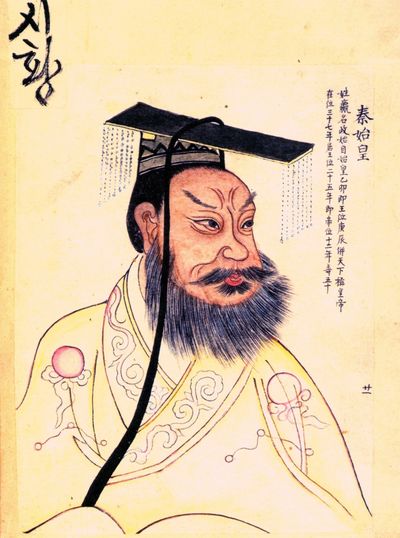
Qin Shi Huang
Emperor · Ancient
83.5Total
Basic Information
Born
-382
-259
Died
-301
-210
Era
Ancient
Ancient
Nationality
Macedon
China
Occupation
Emperor
Emperor
Civilization
Western
Eastern
Score Comparison
Military (10%)
72.9
80.0
Political (20%)
90.4
88.0
Influence (20%)
70.9
82.0
Legacy (20%)
65.8
85.0
Leadership (15%)
80.5
88.0
Strategy (15%)
78.0
75.0
TOTAL
76.5
83.5
Rankings
🥇
Qin Shi HuangLeader
Mil: 80.0Pol: 88.0Inf: 82.0
83.5
🥈
Antigonus I Monophthalmus
Mil: 72.9Pol: 90.4Inf: 70.9
76.5
+7.0 behind
How This Comparison Works
Algorithm
Each figure is scored on 6 dimensions (0—100 scale) based on structured historical data: Military (10%), Political (20%), Influence (20%), Legacy (20%), Leadership (15%), Strategy (15%). The weighted total produces the final ranking.
Data Sources
Scores are computed from structured sub-indicators in the database. Scale factors adjust for era (Ancient ×0.85, Modern ×1.0) and civilization size (Eastern ×1.05, Other ×0.80) to account for differences in population and military scale.
Maximum 3 Figures
Comparisons are limited to 2—3 figures to ensure readability and statistical meaningfulness.
Error Margins
±5 points per dimension — Sub-scores are derived from historical records with inherent uncertainty. Two figures within 5 points on a dimension should be considered roughly equivalent in that area.
Total Score Accuracy
±3 points overall — The weighted combination of 6 dimensions produces a total score with approximately ±3 points of uncertainty. Differences of less than 3 points are not statistically significant— the figures are effectively tied.
Known Limitations
- Historical records are incomplete and uneven across civilizations
- Figures from oral-tradition societies may be underrepresented
- Occupation labels can misclassify multi-role figures
- Scores measure capability and impact, not moral character
- Quantitative scoring is a comparison tool, not absolute truth
Capability Radar
Military (10%) — Battles & Warfare
Battles
85
85
Win Rate
80
90
Expansion
90
90
Political (20%) — Governance & Reform
Reform
65
95
Diplomacy
72
75
Economy
60
90
Influence (20%) — Cultural & Global Reach
Cultural
60
95
Global
70
85
Legacy (20%) — Historical Impact
Historical
75
95
Longevity
65
95
Leadership (15%) — Power & Stability
Tenure
70
70
Stability
55
65
Strategy (15%) — Tactics & Innovation
Strategy
88
85
Tactics
82
80
Reform
75
95
Analysis will be generated on first visit.
Scores and timeline are available below. The page will refresh automatically when ready.
Antigonus I Monophthalmus — Complete Timeline
316 BC
Battle of GabieneWar◆ Major
Antigonus I defeated Eumenes, a former general of Alexander, at Gabiene in Persia. This victory eliminated a major rival and gave Antigonus control over the eastern satrapies, making him the most powerful of the Diadochi at that time.
DiadochiBattlePersia
Impact: regional
315 BC
Siege of TyreWar
Antigonus I besieged and captured the city of Tyre from Ptolemy I's forces. The siege demonstrated his military capabilities and expanded his control over Phoenicia and Syria, strengthening his position in the Diadochi conflicts.
DiadochiSiegePhoenicia
Impact: regional
306 BC
Proclamation as King of AsiaPolitical Action◆ Major
Antigonus I declared himself king of Asia, claiming authority over the entire former empire of Alexander. This act prompted other Diadochi to also assume royal titles, formalizing the breakup of Alexander's empire into separate Hellenistic kingdoms.
DiadochiKingshipHellenistic
Impact: regional
301 BC
Battle of IpsusWar
Antigonus I Monophthalmus commanded his army against the allied forces of Seleucus, Lysimachus, and Cassander at Ipsus. He was defeated and killed in battle, ending his ambition to reunite Alexander's empire. His death solidified the division of the empire among the other Diadochi.
DiadochiBattleAntigonid
Impact: regionaltragic
Qin Shi Huang — Complete Timeline
246 BC
Construction of the Mausoleum and Terracotta ArmyOther◆ Major
Qin Shi Huang commissioned a vast mausoleum complex near Xi'an, guarded by thousands of life-sized terracotta soldiers, horses, and chariots. The project employed hundreds of thousands of workers and reflected his obsession with immortality and imperial power.
Impact: global
230 BC
Conquest of the Six Warring StatesWar
From 230 to 221 BCE, Ying Zheng led the Qin state in a series of campaigns that conquered the Han, Zhao, Wei, Chu, Yan, and Qi states. This unified China under a single ruler for the first time, ending the Warring States period.
Impact: global
221 BC
Standardization of Writing, Currency, and MeasurementsReform◆ Major
Qin Shi Huang ordered the standardization of Chinese script, currency, and weights and measures across the unified empire. This facilitated administration, trade, and cultural integration, laying a foundation for future dynasties.
Impact: globalconstructive
Proclamation of the Qin DynastyPolitical Action
After conquering the last independent state, Ying Zheng declared himself Shi Huangdi (First Emperor), founding the Qin Dynasty. He adopted a new title to signify his supreme authority and initiated centralized imperial rule.
Impact: global
214 BC
Initiation of the Great Wall ConstructionOther◆ Major
Qin Shi Huang ordered the connection and extension of existing northern fortifications to create a unified defensive wall against nomadic Xiongnu raids. This project involved massive conscripted labor and became the precursor to the later Great Wall.
Impact: regional
213 BC
Burning of Books and Burying of ScholarsPolitical Action◆ Major
On the advice of Li Si, Qin Shi Huang ordered the burning of historical records and philosophical texts not aligned with Legalist doctrine. He also had 460 Confucian scholars buried alive to suppress dissent and consolidate ideological control.
Impact: nationaldestructive
Similar Comparisons
Comments & Discussion
One-EyeRealist6/17/2026
Calling Antigonus a "failed emperor" misses the point—he was the last great Diadoch, holding together a fractured Hellenistic world for decades. Qin Shi Huang unified China through sheer bureaucratic terror, yes, but Antigonus kept Alexander's cavalry elite loyal because they respected his grit, not his paperwork. Qin's realm collapsed a few years after his death; Antigonus's son Demetrius nearly revived his father's dream. Legacy isn't just about who won the final battle—it's about who set the
数据刀锋6/17/2026
别跟我提什么“东西方帝制对比”,你们这些历史网红就爱强行凑对。数据上看看:秦灭六国花了不到十年,行政体系一步到位;安提柯打了四十多年,连一次像样的中央集权都没实现。Qin 统一后立刻推行书同文车同轨,安提柯连境内叛军都压不住。不是我不尊重独眼龙,但把他跟始皇帝放一块儿比,就像拿希腊城邦民兵跟秦弩阵比——数值碾压就是碾压,浪漫主义救不了战绩。
SinologistInExile6/17/2026
The framing here is seductive but sloppy. Antigonus wasn't trying to "build China"—he was fighting for a Macedonian-style universal monarchy rooted in personal charisma and battlefield loyalty. Qin Shi Huang succeeded because he had Shang Yang's Legalist toolkit and a state already militarized for centuries. Antigonus had no such institutional bedrock; he was propping up a dying tradition of conquest kingship. The real comparison should be between Antigonus and Xiang Yu, not the First Emperor. A
考古菜鸟6/17/2026
我最烦这种“伟大失败者”的叙事毒奶。安提柯确实能打,但他在关键决策上全是昏招——不跟塞琉古结盟,非要在伊普苏斯硬扛,结果全盘皆输。反观始皇帝,每一步都算得死死的:先灭韩国震慑诸侯,再用郑国渠拖垮经济对手,最后玩的是大战略。说他残暴我没意见,但论帝国设计,安提柯连始皇帝的鞋底都不配舔。历史不认情怀,只认结果。
TwoEyesBetterThanOne6/17/2026
Let's not romanticize a guy who literally founded a dynasty on a "maybe" and a missing eye. Antigonus's whole campaign in Asia Minor was a masterclass in overextension—too many fronts, too little logistics. Meanwhile, Qin Shi Huang standardized everything from axle widths to writing systems, creating a template for governance that outlasted his own dynasty by centuries. The Di