Loading...
Analysis will be generated on first visit.
Scores and timeline are available below. The page will refresh automatically when ready.
Anawrahta vs Qin Shi Huang
Qin Shi Huang leads by 12.9 pts · 2 figures compared
…
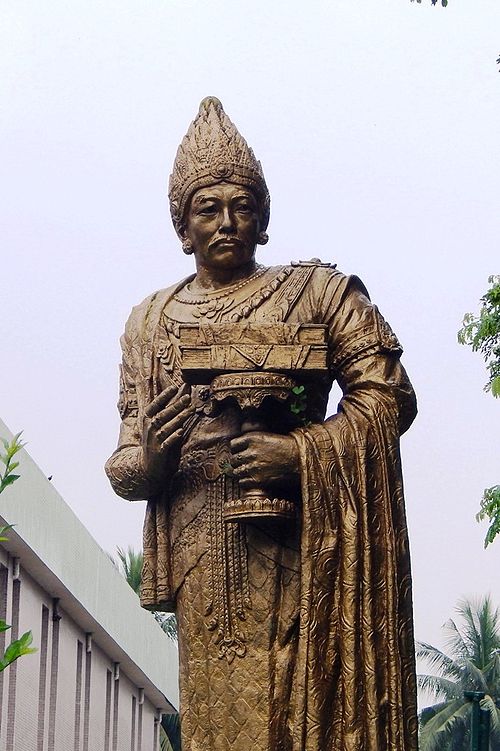
Anawrahta
Emperor · Medieval
70.6Total
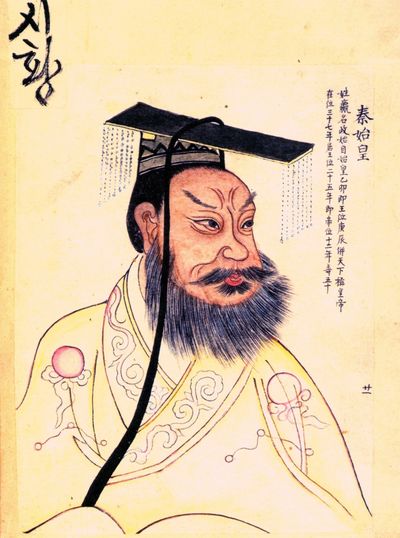
Qin Shi Huang
Emperor · Ancient
83.5Total
Basic Information
Born
1014
-259
Died
1077
-210
Era
Medieval
Ancient
Nationality
Myanmar
China
Occupation
Emperor
Emperor
Civilization
Eastern
Eastern
Score Comparison
Military (10%)
55.3
80.0
Political (20%)
88.0
88.0
Influence (20%)
67.0
82.0
Legacy (20%)
67.1
85.0
Leadership (15%)
79.9
88.0
Strategy (15%)
57.5
75.0
TOTAL
70.6
83.5
Rankings
🥇
Qin Shi HuangLeader
Mil: 80.0Pol: 88.0Inf: 82.0
83.5
🥈
Anawrahta
Mil: 55.3Pol: 88.0Inf: 67.0
70.6
+12.9 behind
How This Comparison Works
Algorithm
Each figure is scored on 6 dimensions (0—100 scale) based on structured historical data: Military (10%), Political (20%), Influence (20%), Legacy (20%), Leadership (15%), Strategy (15%). The weighted total produces the final ranking.
Data Sources
Scores are computed from structured sub-indicators in the database. Scale factors adjust for era (Ancient ×0.85, Modern ×1.0) and civilization size (Eastern ×1.05, Other ×0.80) to account for differences in population and military scale.
Maximum 3 Figures
Comparisons are limited to 2—3 figures to ensure readability and statistical meaningfulness.
Error Margins
±5 points per dimension — Sub-scores are derived from historical records with inherent uncertainty. Two figures within 5 points on a dimension should be considered roughly equivalent in that area.
Total Score Accuracy
±3 points overall — The weighted combination of 6 dimensions produces a total score with approximately ±3 points of uncertainty. Differences of less than 3 points are not statistically significant— the figures are effectively tied.
Known Limitations
- Historical records are incomplete and uneven across civilizations
- Figures from oral-tradition societies may be underrepresented
- Occupation labels can misclassify multi-role figures
- Scores measure capability and impact, not moral character
- Quantitative scoring is a comparison tool, not absolute truth
Capability Radar
Military (10%) — Battles & Warfare
Battles
55
85
Win Rate
60
90
Expansion
60
90
Political (20%) — Governance & Reform
Reform
65
95
Diplomacy
60
75
Economy
55
90
Influence (20%) — Cultural & Global Reach
Cultural
70
95
Global
55
85
Legacy (20%) — Historical Impact
Historical
75
95
Longevity
70
95
Leadership (15%) — Power & Stability
Tenure
70
70
Stability
60
65
Strategy (15%) — Tactics & Innovation
Strategy
55
85
Tactics
50
80
Reform
45
95
Analysis will be generated on first visit.
Scores and timeline are available below. The page will refresh automatically when ready.
Anawrahta — Complete Timeline
1044 AD
Founding of the Pagan EmpirePolitical Action
Anawrahta ascended the throne and unified the Irrawaddy River valley, founding the Pagan Empire. He conquered the Mon kingdom of Thaton and other neighboring states, creating the first unified Burmese kingdom and establishing Bagan as its capital.
UnificationEmpireBagan
Impact: regionalconstructive
1056 AD
Introduction of Theravada Buddhism to PaganCultural
Anawrahta adopted Theravada Buddhism after being converted by the Mon monk Shin Arahan. He made Theravada the state religion, replacing the existing Mahayana and animist practices. This religious shift had a lasting impact on Burmese culture and politics.
BuddhismReligionConversion
Impact: regionalconstructive
1057 AD
Conquest of the Thaton KingdomWar◆ Major
Anawrahta led a military campaign against the Mon kingdom of Thaton, capturing the city and bringing back Buddhist scriptures, monks, and artisans to Bagan. This conquest enriched Pagan's culture and solidified its dominance in the region.
ConquestMonCultural Exchange
Impact: regional
Qin Shi Huang — Complete Timeline
246 BC
Construction of the Mausoleum and Terracotta ArmyOther◆ Major
Qin Shi Huang commissioned a vast mausoleum complex near Xi'an, guarded by thousands of life-sized terracotta soldiers, horses, and chariots. The project employed hundreds of thousands of workers and reflected his obsession with immortality and imperial power.
Impact: global
230 BC
Conquest of the Six Warring StatesWar
From 230 to 221 BCE, Ying Zheng led the Qin state in a series of campaigns that conquered the Han, Zhao, Wei, Chu, Yan, and Qi states. This unified China under a single ruler for the first time, ending the Warring States period.
Impact: global
221 BC
Standardization of Writing, Currency, and MeasurementsReform◆ Major
Qin Shi Huang ordered the standardization of Chinese script, currency, and weights and measures across the unified empire. This facilitated administration, trade, and cultural integration, laying a foundation for future dynasties.
Impact: globalconstructive
Proclamation of the Qin DynastyPolitical Action
After conquering the last independent state, Ying Zheng declared himself Shi Huangdi (First Emperor), founding the Qin Dynasty. He adopted a new title to signify his supreme authority and initiated centralized imperial rule.
Impact: global
214 BC
Initiation of the Great Wall ConstructionOther◆ Major
Qin Shi Huang ordered the connection and extension of existing northern fortifications to create a unified defensive wall against nomadic Xiongnu raids. This project involved massive conscripted labor and became the precursor to the later Great Wall.
Impact: regional
213 BC
Burning of Books and Burying of ScholarsPolitical Action◆ Major
On the advice of Li Si, Qin Shi Huang ordered the burning of historical records and philosophical texts not aligned with Legalist doctrine. He also had 460 Confucian scholars buried alive to suppress dissent and consolidate ideological control.
Impact: nationaldestructive
Similar Comparisons
Comments & Discussion
QINCOMPARATOR6/17/2026
Metrics don't lie: Qin's population was maybe 40 million; Anawrahta's was under 2 million. You're comparing a statewide bulldozer to a river-basin visionary. Standardizing script, axle widths, and weights across a continent? That's infrastructure-as-destiny. Building 10,000 pagodas in Pagan? Aesthetic, sure, but that's real estate, not empire. I'll take the man who unified a writing system over the one who unified a prayer circuit any day. Power scales, folks.
BURNING-BOOKS6/17/2026
别被秦始皇后世的丰功伟绩洗脑了。焚书坑儒不是传说——那是文化灭绝。战国时期的百家争鸣哪去了?被他烧个精光。而阿奴律陀引入上座部佛教,统一的是信仰,不是烧掉别人的信仰。他修佛塔、建灌溉系统,给蒲甘带来的是文化黏合剂。如果做皇帝的要有遗产,我宁愿选那个建了千座佛塔的国王,而不是把四海之内变成监牢的人。
PAGAN-PILGRIM6/17/2026
As a military historian, I'm giving this to Anawrahta for logistics. Qin's Terracotta Army is a static mausoleum; Anawrahta's conquest of the Mon and Shan states required riverine amphibious warfare, elephant corps coordination across monsoon valleys, and supply lines that didn't rely on slave labor to the same degree. The Pagan empire's 12,000 km² irrigation network supported a standing army that could campaign year-round. Qin's Great Wall was a defensive flex on static geography; Anawrahta bui
SHARD-OF-SHANG6/17/2026
你们这些后世的马后炮总爱把阿奴律陀塑造成一个精神领袖式的帝王。拜托,他废除私有土地制、推行僧伽权力高于世俗贵族,这根本就是政教合一的惊天谋略。他没有用铁血,但用近乎恐怖的神权洗脑打造了一个没有反抗可能的信仰体系。秦始皇用商鞅之法把民众驯化成耕战机器;阿奴律陀用佛法把民众驯化成供僧工具。两种方式的专制本质并无不同,一个用刀,一个用经。
STELAE-SLEUTH6/17/2026
None of these comparisons acknowledge the elephant in the Anawrahta room: the Myazedi inscription. It's written in four languages—Pyu, Mon, Pali, and Burmese. That's not just piety; that's a multilingual propaganda machine. Qin needed coercive standardization because his multicultural empire had no unified identity otherwise. Anawrahta created a cultural cosmopolitan core where four languages thrived with different functions. That's smarter statecraft: one faith, many